

S&P 500 Retreats from Record High Amid Rising Yields
Wednesday, October 07, 2026
S&P 500 Retreats from Record High Amid Rising Yields
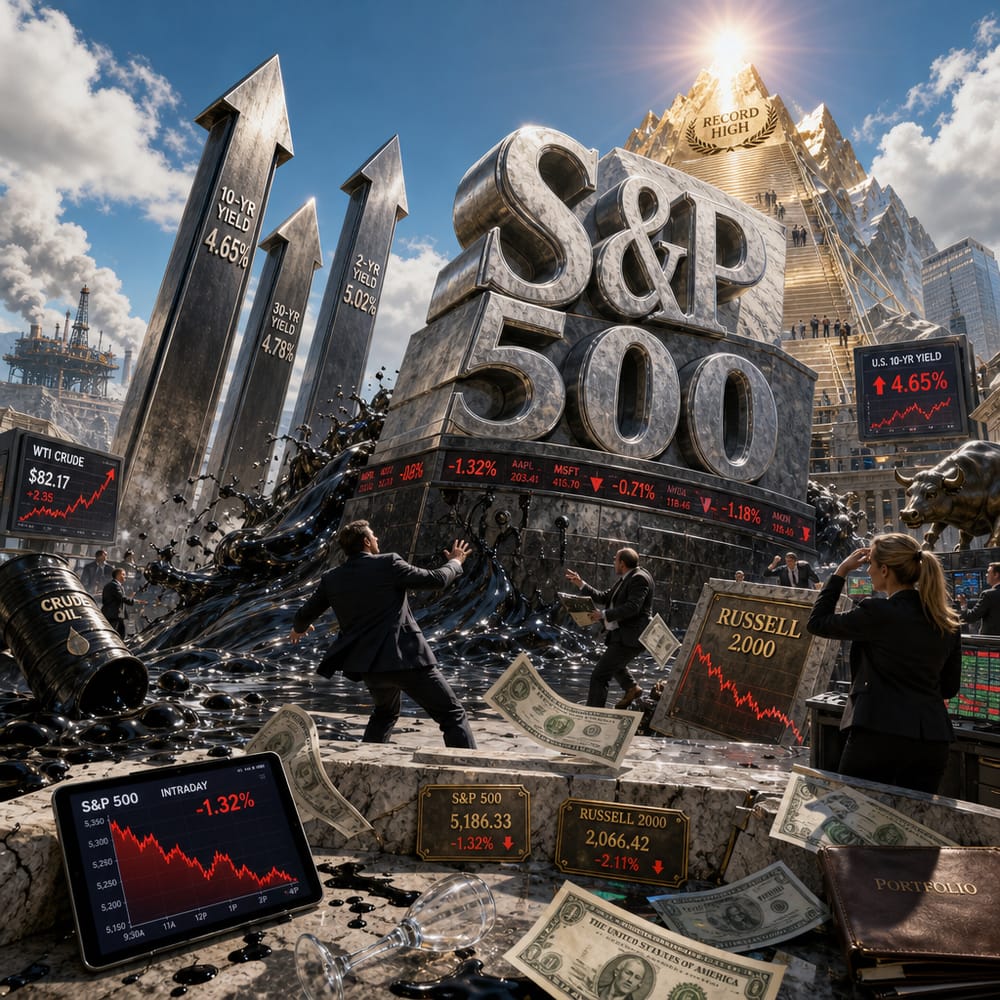
All good things must come to an end, right? Or at least hit a small speed bump. The S&P 500, that darling of every stock market enthusiast, decided to take a little breather from its all-time high, slipping 0.2% on October 7. The culprit? Rising Treasury yields and climbing oil prices. Turns out, when the cost of borrowing goes up and filling up your gas tank feels like signing a mortgage, investors start getting a bit jittery.
Now, let's dive into why this isn't just a hiccup but a wake-up call on how macroeconomic factors can throw a wrench in Wall Street's party plans.
TREASURY YIELDS: THE PARTY POOPER
Rising Treasury yields are like the silent, ominous uncle at a family gathering who everyone tries to avoid. They have this knack for making equity markets—fancy talk for stock markets—uncomfortable. But why, you ask? Well, Treasury yields are a benchmark for interest rates, and when they go up, borrowing costs for companies and individuals tend to rise too. Higher borrowing costs mean higher expenses, which can eat into corporate profits. And, let's face it, no investor likes the sound of shrinking profits.
Higher yields also make bonds more attractive compared to stocks. Think of it as your favorite restaurant suddenly spiking their prices—suddenly, that new, cheaper spot around the corner starts to look pretty appealing. Investors start eyeing bonds for safer returns, pulling money out of stocks. This can dampen stock prices and sour market sentiment.
THE OIL SLICER
And then there's oil, the slippery player in this saga. When oil prices climb, it has a domino effect on the economy. It costs more to transport goods and for airlines to operate, and manufacturing prices go up too. All this can lead to higher inflation, and we all know how much central banks love to curb inflation by hiking interest rates. It’s the financial equivalent of a double-whammy—higher costs for businesses and consumers, and the possibility of higher rates.
For investors, the reality of pricier oil and the potential for more rate hikes is like finding out your favorite ice cream is being discontinued. It’s a bummer for market sentiment and could lead to a sell-off in energy-intensive sectors, dragging down indexes like the S&P 500 along with them.
WHAT'S THE BIG DEAL?
So, what's the grand takeaway from all this? The S&P 500's pullback throws a spotlight on how sensitive the market can be to macroeconomic shifts. It’s a reminder that while corporate earnings and industry trends matter, broader economic factors like Treasury yields and commodity prices have a big say in what direction the market takes.
With the Russell 2000, another major index, also feeling the heat, it’s clear the ripples are being felt across the board. Investors are caught in a tug-of-war between the allure of juicy bond yields and the rollercoaster of stock market returns.
For the everyday investor, this means keeping a close eye on economic indicators is as crucial as scrutinizing a company’s earnings report before making those buy or sell decisions. After all, the market isn't just about the companies you love; it's a complex mesh of global economics, interest rates, and prices at the pump.
In the end, the S&P 500's stumble might just be a blip in its marathon, but it’s a blip that reminds us of the bigger picture. The question isn’t just about when the index will hit another high but how prepared we are to understand and navigate the ups and downs that come with it. So, dear investor, keep your eyes peeled and your strategy sharp—you never know when the next shift in yields or oil prices will change the game all over again.
This article is for informational purposes only and is not investment advice. Always do your own research or consult a licensed financial professional before making investment decisions.
© Copyright 2024. All Rights Reserved.
© Copyright 2024. All Rights Reserved.