

S&P 500 Registers Modest Rebound as Treasury Yields Tilt Lower
Sunday, October 11, 2026
S&P 500 Registers Modest Rebound as Treasury Yields Tilt Lower
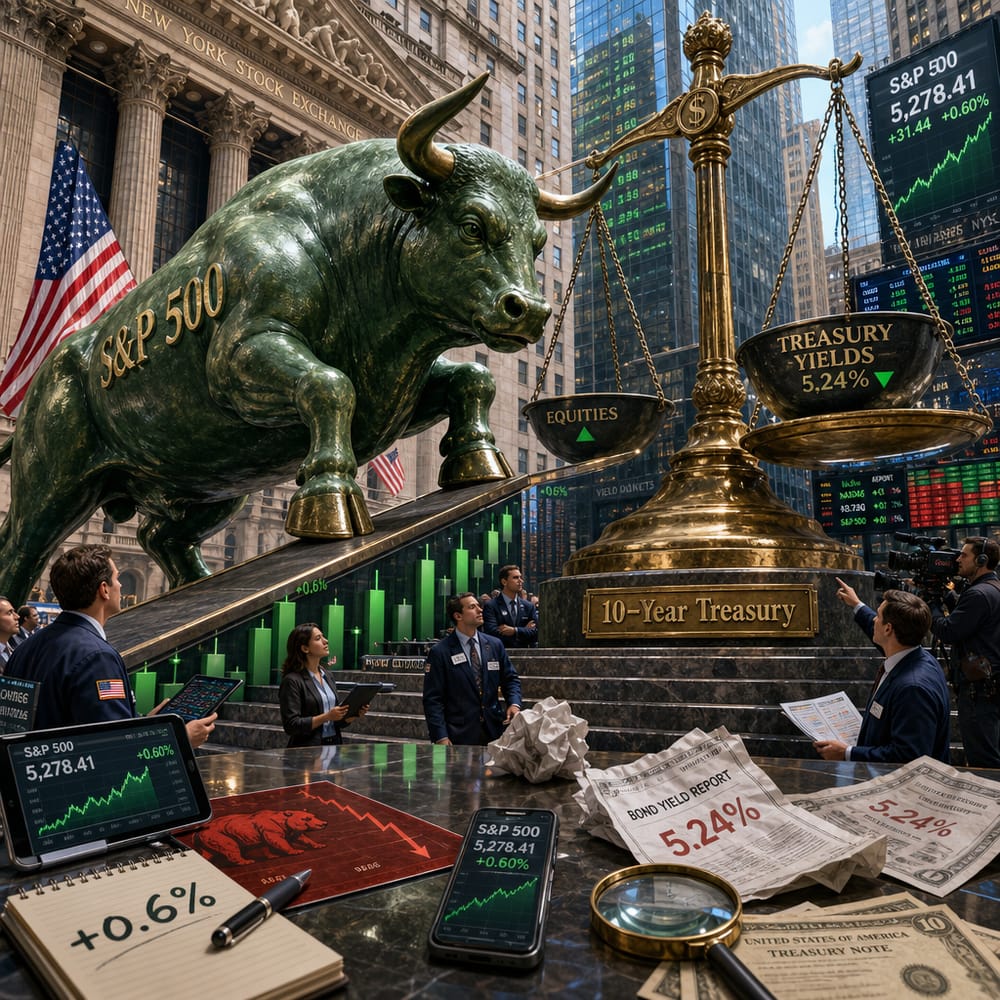
They say the stock market can be like a rollercoaster, but lately it's felt more like a seesaw. On October 9, the S&P 500 decided it had had enough of the downward slide and climbed 0.6%. This wasn’t just any ordinary upward blip; it was the first gain since hitting an all-time high. Meanwhile, the 10-year Treasury yield took a slight dip, just enough to make investors breathe a sigh of relief, now standing at a modest 5.24%.
But what’s really going on here? Is this a sign of better days, or just a fluke in the financial weather? Let's dig into the mechanics behind this market move.
FACTORS BEHIND THE REBOUND
The S&P 500’s bounce back didn’t just happen in a vacuum. Investors were keeping a keen eye on the bond market, and it seems the Treasury yields decided to play nice. A decrease in the yield of the 10-year Treasury note was a key catalyst. Lower yields make stocks appear more attractive compared to bonds, which are usually seen as safer but less exciting than their equity counterparts. The slight cool-off in yields had investors itching for equities again, lifting the S&P 500 out of its funk.
But there’s more to it. Some relief from geopolitical tensions and whispers of more stability in the Ukraine energy ceasefire could have played a part. After all, a little less global drama often translates to investors being more willing to take on risk.
THE BOND-YIELD SEE-SAW
Understanding Treasury yields is a bit like unraveling a mystery novel. When yields rise, it means investors are expecting higher interest rates down the road. Not exactly a recipe for stock market enthusiasm. This is why even a small dip in yields can make a big difference—it signals a breather from anticipated rate hikes, making stocks look like a better bet.
However, let’s not get too cozy. Yields can swing back up just as easily as they fall. And when they do, expect the stock market to feel the pressure. It's a delicate balance, and right now, we're treading on eggshells where even minor shifts in yields can spark big reactions in the equity markets.
WHAT TO WATCH IN THE BOND MARKET
For those playing the long game, staying tuned to the bond market is like checking the weather before a hike—it can make or break your day. The 10-year Treasury yield is particularly important as it influences everything from mortgage rates to corporate borrowing costs. A steep rise can be a red flag for stock investors, often leading to market pullbacks.
Investors would be wise to keep an eye on any policy changes from the Federal Reserve, which loves to throw some spice into the mix by adjusting interest rates or providing hints of future actions. Also, watch out for economic indicators like inflation rates and employment numbers; these play a leading role in where yields are headed.
THE ROAD AHEAD
So, what’s next for our market seesaw? While the rebound is a positive sign, the underlying factors that caused the initial slump haven’t disappeared. The global economy is still grappling with some heavyweight issues, and any resolution—or escalation—will ripple across the markets.
In the short term, investors should brace for more volatility. While the bond market is currently providing a cushion, it’s one that could deflate if economic data pushes yields higher again.
For retail investors, this means keeping a diversified portfolio and not betting the farm on any single market move. The interplay between bonds and equities is a long-running drama, and while today’s twist might seem significant, there are bound to be more plot twists ahead.
In the end, the market is as much about sentiment as it is about numbers. A modest rebound is nice, but in the grand scheme of things, it's just one chapter in the ongoing saga of market dynamics. So, stay savvy, stay informed, and as always, buckle up for the ride.
This article is for informational purposes only and is not investment advice. Always do your own research or consult a licensed financial professional before making investment decisions.
© Copyright 2024. All Rights Reserved.
© Copyright 2024. All Rights Reserved.