

S&P 500 Recovers Amid Treasury Bond Buybacks
Wednesday, August 19, 2026
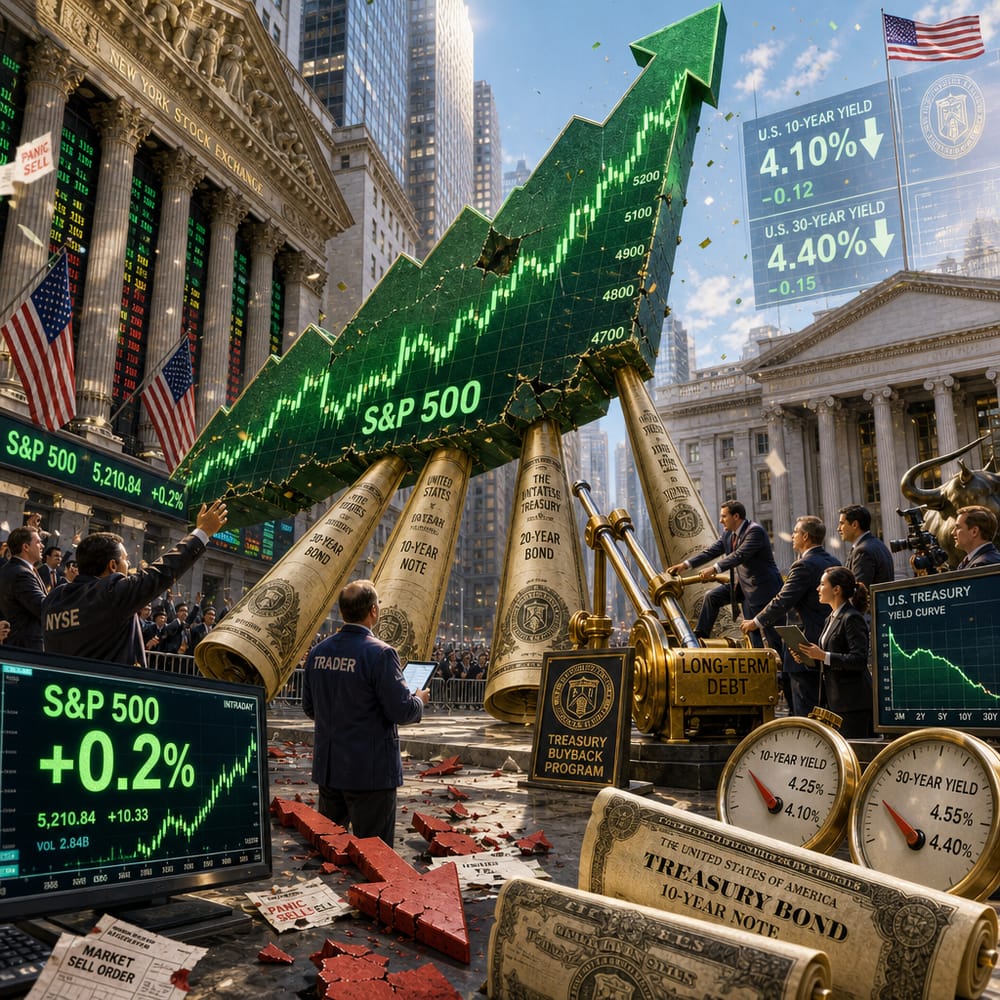
S&P 500 REBOUNDS AS TREASURY STEPS UP BOND BUYBACKS
Here's a riddle: What do you call a situation where the U.S. government is neck-deep in debt but still manages to make the stock market dance a little jig? Answer: the Treasury Department's latest move to double its buyback of long-term Treasury debt. It's like a market tango, where the Treasury leads and everyone else follows, hoping not to trip over their own feet.
After three days of playing limbo with the stock charts, the S&P 500 decided it had enough of the downward dog and added 0.2% to its height. This came hot on the heels of the Treasury's announcement that it would up its buybacks of long-term Treasury bonds from $2 billion to at least $4 billion. It’s a move that screamed, “Chill out, yields!”—and for the moment, they obliged.
Now, if you're wondering why this matters, let’s break it down. Imagine long-term yields as the party poopers of the financial world. The higher they go, the more they scare everyone away from risky assets like stocks, which are basically the life of the market party. By doubling down on buybacks, the Treasury basically told these party poopers to take a seat and relax for a bit. The result? A little less pressure, a little more stability, and investors feeling a tad more optimistic.
But let’s not get ahead of ourselves. Sure, the short-term relief is like a splash of cold water on a hot day, but will it really keep yields in check? It’s not like we’ve found the magic wand to make all our fiscal worries vanish. With U.S. government debt breaching the $40 trillion mark, the Treasury’s buyback plan is like trying to mop up an ocean with a sponge. It's an impactful step, but the long-term outlook for yields isn't miraculously fixed.
So, what’s the ripple effect on the equity markets? In the short run, investors can breathe a sigh of relief. A little less worry about rising yields means more room for investments in stocks. The S&P 500’s little victory lap is a testament to that. But beyond the initial euphoria, the market’s like an endlessly curious cat, always needing more assurances and shiny things to chase.
The burning question is whether this maneuver will stabilize the rock-and-roll nature of the markets. If yields remain tame, it could mean a smoother ride for equities. But if they decide to break out their dancing shoes once more, the rollercoaster could resume its twisty path.
What about our old pals, long-term Treasury bonds? With the Treasury stepping in as a buyer, bond prices are likely to get a boost, which inversely means yields dip. It's a classic case of supply and demand, with the Treasury trying to tilt the scales in favor of more buyer interest.
However, the success of the Treasury’s intervention hinges on various factors, including the broader economic backdrop. Inflation, interest rates, and global economic health are all still in play, each with their own potential to stir the pot.
For retail investors, this means staying alert. A market buoyed by temporary measures could still face turbulence from other fronts. It’s crucial to keep a diversified portfolio, with an eye on both fixed-income opportunities and equity markets. The Treasury’s move is like patching up a leaky boat—it helps float the vessel a little better, but the seas might still get rough.
In the grand scheme, the Treasury’s buyback strategy is a signal that while challenges abound, steps are being taken to navigate through them. It's an intricate dance, with the Treasury trying to lead without stepping on the toes of the Federal Reserve's policies and broader market dynamics.
So, as we watch the Treasury and the markets tango, it’s essential to keep perspective. The moves in the financial dance hall are complex and, often, surprising. But one thing's for sure: every investor should be prepared to pivot with the music.
This article is for informational purposes only and is not investment advice. Always do your own research or consult a licensed financial professional before making investment decisions.
© Copyright 2024. All Rights Reserved.
© Copyright 2024. All Rights Reserved.