

S&P 500 Pullback From Record High on Weak Retail Sales & Oil Swing
Sunday, August 16, 2026
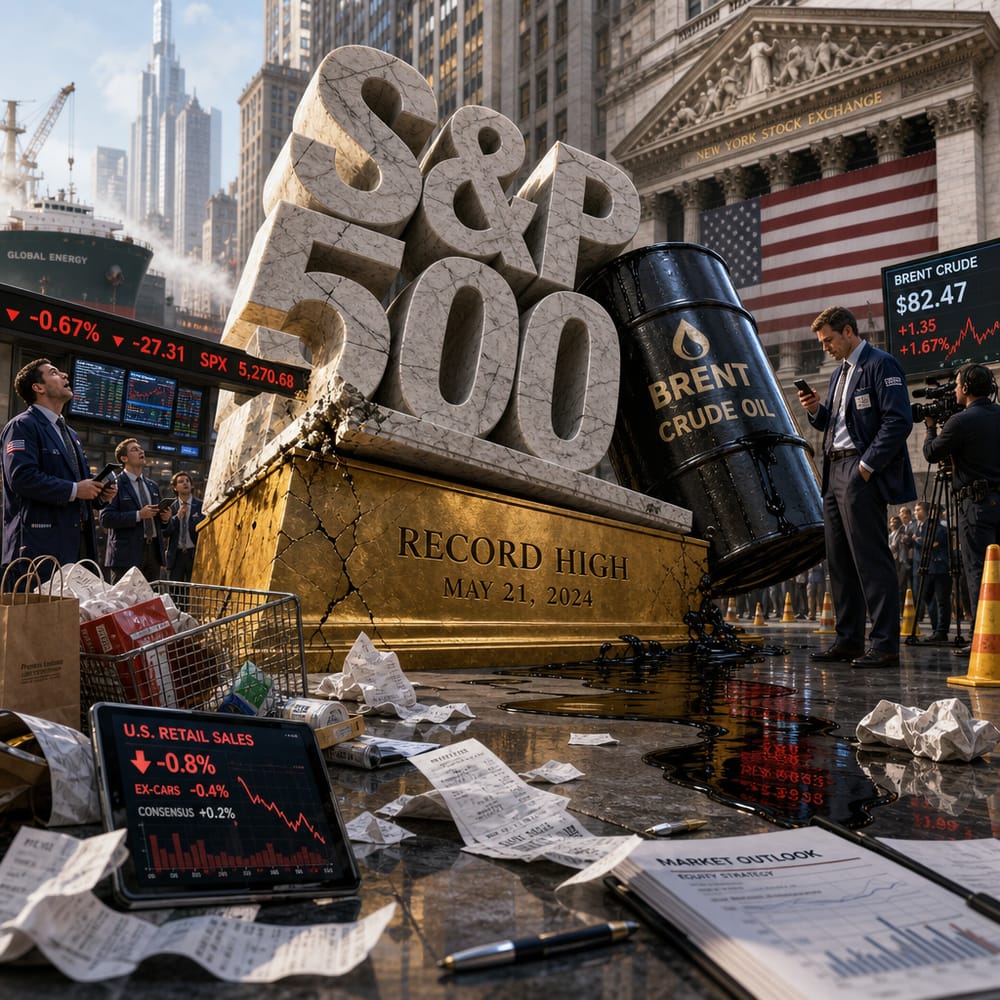
When the stock market throws a tantrum, it’s usually a couple of bad news headlines that push it over the edge—like someone telling you there’s no coffee left at 8 a.m. on a Monday. On Friday, the S&P 500 flexed its moody side, slipping 0.2% from its record high. The culprit? A one-two punch of weak retail sales data and oil prices on the rise. You could almost hear investors collectively sigh: “Here we go again.”
WEAK RETAIL SALES: AN ECONOMIC CANARY IN THE COAL MINE?
Picture this: retail sales reports are like the report cards of American consumerism, showing us whether Main Street is out shopping or saving for a rainy day. Recent data turned out to be a bit of a buzzkill, with sales figures not quite hitting the mark. It’s a sign the consumer might be getting a bit squeamish, perhaps folding their wallets when they used to spend freely.
So, who are the biggest losers in this retail report card? Think of sectors like consumer discretionary, which includes things people like to buy but don’t necessarily need—like that fifth pair of sneakers or the latest tech gadget. Companies in this space are feeling the pinch, as weak sales data suggest consumers might be reigning in their spending sprees.
And it's not just the sneaker sellers and gadget gurus that need to worry. This kind of data can have ripple effects across different sectors, from auto dealerships to restaurants. If consumers aren’t splurging on clothes and tech, you can bet they're also not eager to buy extra guac at Chipotle or spring for leather seats in their new ride.
OIL PRICES RISING: THE INFLATION SPOILER ALERT
As if the weak retail sales data wasn’t enough, here comes oil with its big boots, stomping all over inflation expectations. Brent Crude, the global benchmark for oil prices, has been creeping up, giving economists and central bankers a headache. Rising oil prices are like that unexpected guest at your party who eats everything in sight and leaves without cleaning up—bumping up costs across the board and threatening to set off a chain reaction.
Why do rising oil prices matter so much, you ask? Well, oil isn't just about what you pay at the pump. It seeps into almost every part of the economy. Higher oil prices mean higher transportation costs, which then inflate the price of goods, from groceries to gadgets. It’s like a domino effect, except every domino is knocking another dollar out of your pocket.
This price hike in oil throws a wrench in the Federal Reserve’s delicate dance with inflation. If prices rise too fast, the Fed might have to crank up interest rates to keep things in check. And nothing kills a market party like higher rates, which make borrowing more expensive and stocks less appealing.
THE BIGGER PICTURE: WHAT IT MEANS FOR INVESTORS
Retail sales are soft, oil prices are climbing, and suddenly the trusty, solid S&P 500 isn't looking quite so invincible. The market's reaction underscores its inherent sensitivity to economic indicators and commodity fluctuations—like that friend who’s fine until you mention their ex. It’s a reminder that while the market might bask in the glow of record highs for a day, darker clouds are always on the horizon.
For investors, this means it's time to brace for a bit of a bumpy ride. Rate-sensitive sectors, such as utilities and real estate, might feel the pressure as rising rates could dampen their appeal. On the flip side, energy stocks could benefit from the surge in oil prices, offering a silver lining for those savvy enough to see it.
As for forward guidance, companies will likely tread carefully, painting cautious pictures of the future as they navigate these choppy waters. And as an investor scrolling through news, this is your cue to keep an ear to the ground and not get too comfortable—even when the market seems to be on a winning streak.
The S&P 500’s Friday fumble serves as a wake-up call: the market, much like your cat precariously perched on the edge of the couch, is always one misstep away from a tumble. So, keep your eyes on economic indicators, oil prices, and the Fed's next move—because if there’s one thing predictable about the market, it’s that it’s never predictable.
This article is for informational purposes only and is not investment advice. Always do your own research or consult a licensed financial professional before making investment decisions.
© Copyright 2024. All Rights Reserved.
© Copyright 2024. All Rights Reserved.