

S&P 500 Pullback After Record Highs
Tuesday, August 18, 2026
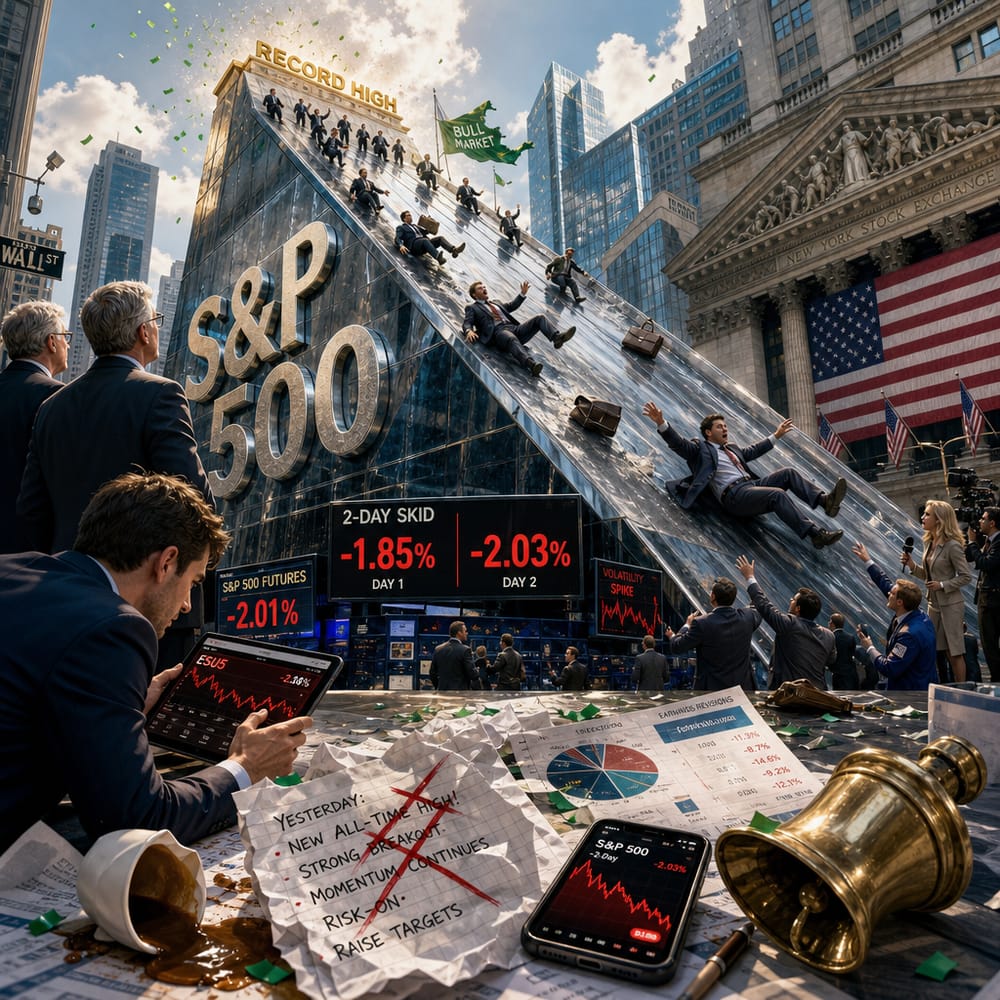
THE S&P 500'S WILD RIDE: WHAT'S BEHIND THE RECENT PULLBACK?
Just when you thought the wild rollercoaster of the stock market had given us all the thrilling twists and turns it could muster, the S&P 500 decided to toss its cookies on the downhill. After hitting a record high, the index pulled back, making investors feel like they were riding a financial seesaw instead of enjoying a stable market ascent.
Why did the S&P 500 hit the brakes so hard after its exhilarating climb? The culprit, in part, is the bond market whispering sweet nothings about rising yields. The yield on the 30-year Treasury bond recently peaked at a 19-year high, and when bond yields rise, stocks often suffer a serious case of vertigo. Investors, always on the lookout for a safer haven, tend to pull out of stocks and into bonds when yields become more tantalizing than the latest tech IPO.
Moreover, the economic backdrop isn't exactly providing a calming influence. Inflation continues to be the unwanted guest that overstays its welcome, and government spending feels like it’s perpetuating a New Year's Eve party that never ends. The U.S. fiscal deficit ballooned to $432.3 billion in July, which is the kind of number that could give even the most optimistic investor pause. With such economic uncertainties, it's no shock that the market is feeling jitterier than a caffeine addict at a decaf convention.
In this environment of uncertainty and nervousness, any market rally is bound to be fragile and fleeting. The S&P 500's pullback serves as a clear reminder: markets are not immune to the broader economic challenges. This fragility signals that while investors might flirt with bullish sentiment, they’re quick to swipe left the moment things get complicated.
But beyond the immediate pullback, what does this mean for the future? For starters, the volatility underscores a vital point for investors: don't get too comfortable with record highs. Markets are a complex beast, often running more on emotion than logic, and they can pivot faster than you can say "buy low, sell high."
Interestingly, while the S&P 500's retreat might seem like a purely negative development, it’s also a testament to investors' cautious optimism. The fact that the index hit a record high in the first place means there’s still faith in the underlying strength of key sectors. Big tech, for example, continues to benefit from the artificial intelligence boom, with Nvidia flexing its considerable capital muscle to stay ahead of the competition.
However, the market's ebb and flow also hints at potential opportunities. As the S&P 500 recalibrates, savvy investors might look to sectors like cybersecurity, where increased threats are pushing stock valuations higher. Or perhaps health tech, where companies like Hims & Hers are shaking up traditional models, despite regulatory hurdles.
Meanwhile, the financial innovators at Kalshi are making waves with their perpetual futures contracts, offering a fresh perspective on equity index trading. This reflects a broader trend where technology continues to redefine how markets operate and where investors can find value.
So where does all this leave the everyday investor? Amid the turbulence, it’s crucial to stay grounded. Diversification remains key — spreading assets across different sectors can stabilize portfolios when markets get rocky. Keeping a close eye on economic indicators, such as Treasury yields and fiscal policy shifts, is also essential.
In a market climate that feels like a perpetual game of "what's next?", the best strategy might just be to expect the unexpected. Watch the trends, stay informed, and above all, keep your financial seatbelt securely fastened. The ride may be bumpy, but it’s far from over.
This article is for informational purposes only and is not investment advice. Always do your own research or consult a licensed financial professional before making investment decisions.
© Copyright 2024. All Rights Reserved.
© Copyright 2024. All Rights Reserved.