

S&P 500, Nasdaq, and Dow Retreat Amid Rising Oil Prices
Tuesday, August 18, 2026
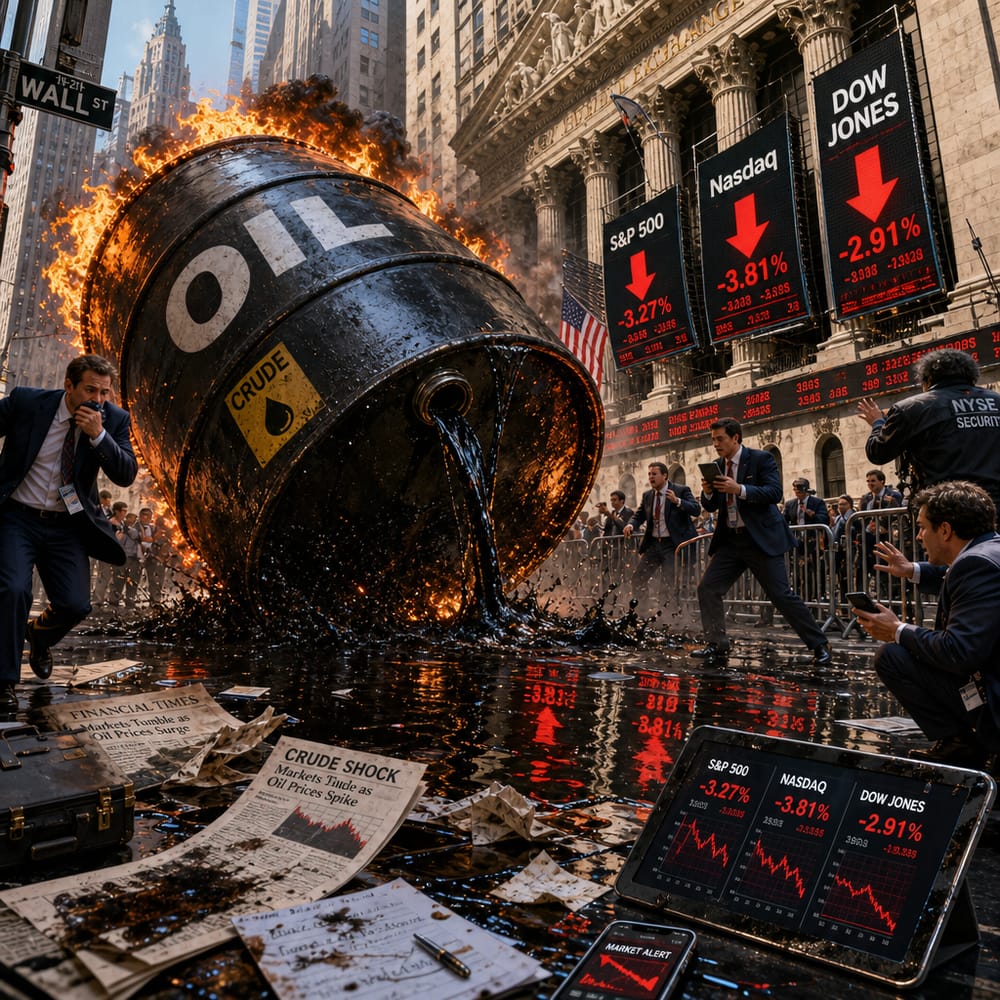
OIL PRICES SPIKE, MARKETS TANK: ARE YOUR STOCKS READY FOR THE WILD RIDE?
If you're wondering why your portfolio looked so dismal today, you can point a greasy finger at oil prices. Yep, while we were busy juggling holiday plans and fantasy football drafts, oil quietly slipped into the stock market's control room, flipped the switch, and sent all three major U.S. indices—S&P 500, Nasdaq, and Dow Jones—into a tailspin.
What's the big deal about oil, you ask? Well, think of it as the market's overpriced caffeine shot. When prices surge, it doesn't just mean you'll be paying more at the pump or for that pumpkin spice latte (sorry, PSL enthusiasts). It stokes the fiery beast known as inflation, threatening to eat into consumer wallets and corporate profits alike. And when inflation fears bubble up, the stock market feels a bit seasick.
HOW RISING OIL PRICES COULD FUEL INFLATION
So, let's break this down. Rising oil prices mean it costs more to ship stuff, power factories, and keep the lights on at your favorite Netflix-binge spot. This, in turn, puts pressure on companies to hike prices just to keep up with their own rising costs. And voila, you've got higher inflation.
Why should you care? Inflation eats away at the value of your dollars. If your paycheck doesn't stretch as far as it used to, you're not buying that extra pair of shoes or splurging on avocado toast (the horror!). Lower consumer spending means companies make less money, and when companies make less money, the stock prices tend to take a nosedive.
SECTORS WITH THE BIGGEST CRUDE OIL HANGOVER
While the whole market gets a bit queasy, some sectors really feel the punch. Airlines and transportation companies? They're sweating bullets since fuel is a major chunk of their costs. Consumer goods companies? They're trying to figure out how to pass the rising costs to you without making you run for the hills. Even tech stocks like those in the Nasdaq aren't immune; they rely on these sectors to keep their own operations efficient.
But wait, there's a sliver of a silver lining. Energy stocks often do the cha-cha slide in the opposite direction—up—when oil prices rise. That's because, well, higher oil prices mean bigger profits for oil companies. So, if you're invested in ExxonMobil or Chevron, your portfolio might be looking slightly less grim.
FED POLICY: THE CRYSTAL BALL WE WISH WE HAD
Now, you're probably wondering what the Federal Reserve will do about all this. Rising inflation often makes the Fed itchy to raise interest rates, trying to cool down the economy before it boils over. But high interest rates aren't exactly a party for stocks either. They make borrowing more expensive for companies and consumers, which can slow down economic growth.
However, the Fed is walking on a high-wire here. Raise rates too soon, and they might strangle the economic recovery. Wait too long, and inflation could run rampant like it’s starring in a financial horror movie. It's a balancing act worthy of Cirque du Soleil, and all eyes are on Chair Jerome Powell for the next move.
KEEPING YOUR PORTFOLIO STEADY IN CHOPPY WATERS
Before you hit the panic button and sell off your investments like they're going out of style, take a deep breath. Markets fluctuate, and reacting emotionally can cost you. This might be a good time to review your portfolio and make sure it's diversified. Have a mix of stocks from different sectors, some bonds to steady the ship, and a sprinkle of cash on hand for opportunities or emergencies.
And remember, even in the oil-induced chaos, the market has a history of bouncing back. It's not about timing the market; it's about time in the market. So, buckle up, keep your eyes on the horizon, and let the financial waves roll, knowing you're in it for the long haul.
Keep your financial wits about you, and who knows? With the right strategy and a little luck, you might just ride this out with minimal fuss and maybe even a little extra change in your pocket.
This article is for informational purposes only and is not investment advice. Always do your own research or consult a licensed financial professional before making investment decisions.
© Copyright 2024. All Rights Reserved.
© Copyright 2024. All Rights Reserved.