

S&P 500 Holds Above Key Technical Levels Amid Momentum Thaw
Saturday, August 22, 2026
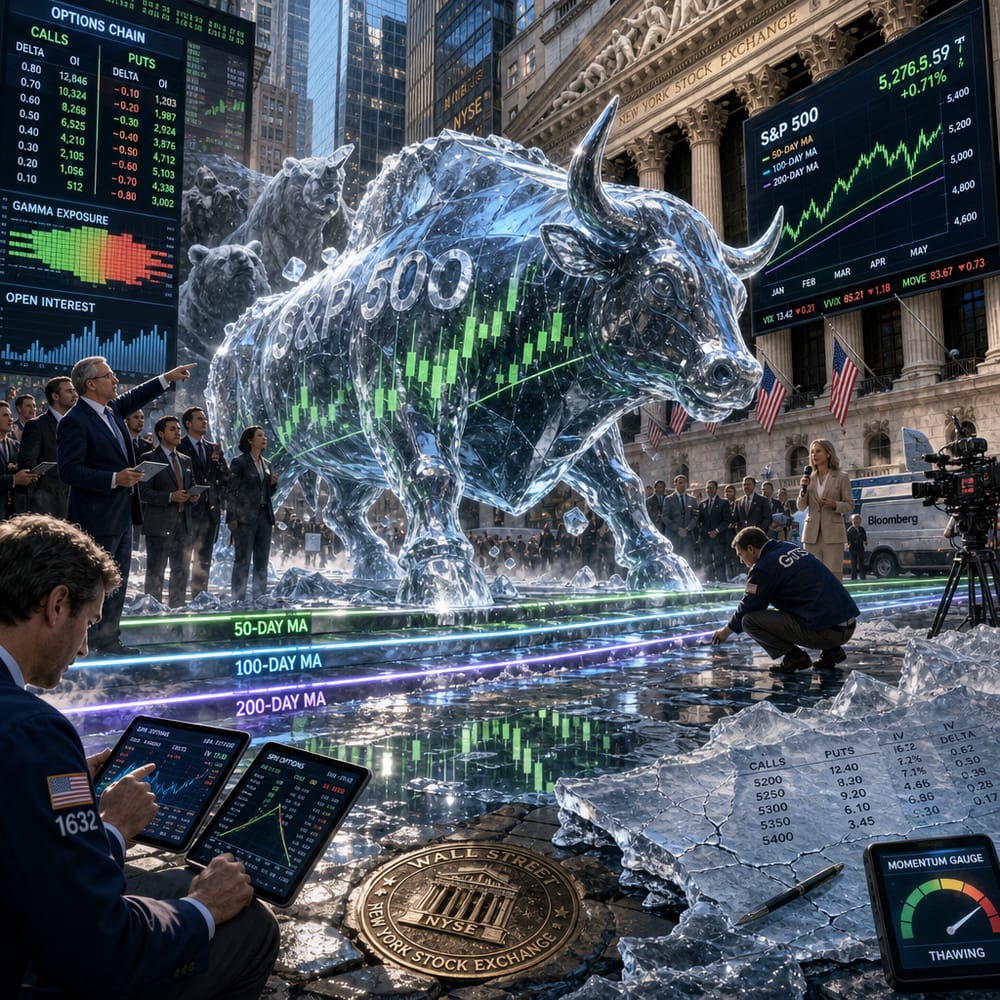
S&P 500 HOLDS ABOVE KEY TECHNICAL LEVELS AMID MOMENTUM THAW
In the thrilling theatrical play called "The Stock Market," the S&P 500 is currently that Oscar-winning performance everyone can't stop talking about. It's holding the stage with poise, still above its crucial moving averages, even as recent market dynamics make us sweat more than a heated Bikram yoga session. So, does this mean an encore or is this performance about to fade into obscurity?
First, let's get on the same page. The S&P 500, the index that your Uber driver might casually mention in financial banter, is not just a stock ticker; it's essentially the "Who's Who" of the U.S. economy. When it breaks above certain levels known as moving averages, it's like hearing the starter's pistol at a hundred-meter dash—indicating momentum and a potential blast ahead.
But here's the twist: while it's still sprinting, the air is thick with uncertainty. Recent market fluctuations have investors biting their nails, wondering if this is a breakout with legs or a false start. The S&P 500 has managed to stay above the technical lines (think of them as the support beams of a financial bridge), so kudos there. But can it keep defying gravity?
One way to gauge the staying power is to peek at the options market. Picture it as the mood ring of Wall Street. It's a sentiment barometer that tells us whether investors are feeling giddy or gloomy. Right now, options traders appear to be positioning cautiously. There’s a sense of “let’s wait and see,” with hedging strategies taking center stage, reflecting the wariness beneath the surface enthusiasm.
A key risk that has retail investors—and their 401(k)s—on edge is the looming specter of trade wars. The U.S.-Canada tiff has reignited with enough intensity to toast a marshmallow. Tariffs on Canadian goods are in full swing, and Ottawa isn’t exactly taking it lying down. If you think this doesn't matter, remember that trade tensions can ripple across the market faster than viral TikTok dances. Add the U.S.'s burgeoning national debt, now a grim $40 trillion, and you’ve got a cocktail of potential financial turbulence.
Walmart’s current predicament also tells a part of the story. Higher gas prices are biting into consumer pockets, taking a nibble out of spending, and indirectly, Walmart sales. The retail giant’s recent sales figures, coupled with a massive tariff refund, paint a picture of a consumer economy that’s feeling the pinch. When Walmart sneezes, the economy catches a cold, so investors should keep their eyes trained on consumer trends, as they often foreshadow broader economic patterns.
Meanwhile, across the Pacific, Tesla’s massive recall in China adds another layer of complexity to the global market narrative. Nearly 3 million vehicles are being recalled, highlighting the tightrope international businesses walk. While this recall might seem like a distant problem for U.S. markets, remember that global economic interconnectedness means a hiccup in China can echo across markets worldwide.
As for the S&P 500, the question remains: Breakout or breakdown? Retail investors should brace for volatility. Like a suspenseful Netflix thriller, every episode (or trading day) brings new twists. Keeping a close watch on moving averages, trade policies, and consumer spending will be crucial. These factors will likely dictate whether we witness a sustainable rally or a slow simmer back to previous levels.
In the endgame, while the S&P 500 holds strong today, the road ahead may not be as straightforward. There’s room for discretionary inflows if momentum holds, but as any seasoned investor will tell you, markets have a knack for surprising us just when we think we’ve got them all figured out.
In this drama of charts and numbers, remember that no trend, no matter how strong, lasts forever. So keep your portfolios agile, your eyes sharp, and your wits about you. The S&P 500 will continue to be the talk of the town, at least until the next market story steals the spotlight.
This article is for informational purposes only and is not investment advice. Always do your own research or consult a licensed financial professional before making investment decisions.
© Copyright 2024. All Rights Reserved.
© Copyright 2024. All Rights Reserved.