

S&P 500 Hits Record High Amid Cooling Inflation
Sunday, August 16, 2026
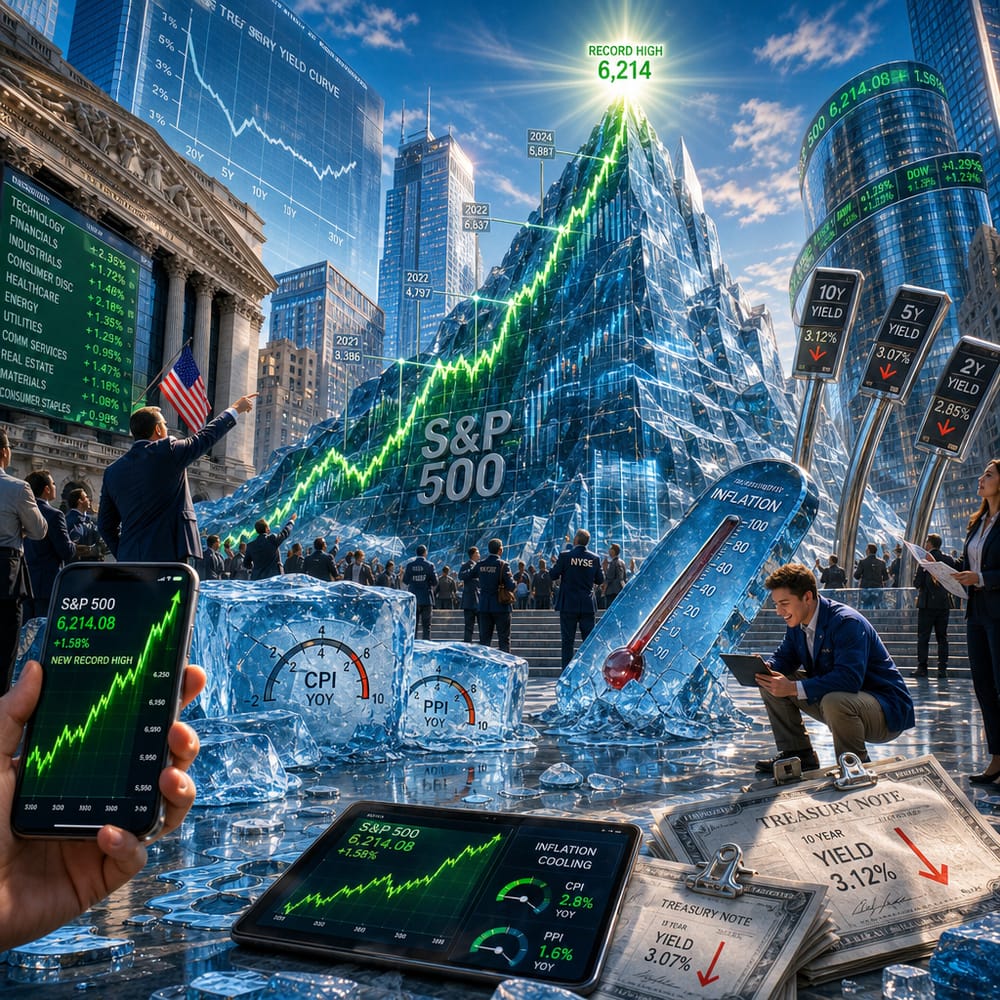
S&P 500 HITS RECORD HIGH AMID COOLING INFLATION: WHAT NOW?
It's official: the S&P 500 just soared to a new all-time high, and no, this isn’t the plot twist in a financial thriller. It’s reality, and it’s sending ripples of excitement through Wall Street faster than you can say “bull market.” On August 13, thanks to a softer-than-expected inflation report, the market’s favorite index breached new heights. So, let’s break down what’s cooking in the cauldron of investor sentiment and Federal Reserve anticipation.
First things first: why did the S&P 500 decide to party like it’s 2021? The answer lies in the labyrinth of inflation data. The latest numbers showed wholesale inflation—what businesses pay for their goods—didn’t rise as much as the Wall Street brainiacs predicted. Think of it as the market equivalent of finding out your favorite band is releasing a surprise album. This eased the nerves of investors who had been biting their nails over how the Federal Reserve might react.
When inflation cools, it’s like a soothing balm for investors. It suggests that, perhaps, we’re not speeding toward an economic inferno. Cheaper production costs could mean more stable prices down the line for consumers. And what does that mean for the S&P 500? Investors, feeling a bit more confident, start snapping up stocks, boosting the index.
THE FED DANCE
Now, let’s talk about the elephant in the trading room: the Federal Reserve. The cooling inflation data is like catnip for those hoping the Fed will ease up on the rate hikes. If you’re new to this, think of rate hikes as the Fed’s way of saying, “Whoa, slow down there!” to the economy, so it doesn’t overheat. But with inflation cooling like a pie on a windowsill, investors are hoping the Fed will take a more laid-back approach.
So, what does this mean for Fed policy? Well, the softer inflation numbers could give the Fed a reason to hit pause on its relentless rate hiking spree. If they decide to ease off, this could keep borrowing costs lower, encouraging businesses to invest and consumers to spend. It’s the classic economic domino effect.
KEEPING AN EYE ON TREASURY YIELDS
Then there's the story of Treasury yields. These are basically IOUs from the government that pay a fixed interest rate. Investors watch them like hawks because they signal where the economy might be heading. Recently, yields have been a tad moody, reflecting uncertainty over economic growth and Fed policy. A softer inflation report could mean lower yields, signaling to investors that it's safer to dive back into stocks.
A CAUTIOUSLY OPTIMISTIC FUTURE?
Will this trend of stock market euphoria continue? The crystal ball is a little fuzzy, but here’s a thought: unless something drastically shakes the economic landscape—like an unexpected spike in geopolitical tension or a surprise from the corporate earnings season—the positive sentiment could linger. However, investing isn't a straight path. It's as curvy as a mountain road, with potential detours like changes in consumer spending or surprises in key economic indicators.
But for now, investors are taking a collective sigh of relief. With inflation softening and hopes of a more dovish Fed, the mood is cautiously optimistic. The S&P 500's record high is a beacon, signaling smoother economic waters ahead—or at least less stormy ones.
As we watch this play out, remember: the stock market is a rollercoaster, not a monorail. So, strap in, keep your eyes open, and enjoy the ride. Because, in the world of investing, the only certainty is uncertainty, and that’s what makes the journey worth it.
This article is for informational purposes only and is not investment advice. Always do your own research or consult a licensed financial professional before making investment decisions.
© Copyright 2024. All Rights Reserved.
© Copyright 2024. All Rights Reserved.