

S&P 500 Enters Correction with Longest Losing Streak Since Feb 2020
Sunday, November 22, 2026
S&P 500 Enters Correction with Longest Losing Streak Since Feb 2020
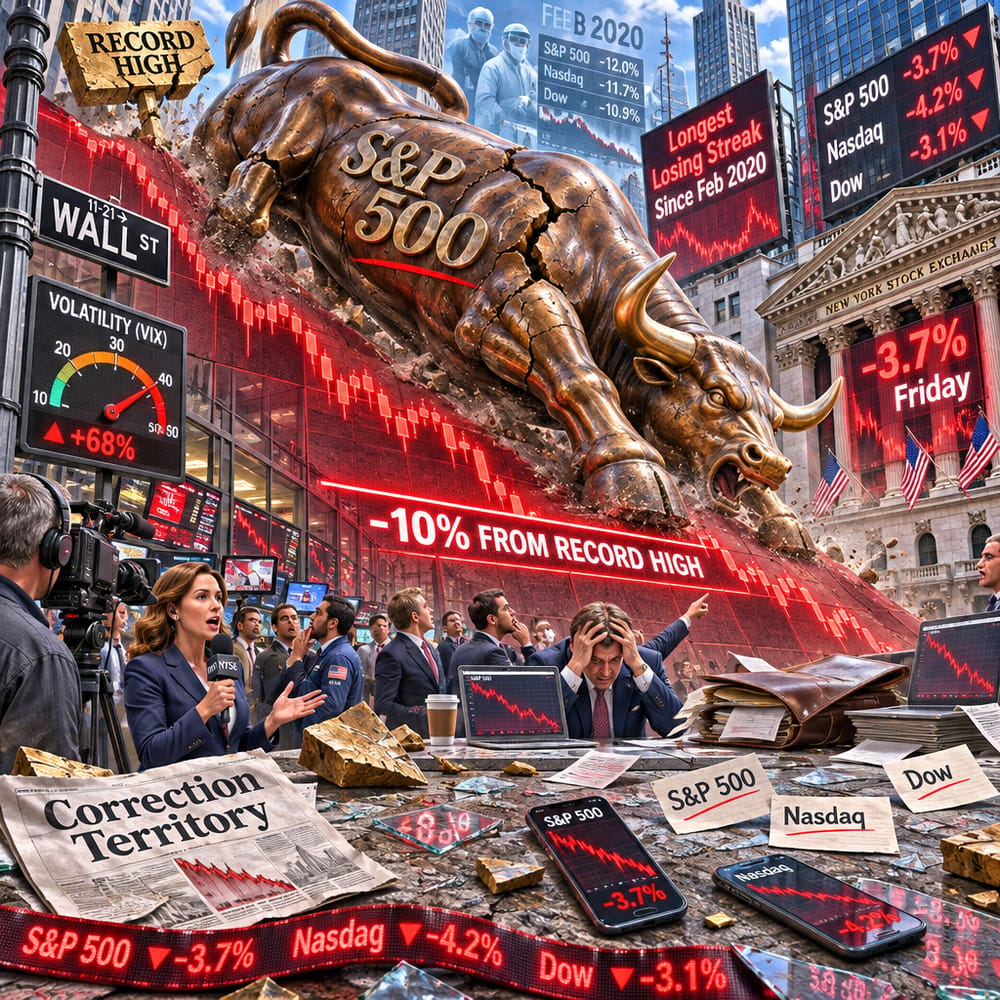
Remember that Saturday night when you wore your favorite shoes, only to lose a heel and limp home? Well, that's how the S&P 500 feels right now. It stumbled into correction territory this past Friday, falling a painful 3.7% and marking its longest losing streak since the infamous February of 2020. Investors are clutching their portfolios like a toddler with their favorite blanket, nervously watching for what comes next.
Why does this matter? Picture this: The S&P 500 is not just any index; it's like the thermometer of the U.S. stock market. When it's hot, everyone's feeling good. When it's cold, you might as well start bundling up. A correction—defined as a 10% drop from a recent high—signals that investor sentiment and market dynamics are shifting like tectonic plates before an earthquake. Whether it’s a mere tremor or the big one remains to be seen.
What’s gotten the market so spooked? There’s no single boogeyman hiding under the bed, but rather a ghastly ensemble cast. Rising interest rates, geopolitical tensions, and those ever-present fears of an economic slowdown are all causing investors to rethink their Netflix-and-chill approach to stock holdings. Like a bad plot twist, economic data hasn't changed dramatically, yet the market is reacting as if it's just discovered the protagonist's evil twin.
THE WALL STREET JITTERS
So, what now for the S&P 500? Investors are eyeing potential inflection points like a hawk scouting its next meal. The next support level—a technical term for the price level where the asset might stop falling and bounce back up—is being hotly debated among the suits. Some say it’s around the 4,100 mark, others are whispering numbers even lower. It's like guessing how low your teenager will sag their jeans; your guess is as good as theirs.
Meanwhile, the Nasdaq 100 is inching dangerously close to a bear market, defined by a 20% drop. Dip buyers—those brave souls who purchase stocks when prices are down—are hesitating. Bargains may abound, but nobody wants to catch a falling knife. They're waiting to see if this correction will turn into a full-on bull run’s evil twin—the dreaded bear market.
INVESTOR CONFIDENCE ON THE ROCKS
With the market on shaky ground, how’s your confidence holding up? Investors are beginning to sweat. It's like walking a tightrope over a pit of snapping alligators—exciting if you make it across, but nerve-wracking when you're teetering. Corrections can shake the faith of even the seasoned investor, but remember: historically, corrections are as common as awkward family dinners. Historically, they can serve as a market's much-needed breath of fresh air.
There’s a silver lining for those with nerves of steel and cash to spare. Market dips can be prime buying opportunities, much like snagging that designer jacket in the clearance bin. With valuation metrics pointing to bargains, some contrarian investors are rubbing their hands together in anticipation. Others, however, are sitting tight, licking their wounds, and waiting for clearer skies.
THE BIGGER PICTURE
So what's next? Investors are watching global economic developments with an eagle eye, considering everything from China's tech tango with the U.S. to wealth tax debates on American soil. The world feels like it's in a high-stakes poker game, with the U.S. and China embroiled in a tense rivalry while local governments are dealing with a growing wealth chasm.
The S&P 500's latest trip into the correction zone should serve as a wake-up call. Whether it jolts you into action or sends you into hiding depends on your comfort with a little chaos. If history is any guide, the market will find its footing again, just as you eventually replace your broken shoe.
In the meantime, keep those seatbelts fastened—markets, like life, are full of surprises.
This article is for informational purposes only and is not investment advice. Always do your own research or consult a licensed financial professional before making investment decisions.
© Copyright 2024. All Rights Reserved.
© Copyright 2024. All Rights Reserved.