

S&P 500 and Nasdaq Volatility Amid AI Concerns
Wednesday, November 18, 2026
WHEN AI HYPE MAKES THE MARKETS JITTERY
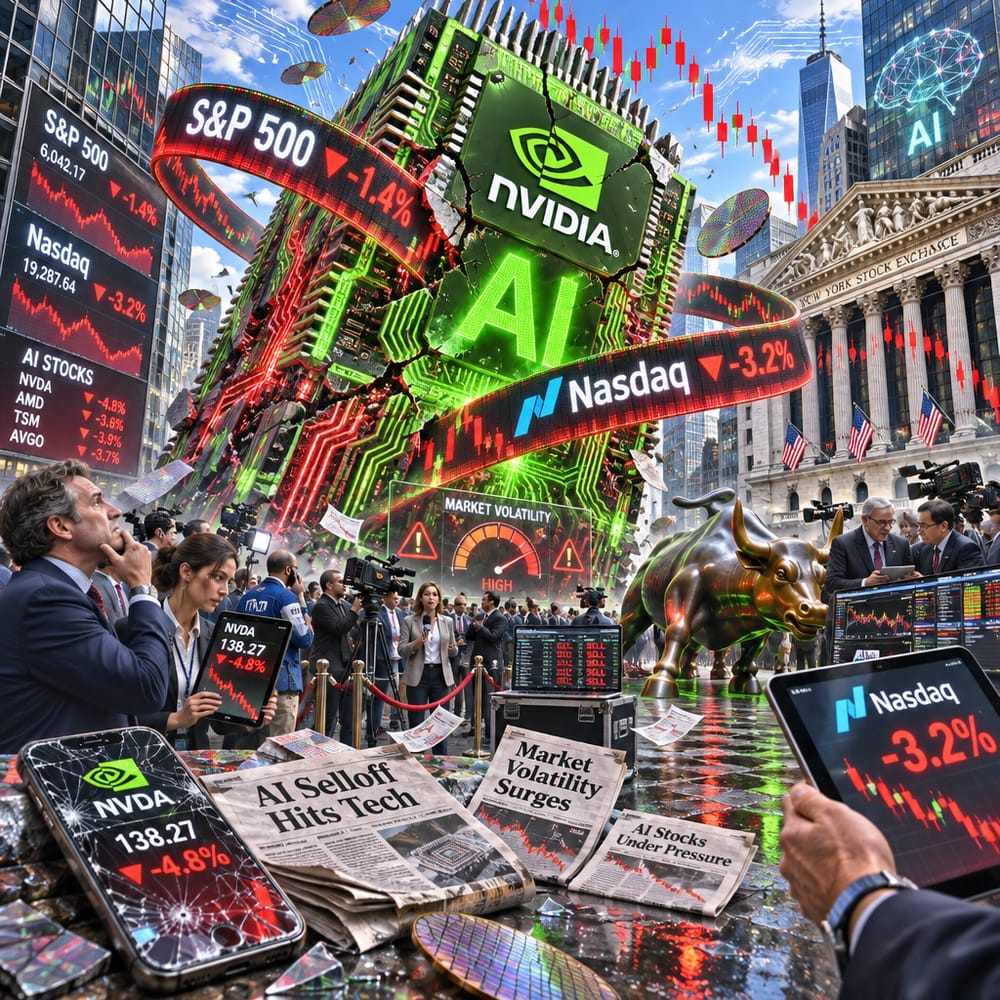
Hold onto your hats, folks. The rollercoaster that is Wall Street has us all clinging to the safety bar as the S&P 500 and Nasdaq make us question whether our retirement plans involve a yacht or a cardboard box. On November 17, the S&P 500 took a 1% nosedive, while the Nasdaq plummeted a dramatic 3.2%, thanks to some skittish AI-related stocks, with Nvidia leading the charge. It’s a see-saw of epic proportions, and we’re all just here for the ride, whether we like it or not.
WHAT'S FUELING THIS VOLATILITY?
You might wonder what's turning the market into a frenetic game of whack-a-mole. Well, friends, let's talk about the shiny tech giant Nvidia. Once the darling of the AI revolution, Nvidia is now experiencing a bit of an identity crisis. Following their CEO's untimely exit amidst some juicy scandals, the company is trying to find its footing. Nvidia's latest earnings report was supposed to be the hero we needed, surpassing all expectations. But investors, ever the pessimistic relatives at the family reunion, weren't sold. The stock price pulled a Houdini, disappearing by more than 2% in a trading session.
So, why all the hand-wringing over a single stock? Nvidia isn’t just any company; it’s the heart pumping silicon through the veins of the AI industry. When it catches a cold, the tech sector sneezes, and the sneeze this week echoed through the halls of the S&P and Nasdaq with resounding volatility.
AI'S INFLUENCE ON THE MARKETS
AI has been the golden goose laying golden eggs for investors this past decade, promising to revolutionize industries and mint millionaires out of the bold and foresighted. But now, Wall Street's enthusiasm is starting to crack. The AI hype train is losing steam, and with it, Nvidia's market value is evaporating faster than an ice cube in the Sahara—$2 trillion gone in a blink. It's like watching your favorite tech drama unfold, only this time, the stakes are your 401(k).
The Federal Reserve isn't helping to calm the waters, either. With whispers of AI contributing to inflation risks, the Fed’s rhetoric sounds like a concerned parent imposing a curfew on a teenager—necessary but definitely not welcomed. The fear is that AI-driven demand might send inflation soaring faster than a SpaceX rocket, prompting more interest rate hikes. Spoiler alert: Wall Street doesn't like surprises, especially the kind that come with rising rates.
WHAT SHOULD INVESTORS KEEP AN EYE ON?
For those of us trying to decipher whether this is a passing storm or the beginning of the AI market's autumn, there are a few key pieces to watch. Keep an eye on Nvidia’s next moves, not just in leadership but in strategy. As the new interim CEO Colette Kress tries to steer this ship through turbulent waters, investor confidence will hinge on her ability to keep the company’s AI dominance intact without the star power of Jensen Huang.
Next up, the broader AI funding trends. The money faucet that fueled AI's rapid growth is tightening, and if funding continues its downward spiral, more turbulence could be on the horizon.
And let’s not forget the Federal Reserve. Their decisions on interest rates in the face of AI-induced inflation risks will set the tone for the markets in the coming months. Like a particularly stern school principal, their policies could either rein in the chaos or add fuel to the fire.
THE BOTTOM LINE
In the grand tapestry of market history, these AI-related swings might be just a colorful stitch. But they remind us of the market’s fickle nature, where yesterday's darling can become today's pariah at the drop of a hat. As always, the savvy investor has to keep one eye on the headlines and one eye on the long-term goals. Whether AI’s current rollercoaster leads to the next big drop or a triumphant ascent, only time will tell. In the meantime, maybe keep that cardboard box handy—just in case.
This article is for informational purposes only and is not investment advice. Always do your own research or consult a licensed financial professional before making investment decisions.
© Copyright 2024. All Rights Reserved.
© Copyright 2024. All Rights Reserved.