

S&P 500 and Nasdaq Slip for Second Day — Tech Drag Amid Iran Tensions, Oil Swings
Tuesday, August 11, 2026
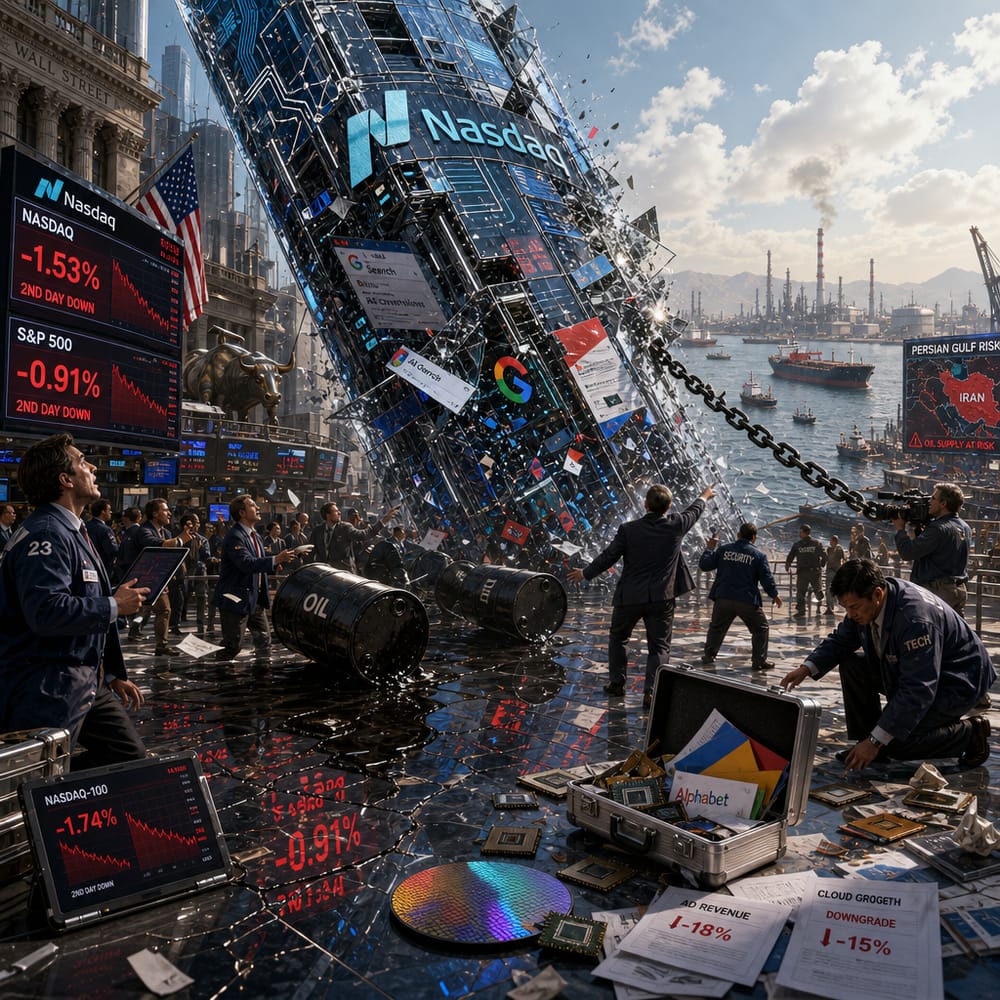
There’s nothing like a geopolitical cocktail mixed with a tech sector hangover to sour the mood on Wall Street. And this week, the S&P 500 and Nasdaq have been sipping from that concoction, slipping for the second day straight. You might be wondering why those market indices, which usually operate like a fine-tuned machine, have hit a bit of a snag. Well, grab your favorite beverage and let’s dive into this market melodrama.
First things first. Picture this: a bar brawl breaks out, but with stocks instead of fists. The tech sector, usually the flashy superstar everyone’s watching, stumbled in the midst of the chaos. Alphabet, the parent company of Google, and others in tech took a nosedive, pulling major indices along for the wild ride. Alphabet alone dropped nearly 4%, marking its fourth losing session in a week. It’s like your favorite sports team suddenly forgetting how to play their game. Not the best look.
You see, the tech sector isn’t just another player on Wall Street; it’s more like the star quarterback. When tech sneezes, the rest of the market catches a cold. And right now, tech seems to be battling a case of the flu. So why the slump? Alphabet’s ongoing reshuffling of its AI divisions has investors feeling jittery. Imagine your co-pilot suddenly switching seats with the flight attendant mid-flight. A bit unsettling, right?
Now, none of this is happening in a vacuum. Enter stage left: geopolitical tensions. The Strait of Hormuz, a critical choke point for global oil shipments, is embroiled in a diplomatic standoff involving the U.S. and Iran. Think of it as an international tug-of-war with a whole lot of oil at stake. The uncertainty over whether or when things will calm down has oil prices playing seesaw, swinging between $87 and $90 per barrel. Such swings aren’t just about numbers; they’re like ripples in a pond, spreading to touch everything from transportation costs to consumer prices.
This uncertainty over oil isn’t just a sidebar—it’s a headline. Any rumble in the oil market can send shivers through global stock markets. Investors hate uncertainty like a cat hates water. The idea that Iran might keep the Strait of Hormuz closed has folks on Wall Street sleeping with one eye open. When peace talks stall, optimism dwindles, and so does investor sentiment—fast.
But let’s not give tech and geopolitical jitters all the limelight. The broader market scene is sprinkled with bits and pieces from various sectors that aren’t helping either. Take Nvidia, for instance. The chipmaker has been busy shaking hands with asset managers to bankroll data centers like they’re the new skyscrapers, all while dealing with competition from China. It’s a massive gambit, and while it may sound like a plotline from a techno-thriller, it’s serious business that has investors on edge.
Meanwhile, even old-school sectors are feeling the pinch. General Motors just inked a deal worth up to $4.5 billion to sidestep supply chain snafus—a reminder that even giants have to tiptoe through today’s economic minefield. These are the kinds of moves that keep Wall Street on its toes in a world where nothing stays the same for long.
So why should you, the everyday investor, care about all these market tremors? Simple. It underscores just how sensitive markets are to both global news and sector-specific hurdles. Understanding these dynamics can help you stay ahead of the game instead of being blindsided by headlines.
In other words, consider it a crash course in market sociology—how the behaviors and decisions of a few sectors and global powers can ripple across the stock market, affecting your portfolio’s health. And while today's landscape might seem like an unpredictable rollercoaster, remember, being informed is the best seatbelt you’ve got.
There you have it. A day in the life of the market where tech stumbles, geopolitics heat up, and everyone else tries to keep their cool. Keep your eyes sharp and your fingers crossed, because who knows what tomorrow’s headlines will bring?
This article is for informational purposes only and is not investment advice. Always do your own research or consult a licensed financial professional before making investment decisions.
© Copyright 2024. All Rights Reserved.
© Copyright 2024. All Rights Reserved.