

S&P 500 and Nasdaq Reach Record Highs Amid Easing Yields and Oil Prices
Wednesday, October 07, 2026
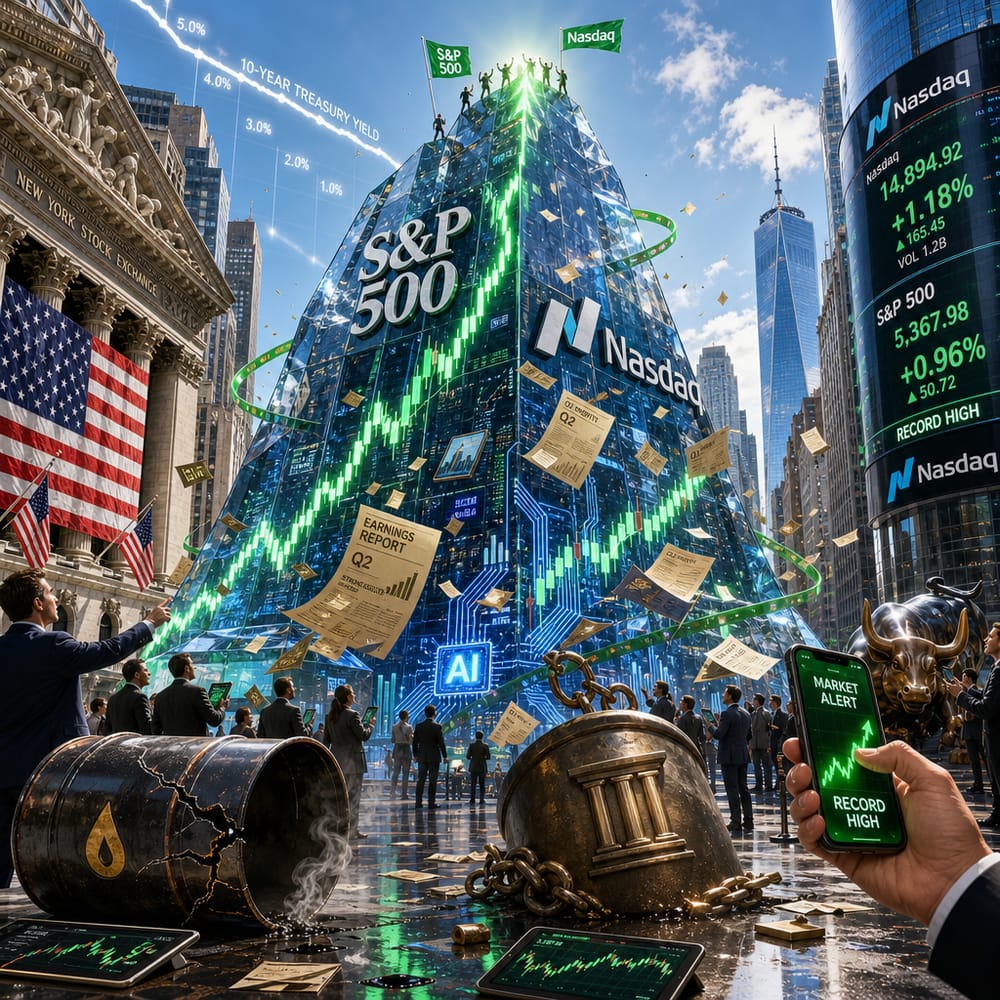
S&P 500 and Nasdaq Reach Record Highs: Are You Riding the Market Wave or Watching from the Shore?
If stock market highs were a party, the S&P 500 and Nasdaq just blew the roof off. On October 6, these indices waltzed to all-time highs, leaving us all to wonder if this is the start of something big or just another market tease. Spoiler alert: there’s more than one reason behind this dance, and you might want to stay tuned.
First off, let’s talk about Treasury yields. If you've been watching the financial rollercoaster, you know these are like the mercurial friend who can either make or break your weekend plans. Recently, the 10-year Treasury yield took a friendly plunge after a solid bond auction got everyone excited. Why does this matter? Well, when yields drop, borrowing costs typically go down, giving companies more financial room to maneuver—and investors more reasons to be optimistic.
And speaking of optimism, our good friends in the tech world, specifically those dabbling in artificial intelligence, are playing a major role in the market's recent high spirits. AI is the kind of hot topic that has investors drooling like kids in a candy store. Companies like Meta are making waves with new AI tools that are not just trendy but also potentially transformative. In fact, the buzz surrounding AI is so electrifying, it's got tech stocks soaring faster than a SpaceX rocket.
But let’s not forget about the other usual suspect—oil. Oil prices have been on a downward trend, relieving some pressure. With lower oil prices, you get a break at the pump and a breather for the broader economy. When energy costs are down, everyone from airlines to manufacturers gets a little more wiggle room, and that’s a good thing for stock indices.
So, what does all this mean for the future market trends? Here’s the scoop: a combination of lower yields, bullish tech moves, and softer oil prices creates a cocktail that can keep the party going, at least for now. But, just like any high school dance, the question is whether the music will keep playing or if the lights will come on sooner than we’d like.
Let's not ignore the elephant in the room: the macroeconomic shifts. The current optimism is dancing on the thin ice of geopolitical tensions, potential interest rate hikes, and economic policy updates. Sure, we've hit record highs, but remember, what goes up can come down, especially if any of these factors decide to rain on our parade.
As for AI and tech sectors, they’re not just influencing market sentiment; they're driving it like a Mustang on the open road. Investors are starry-eyed over the potential growth, scalability, and profitability AI promises. The tech sector's current influence on the market is like having a rockstar lead singer—it's hard to imagine the show without them. But with great power comes great responsibility (thanks, Spider-Man), and tech firms need to keep innovating to maintain investor confidence.
For the average retail investor scrolling through their feed, here’s your takeaway: keep an eye on how Treasury yields fluctuate and how that impacts borrowing and spending. Watch oil prices like a hawk, especially with environmental and geopolitical factors constantly in flux. And, as always, keep your ear to the ground for the latest in tech developments, because that's one train you don't want to miss if it continues its current trajectory.
The market is like a giant game of chess, and these record highs are just one move. Whether you're buying, holding, or just spectating, remember that while highs are thrilling, it's the strategy that wins the game. Now, armed with this knowledge, you can decide whether you're ready to ride the wave or prefer watching the spectacle from the shore. Either way, it's an exciting time in the market, and who doesn’t love a bit of suspense?
This article is for informational purposes only and is not investment advice. Always do your own research or consult a licensed financial professional before making investment decisions.
© Copyright 2024. All Rights Reserved.
© Copyright 2024. All Rights Reserved.