

Russia's New Crypto Regulations: Impact on Global Markets
Tuesday, August 18, 2026
RUSSIA'S NEW CRYPTO REGULATIONS: IMPACT ON GLOBAL MARKETS
Hold onto your digital wallets, folks—Russia's financial overlords have rolled out a crypto plot twist that even the savviest investor didn't see coming. The Bank of Russia is shaking down the crypto arena with a new set of rules that could ripple through the digital coins like a rock concert through an unplugged amp.
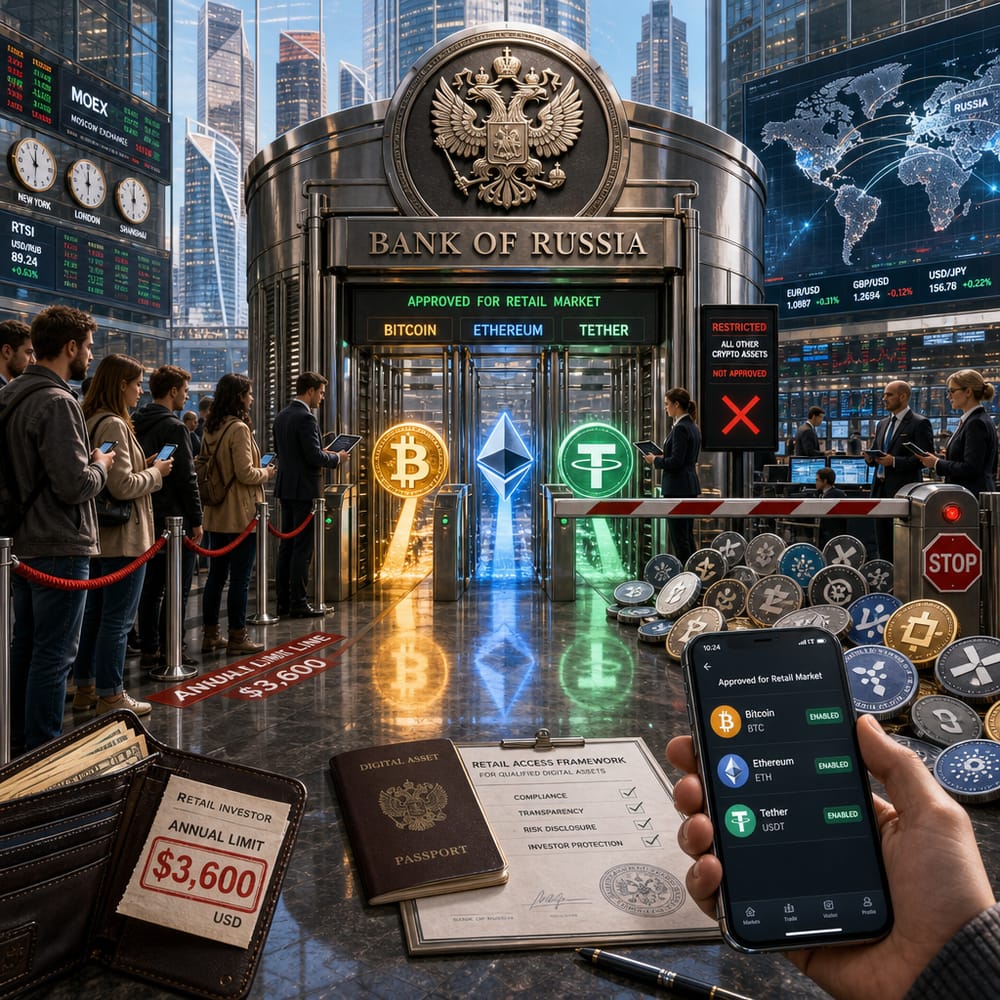
Picture this: starting soon, if you're a Russian crypto enthusiast, your playground just shrank. You’re only allowed to trade three coins—Bitcoin, Ethereum, and Tether. And don't go dreaming about becoming the next crypto tycoon, because there's a catch—an annual spending cap of $3,600. So, unless you fancy reimagining Scrooge McDuck dives, you'll be counting your satoshis.
But why does this matter to the rest of the globe, you ask? Well, imagine the world of cryptocurrency as one ginormous rock pool. A single splash in Moscow could send ripples that are felt from Wall Street to Silicon Valley.
Let's break it down: How might these regulations drop-kick global crypto trading volumes? Russia is no small player in the crypto game. With its tech-savvy population and an icy fondness for bypassing traditional banking systems, Russia's crypto scene is thriving like a bunch of cryptos on a bullish streak. Capping transactions could mean traders run out of steam halfway through their crypto pilgrimage, potentially lowering global trading volumes and putting a damper on the whole market's vibe.
And it’s not just the Bitcoin cowboys who should be bracing—stablecoins like Tether could find themselves under a fresh wave of scrutiny. If Russia's move is seen as a prelude to other nations getting tough on stablecoins, we might witness a global regulatory domino effect. Picture this: one minute, you're sipping your morning coffee scanning crypto headlines, the next, the entire landscape is shifting beneath your feet.
But here’s the million-dollar question—or should I say, the Bitcoin question: Could this lead to similar regulatory actions in other countries? In a word, maybe. Countries worldwide are playing a game of regulatory catch-up, eyeing crypto's wild west with both intrigue and suspicion. Russia's move could embolden other nations to tighten the reins, especially if they’ve had crypto regulatory plans simmering on the backburner.
Look to Europe, for instance. Historically, they’ve loved their regulations like New Yorkers love their pizzas—thick, layered, and all-encompassing. If Europe's regulatory bodies catch wind of Russia's game plan, we might be in for a regulatory race to see who can draft the most comprehensive crypto rulebook.
Meanwhile, across the pond, Uncle Sam might be watching closely. The U.S., with its own history of financial oversight, could leverage Russia's actions as a prototype—or a cautionary tale—for its own crypto governance. After all, if there's one thing regulators worldwide fear, it's the unknown beast that is unregulated crypto.
And let's not forget the markets themselves. Crypto investors, notoriously swift in reacting to even the faintest whiff of news, could pivot strategies quicker than you can say "blockchain." We might see a surge in demand for Bitcoin and Ethereum as investors reshuffle portfolios to align with Russia's new rules, inadvertently boosting their prices.
But here's the twist in the tale: this isn't just a story about regulations. It's about the untamed spirit of digital currencies and the eternal tug-of-war between innovation and regulation. Crypto isn’t just currency—it's a catalyst for discussions about freedom, oversight, and the very nature of value in our digital age.
So, as Russia redraws the crypto map, it’s time for investors worldwide to stay sharp, stay informed, and keep an eye on the road ahead. Because in this digital financial wild west, every new regulation is a fresh plotline in the unfolding saga of cryptocurrency. Grab your digital popcorn, folks—it’s going to be one heck of a show.
This article is for informational purposes only and is not investment advice. Always do your own research or consult a licensed financial professional before making investment decisions.
© Copyright 2024. All Rights Reserved.
© Copyright 2024. All Rights Reserved.