

Russia's Crypto Trading Restrictions
Wednesday, August 12, 2026
RUSSIA'S CRYPTO TRADING RESTRICTIONS: A CRYPTO COLD WAR?
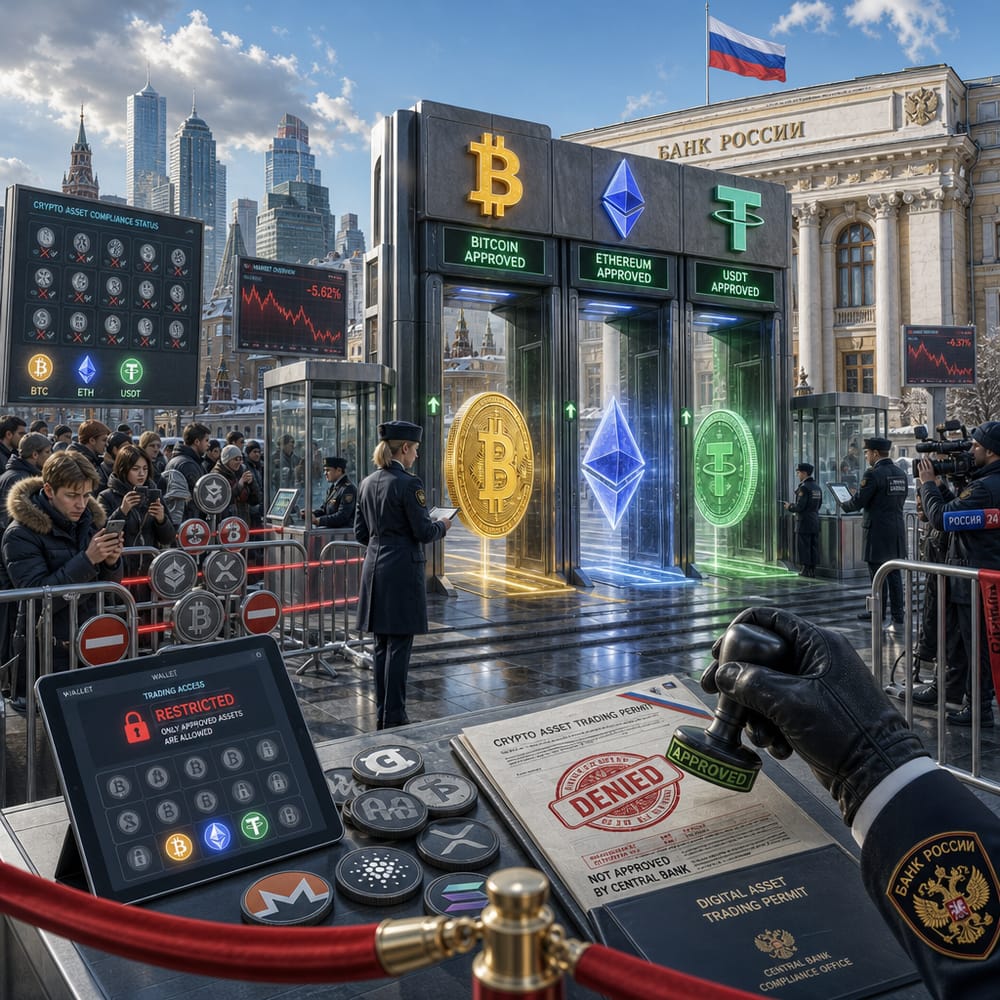
Once upon a time, in the mystical land of vodka and nesting dolls, Russia decided it was time to stir the crypto pot. Picture this: A vast nation with a love for borscht and ballet suddenly grabs a ladle and starts spooning out crypto restrictions like they're serving up the latest delicacy at the Kremlin buffet. But, instead of salad, they’re serving a selective crypto menu. Only Bitcoin, Ethereum, and USDT make it to the table. The rest? Left out in the cold.
WHY BITCOIN, ETHEREUM, AND USDT?
Let’s dive into why Russia swung the axe this way. The short answer? Trust and stability. Bitcoin and Ethereum are the prom king and queen of the crypto world, tried and true with a global fan club. They're not the quirky altcoins that pop up like digital Whac-a-Moles. Russia wants to keep things neat, tidy, and predictably cha-ching.
USDT, the trusty stablecoin, keeps the party from going haywire with its 1:1 peg to the U.S. dollar. It's the crypto equivalent of bringing a designated driver to a rowdy party. It keeps things…well, stable.
But, of course, in Mother Russia, things aren’t always as they seem. The geopolitical backdrop can't be ignored. With bitcoin and friends dominating international waters, it’s no surprise Russia is strategically picking players that let it dance with the global crypto community without stepping on too many toes.
THE FROSTY FATE OF ALTCOINS
Now, imagine being an altcoin in Russia. One minute, you're the star of your own start-up saga; the next, you’re ghosted like a bad Tinder date. These lesser-known cryptocurrencies are, quite frankly, left to fend for themselves. Volume could drop, liquidity might shrivel, and market cap? Let’s just say it’s not looking great.
For retail investors who have dabbled in these digital underdogs, it's a moment of reckoning. Diversification in the Russian crypto landscape has suddenly become as scarce as a Siberian tiger. Investors may find themselves scrambling to reallocate and strategize around this new, limited offering.
GLOBAL RIPPLE EFFECTS
Russia isn’t just playing chess with its own crypto market; it’s throwing a pebble into the global pond. Other nations are watching closely, trying to decide if they too should narrow their crypto focus or maintain an open-door policy for all digital currencies. This selective regulation approach could become the next big trend, reshaping how countries view and regulate cryptocurrency.
For the crypto world at large, Russia’s decision could ignite a domino effect. Countries with shaky economic structures might see the appeal in curbing crypto options to stabilize their own financial environments. On the flip side, the free-market-maximalists might double down on open platforms, capitalizing on what they see as an opportunity to snatch up crypto refugees.
THE REGULATORY BALANCING ACT
Can the Russian bear teach the rest of the world a lesson in crypto discipline? Or will it backfire like an oligarch’s yacht party gone wrong? The answer could lie in how effectively Russia manages this new crypto landscape and the economic ripples that follow.
As the digital currency realm navigates these murky waters, global regulatory bodies are left with a bundle of questions. Should they impose a degree of control like Russia? Or allow the cryptos to roam free, like digital nomads on the blockchain frontier? Whatever the choice, the move has made clear one thing: the crypto regulatory race is on, and Russia just made a bold, albeit restrictive, move.
So, hang tight, fellow crypto-watchers. In a world where digital currencies are still charting their course, the map just got a little more complicated. Whether this restriction is a savvy strategic maneuver or just a bureaucratic blunder, one thing’s certain: the world of cryptos is never dull. Buckle up, the digital rollercoaster is just warming up.
This article is for informational purposes only and is not investment advice. Always do your own research or consult a licensed financial professional before making investment decisions.
© Copyright 2024. All Rights Reserved.
© Copyright 2024. All Rights Reserved.