

Russia's Crypto Trading Cap Proposal
Sunday, August 16, 2026
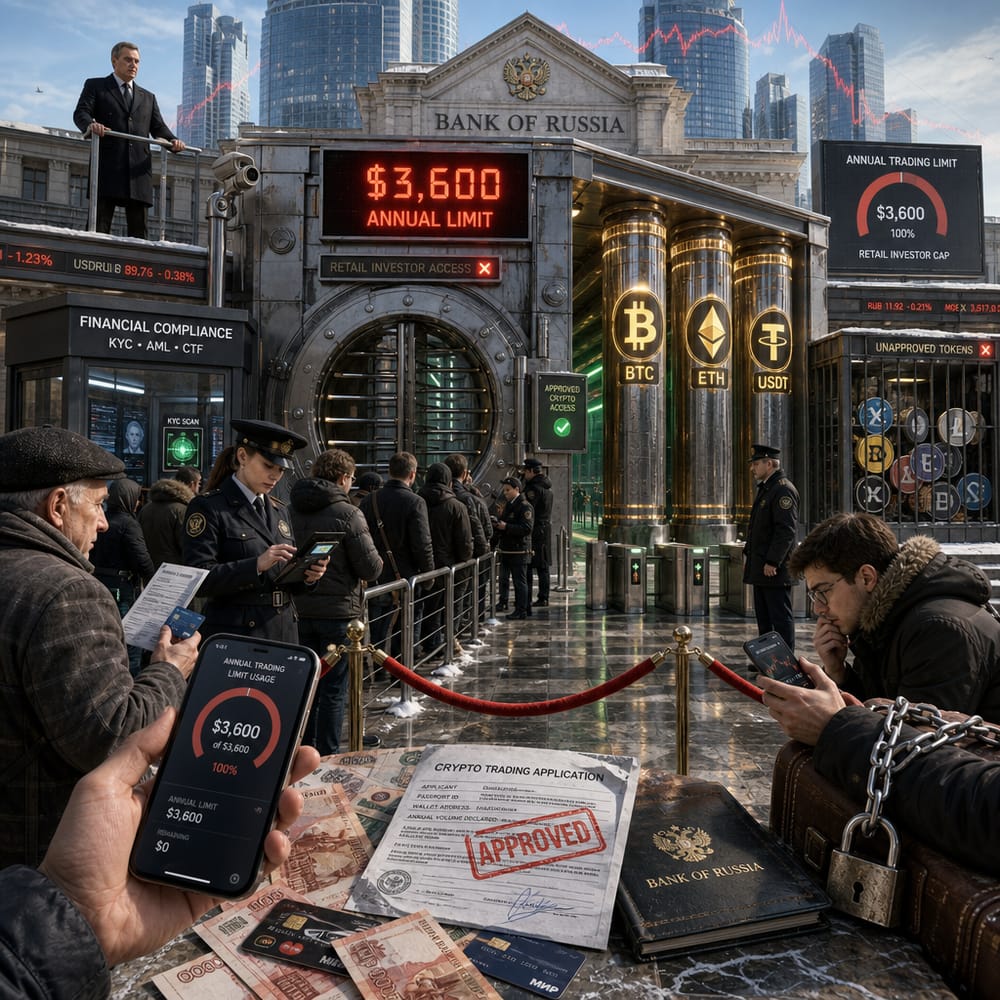
RUSSIA'S CRYPTO TRADING CAP PROPOSAL: A GAME-CHANGER FOR GLOBAL MARKETS?
So, Russia's central bank wants to play chaperone at the crypto party, and it's not everyone's idea of a good time. The new directive on the table? Let retail investors trade only three cryptos—Bitcoin, Ethereum, and Tether—and slap a modest $3,600 annual cap on them. Yes, you read that right. You can spend more on a fancy espresso machine than on your crypto trades in Mother Russia. But what's behind this move, and why should you care? Let's take a closer look.
First things first: Why the cap? Well, Russia’s central bank seems to be channeling its inner helicopter parent, trying to protect its citizens from the wild volatility of the crypto world. It's a universe where Bitcoin can nosedive faster than your heart rate after a triple espresso, and Ethereum can shoot to the moon quicker than you can say "blockchain."
But let's decode what this really means. Crypto trading in Russia isn't some niche hobby. The nation isn't just famous for its vodka and ballet; it's also a heavyweight in the crypto arena. The new rules could put a serious damper on trading volumes, which means fewer rubles flowing into the crypto nuts and bolts. That's like telling a Lamborghini driver they can only use the first gear. Sure, they can still drive, but that adrenaline-pumping thrill? Gone.
How might Russian traders react? Well, savvy investors might resort to alternative means. Think VPNs and international exchanges where the grass, or rather the crypto, is greener, with no annual caps. However, for your average Joe in Moscow, this might mean less dabbling in digital currencies and more conventional investments—or perhaps more samplings of heavy metal bands. Who knows?
But here's where it really gets spicy: What does Russia's crypto clampdown mean for the global market? The crypto world is like a tightly knit sweater; pull a thread in one part, and the whole thing shifts around. If Russia, one of the top global players, sneezes, the rest of the crypto world catches a cold.
Some might argue that limiting trade to Bitcoin, Ethereum, and Tether could bring more stability to these specific markets. Think of it as corralling the wild stallions of crypto into a stable. But on the flip side, having fewer players in the game might cut down on innovation and liquidity. And, let's face it, innovation is the secret sauce that keeps the crypto stew bubbling with excitement.
So, does this mean the end of Russian influence on global crypto markets? Not quite. Even with the proposed cap, Russia's crypto ties remain too deeply ingrained to be completely severed. However, it might see a dip in its crypto clout, with other countries stepping in to fill the proverbial vacuum. Picture Brazil or India, places with growing crypto enthusiasm, stepping up their game. As one door closes, another opens. It's the beauty of a decentralized market.
Russia's move also raises a big question for other nations: How much regulation is too much? Thoughtful regulation can protect investors, but go too heavy, and you risk suffocating a burgeoning industry. It's an intricate balancing act akin to crafting the perfect cocktail—too little, and it’s bland; too much, and it’s undrinkable.
For global investors, this development is a stark reminder: the world of crypto is dynamic, unpredictable, and often at the mercy of governmental whims. Anyone with skin in the game must keep abreast of geopolitical currents because today's friendly trading waters can become tomorrow's tempestuous seas.
In the end, will Russia’s proposal be the trendsetter in a wave of crypto regulation, or a cautionary tale of overreach? Only time will tell. But one thing is clear: the crypto narrative is far from over, and as retail investors, we're all characters in this unfolding thriller. So, buckle up and keep your crypto radar tuned. The ride is just getting started.
This article is for informational purposes only and is not investment advice. Always do your own research or consult a licensed financial professional before making investment decisions.
© Copyright 2024. All Rights Reserved.
© Copyright 2024. All Rights Reserved.