

Russia's Central Bank Limits Crypto Trading to BTC, ETH, and USDT
Sunday, August 16, 2026
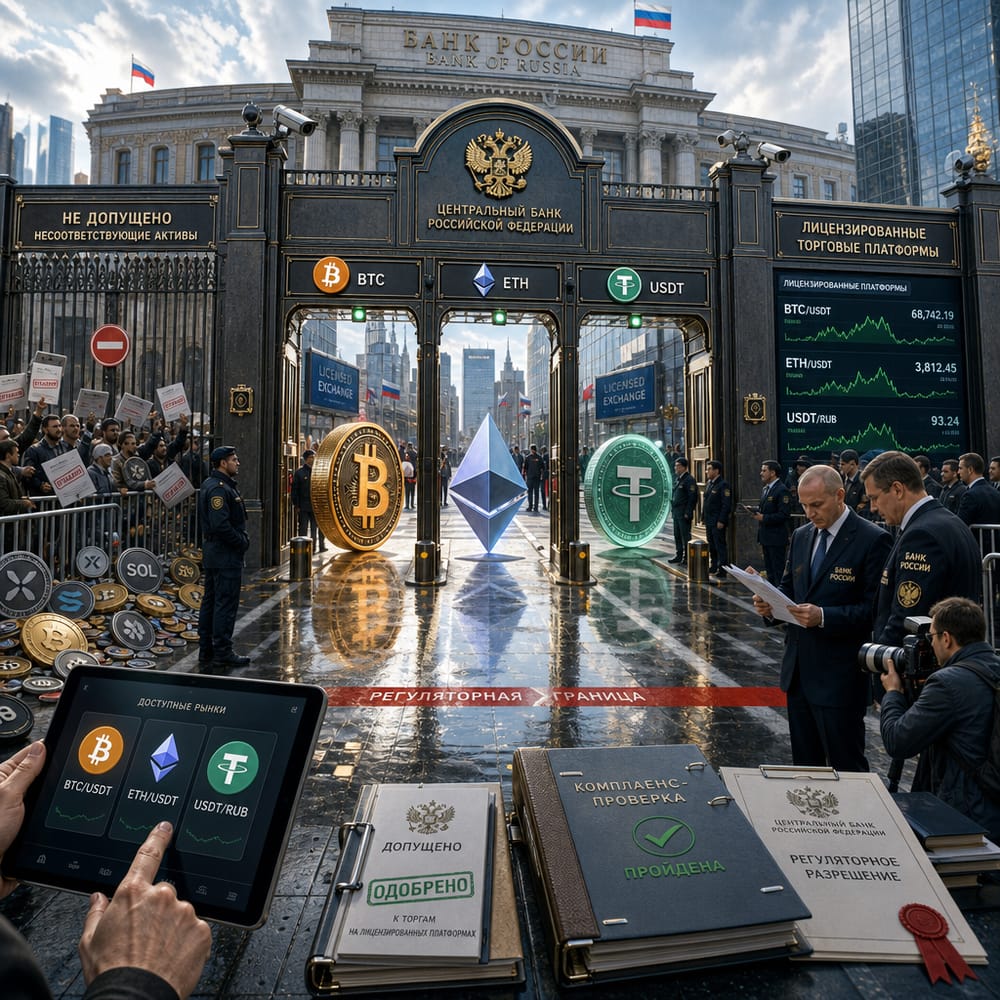
WHEN BITCOIN IS THE ONLY DANCE AT THE PARTY: RUSSIA'S CRYPTO CRUNCH
Picture this: You're at a bustling potluck, and someone brings out a platter of the finest caviar. But instead of letting everyone have a taste, only three people at the party get to indulge. That's essentially what’s happening in Russia with crypto. The Bank of Russia, with the finesse of a strict headmaster, has decreed that only Bitcoin, Ethereum, and Tether's USDT can be traded on licensed Russian exchanges. The rest of the altcoin party? Sorry, folks, your invite got lost in the mail.
So why should you care about what Russia's doing with its crypto dance card? Well, for starters, Russia isn't just a player; it's a heavyweight in the global crypto arena. When a big fish like this makes a splash, ripples spread far and wide.
The first question on everybody’s mind: What happens to the altcoin underdogs? With Russia's regulatory crackdown, the altcoin market is inevitably going to feel the pinch. Imagine being at a concert where only the headliners get to perform—the rest of the acts lose exposure, fans, and, most importantly, revenue. Similarly, altcoins could see a significant dip in liquidity—basically, fewer people buying and selling them—which can lead to price slumps or what some may call an altcoin winter. And if you're an altcoin investor, you might want to brace yourself for a rollercoaster ride that's less Disney World and more Six Flags.
But let’s look at the broader picture. Russia’s move might just be the tip of the iceberg when it comes to global regulatory trends. Other countries are watching closely, and they might just decide to jump on the bandwagon. It's the financial equivalent of your neighbors watching you put up a shiny new fence and deciding they need one too. Tighter regulations could become the fashion statement of the crypto world, leading to a more standardized and perhaps less chaotic market. But while regulations aim for stability, they can also stifle innovation.
Now, let’s talk strategy—because what’s a dance without a plan? Bitcoin, Ethereum, and Tether aren’t just the golden trio by accident. Bitcoin is the seasoned rock star, the Mick Jagger of crypto, if you will. It’s been around, seen the highs, the lows, and it's still packing stadiums. Ethereum, on the other hand, is the innovative artist, always reinventing itself with smart contracts and decentralized apps. And then there’s Tether, the steady and reliable bassist, offering stability with its value pegged to the dollar.
For investors, this trio is like the holy grail of "safe" crypto bets amid a sea of uncertainty. While not exactly risk-free—because let’s face it, if you want risk-free, you're better off with a savings account—these are the assets that currently have the green light in Russia. If you’re playing the long game, aligning your portfolio with these heavyweights could be a savvy move.
But what about the rest of the crypto world? Is this just a temporary buzzkill or a long-term shift? The truth is, it's anyone's guess. Cryptocurrencies are infamous for their volatility and unpredictability. Today’s villain might be tomorrow’s hero. And while Russia's stance could trigger a domino effect, it might also galvanize the crypto community to adapt and innovate. After all, necessity is the mother of invention, and the digital world moves at breakneck speed.
In conclusion, Russia’s crypto clampdown is more than just a regulatory footnote; it’s a seismic shift with potential ripple effects. Altcoin investors might feel the squeeze, but for Bitcoin, Ethereum, and Tether, Russia just rolled out the red carpet. As for global markets, the playbook is still being written. So buckle up, keep your eyes peeled, and remember: in the world of crypto, anything can happen.
This article is for informational purposes only and is not investment advice. Always do your own research or consult a licensed financial professional before making investment decisions.
© Copyright 2024. All Rights Reserved.
© Copyright 2024. All Rights Reserved.