

Russia Proposes Limiting Licensed Crypto Trading
Monday, August 17, 2026
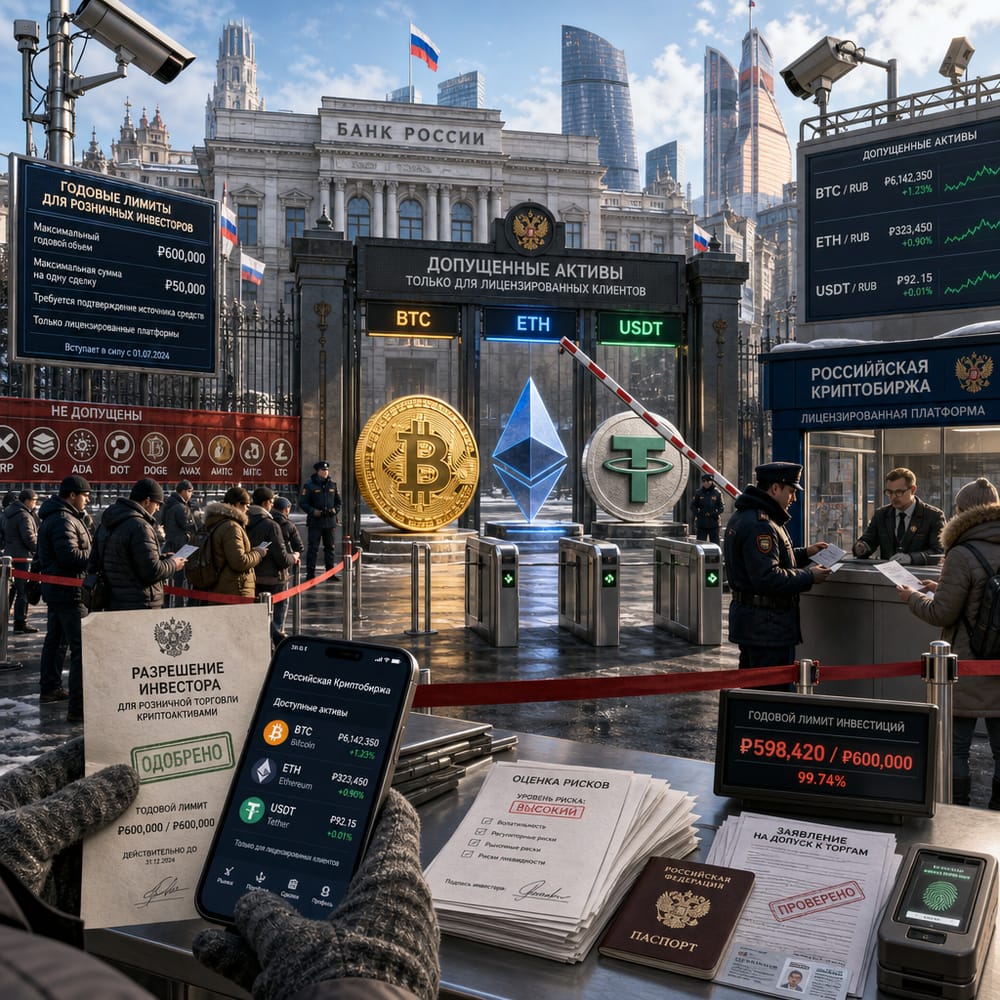
RUSSIA PROPOSES LIMITING LICENSED CRYPTO TRADING
Hold on to your digital wallets, folks, because Russia is gearing up to drop a crypto bombshell that could shake up the entire market. The Bank of Russia just proposed a new directive that would put a cap on licensed crypto trading, limiting it to the big three: Bitcoin (BTC), Ethereum (ETH), and Tether (USDT). So, why these three digital darlings, and what does this mean for the rest of the crypto universe? Let's dive in.
THE TRIO OF CHOICE
If you're wondering why the Bank of Russia chose Bitcoin, Ethereum, and Tether, you're not alone. It's like picking the star players in a crypto all-star game. Bitcoin, the OG of cryptocurrencies, is the digital equivalent of gold. It's a household name and the most widely recognized cryptocurrency. Ethereum, with its smart contract capabilities, has become the backbone for thousands of decentralized applications, making it indispensable in the crypto world. Tether, on the other hand, is a stablecoin, pegged to the U.S. dollar, and is often used as a safe harbor in the volatile crypto seas.
These heavyweights were likely chosen because they have established themselves as relatively stable and reliable – a far cry from the wild and unpredictable ride of altcoins, or alternative cryptocurrencies. With its new proposal, Russia is essentially rolling out the red carpet for the blue-chip stocks of crypto, leaving the altcoin underdogs wondering if they'll ever get their moment in the sun.
THE ALTCOIN CONUNDRUM
Now, let's talk about the crypto critters left out in the cold. Altcoins like Dogecoin, Cardano, and Solana have been making headlines for their dramatic price surges and loyal followings. But Russia's move could send their markets into a tailspin.
By limiting investment options to Bitcoin, Ethereum, and Tether, Russia might inadvertently shrink the demand and liquidity for these lesser-known coins. Investors who were once bullish on the next big altcoin could shy away, fearing regulatory backlash or diminished returns. It's like being at a party where only the cool kids get invited to dance, while the rest are left hanging around the punch bowl.
A GLOBAL RIPPLE EFFECT?
Here's where things get really interesting. Russia's regulatory proposal might not just be a local affair – it could set off a worldwide chain reaction. If other countries see this as a blueprint for managing the crypto craze, we could see similar regulations popping up across the globe. The result? A more homogenized crypto market dominated by a few giants, with altcoins fighting an uphill battle for recognition and investment.
Moreover, this move might add fuel to the fire for governments already wary of the anonymous and decentralized nature of cryptocurrencies. As they pursue stricter regulations, we might see a tug-of-war between innovation and control, with crypto enthusiasts caught in the middle.
FINAL THOUGHTS
As with any major regulatory shift, it's hard to predict exactly how this will play out. Will altcoins rise to the challenge, proving their worth in an increasingly restrictive landscape? Or will they fade into the background, overshadowed by the might of Bitcoin, Ethereum, and Tether? One thing's for sure: the world of crypto is never short on drama and intrigue.
So, whether you're a Bitcoin maximalist or an altcoin evangelist, keep your eyes peeled on Russia's regulatory dance moves. They might just change the game for everyone in the crypto arena.
This article is for informational purposes only and is not investment advice. Always do your own research or consult a licensed financial professional before making investment decisions.
© Copyright 2024. All Rights Reserved.
© Copyright 2024. All Rights Reserved.