

Russia Moves to Legalize Regulated Retail Crypto Trading—but Only for BTC, ETH, and USDT
Monday, August 17, 2026
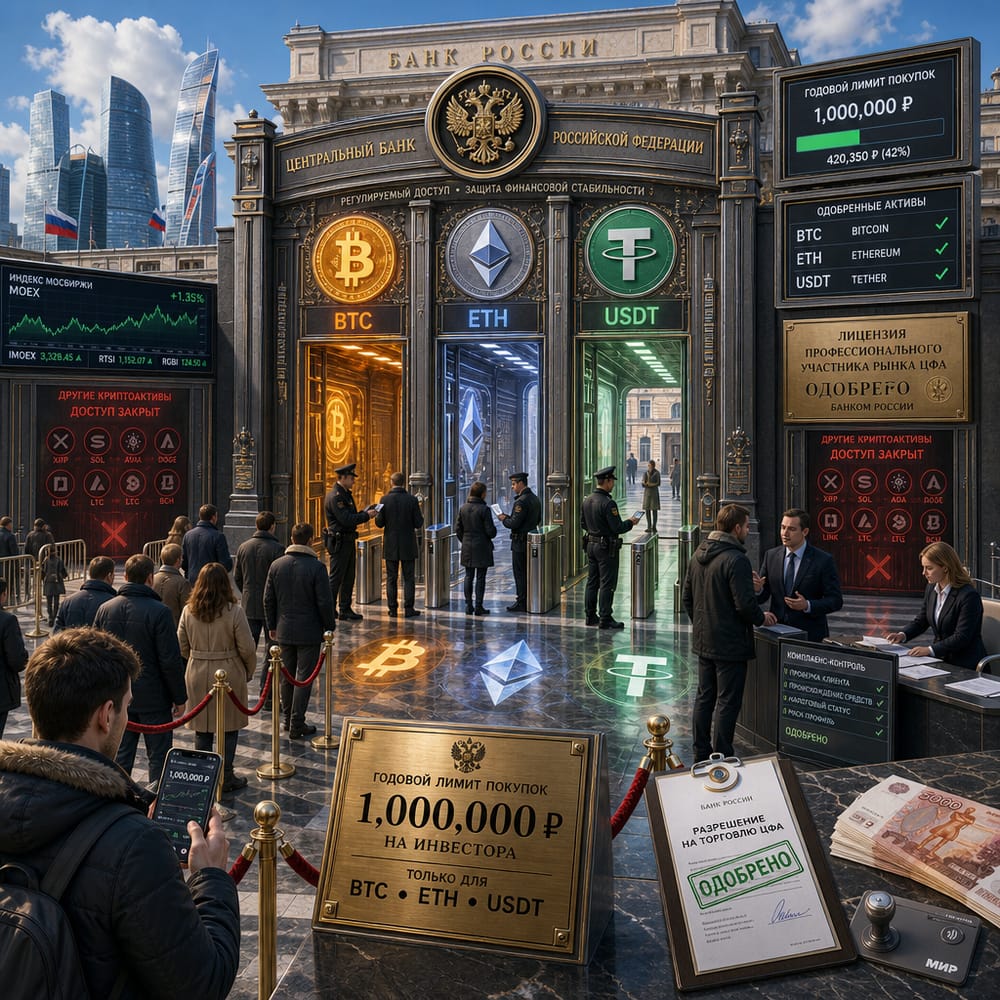
IF YOUR CRYPTO ISN'T ON RUSSIA'S VIP LIST, YOU'RE NOT INVITED: THE CRYPTO CLUB WITH A DRESS CODE
Picture this: Russia’s Central Bank just pulled off the financial equivalent of a velvet rope outside a nightclub, and only the top cryptos are getting in. Yep, you heard it right. Russia is rolling out the red carpet for Bitcoin, Ethereum, and USDT, while the rest of the crypto crowd gets left out in the cold.
Why the exclusivity? Well, much like any discerning bouncer, the Russian financial authorities want to be cautious. They're allowing retail investors to dabble in some crypto, but only the ones that have already made a name for themselves. Bitcoin and Ethereum are like the Gucci and Prada of the crypto world. They have a certain prestige and a proven track record. As for USDT, it’s the 'plain black T-shirt' — stable, reliable, and not likely to cause a scene.
So, what's behind this selective invite list? Russia's been tiptoeing on the crypto tightrope for years, trying to balance innovation with regulation. By allowing only these cryptos, they're likely aiming for a secure introduction to the market. Bitcoin and Ethereum are not just the most popular, they’re also the most widely accepted and understood. Inviting them into the Russian financial fold could pave the way for smoother transactions and fewer surprises.
For the average Ivan or Irina thinking about dipping their toes into these digital waters, this could mean a new era of crypto adoption in Russia. With an official seal of approval, Bitcoin, Ethereum, and USDT could become as familiar as a matryoshka doll. But don’t get too carried away; Russia has slapped on an annual purchase cap for non-qualified investors. Think of it as a parental control on a smartphone — dabble, but don’t leap headfirst into a digital rabbit hole.
Globally, this move might ripple through the crypto waters. Russia’s taken a page out of a cautious playbook that many countries are eyeing. In a world where everyone is trying to figure out what to do with the volatile beast that is cryptocurrency, Russia's strategy could influence regulatory trends from Minsk to Manila. It's about control and safety, recognizing that while not all crypto is created equal, the ones that are can be powerful allies.
This could also reflect a growing trend where governments cherry-pick which digital currencies to endorse. We might see more nations roll out their own selective lists, creating a high-end crypto club that only the most established players can join.
And what does this mean for the rest of the crypto zoo? Well, better luck next time. The likes of Dogecoin and other fringe players might find themselves sitting on the sidelines, waiting for their big break. This could send a signal that until these currencies can boast stability and security, they might continue to be viewed as the wild, unpredictable little brothers of the digital finance world.
In essence, Russia's move is a cautious flirtation with crypto romance — an attempt to embrace the digital future without diving into a full-blown affair. It’s a delicate dance, but if this regulatory experiment works, it might set the stage for a crypto revolution that’s more structured and less chaotic.
So, if you’re in the crypto game, keep a close eye on Mother Russia. They’re breaking ground, and where they lead, others may follow. Just don’t expect Dogecoin to be on the guest list anytime soon. For now, it's all about Bitcoin, Ethereum, and USDT — the crypto titans who've managed to snag a VIP pass to the most exclusive club in town.
This article is for informational purposes only and is not investment advice. Always do your own research or consult a licensed financial professional before making investment decisions.
© Copyright 2024. All Rights Reserved.
© Copyright 2024. All Rights Reserved.