

Russia Limits Retail Crypto Trading to Major Coins
Saturday, August 15, 2026
CRYPTO COLD SHOULDER: RUSSIA TURNS ITS BACK ON ALTCOINS
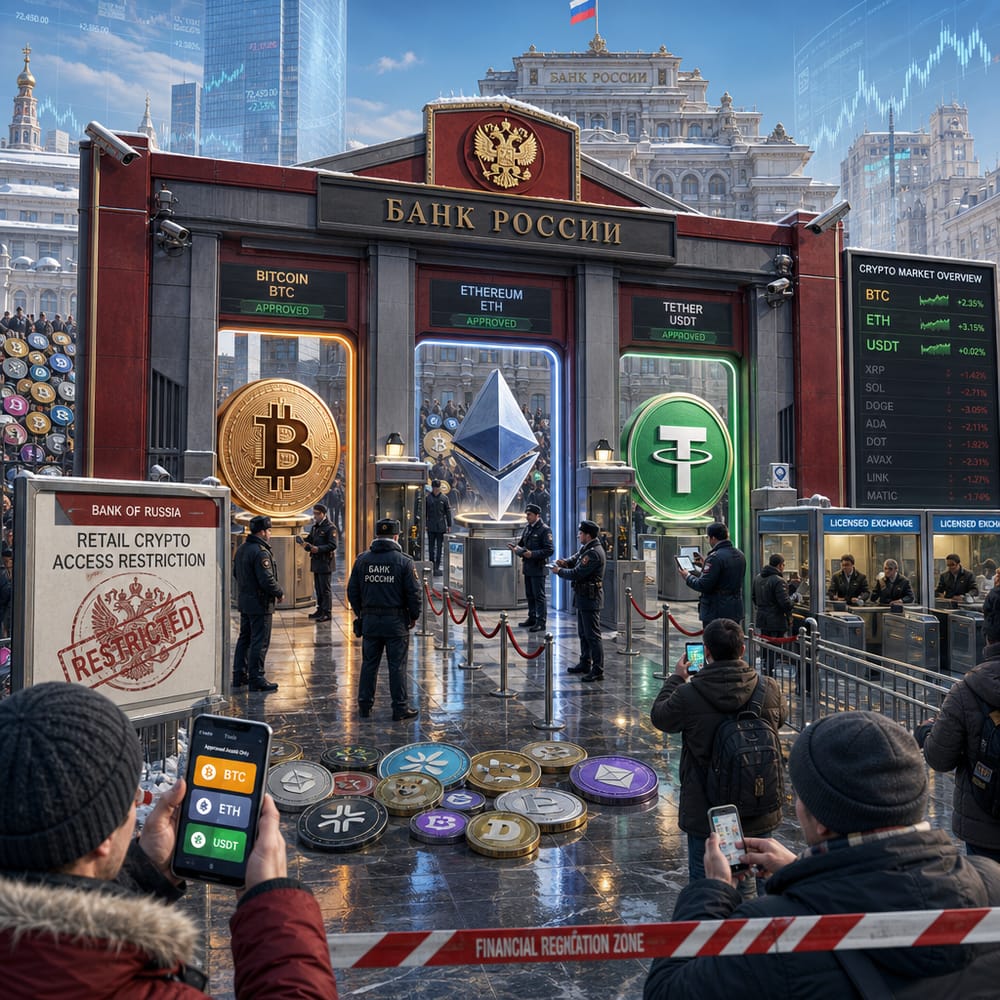
In a move that seems ripped straight from Putin's guide to economic drama, the Bank of Russia has decided to limit retail crypto trading to just the big three: Bitcoin, Ethereum, and Tether. If you’re a fan of the scrappy underdog altcoins, you might feel like you’ve just been kicked out of the club, as all other coins have been unceremoniously booted from licensed exchanges. The decision is a head-scratcher, and it's got everyone asking: why now, and why just these three?
Let’s dive into what’s going on. The Bank of Russia's decision seems to be a mix of conservatism and control. The bank has always had a bit of a love-hate relationship with the crypto world, often citing stability as its main concern. In their eyes, Bitcoin, Ethereum, and Tether are the valedictorians of digital currency — the most well-known, widely used, and, let's face it, least likely to implode. By limiting trading to these three, Russia seems to be playing it safe, trying to avoid the wild roller-coaster ride that lesser-known altcoins often bring along.
But what does this mean for altcoin liquidity in Russia? Spoiler alert: it’s not good news. Altcoins thrive on trading volume — the more people buy and sell, the easier it is to exchange them. By restricting retail investors from trading these coins on licensed platforms, liquidity is likely to take a tumble. In simpler terms, if you're holding onto altcoins, finding someone to buy them might soon feel like trying to sell ice to an Eskimo.
This move also signals a potential reshaping of the Russian crypto market. With altcoins sidelined, licensed exchanges might start to look a lot like a high school dance with only a few popular kids invited — you can expect Bitcoin, Ethereum, and Tether to dominate. This could lead to a concentrated market, where innovation takes a backseat and investors stick to the tried and true. For altcoin enthusiasts, it's like showing up to Coachella only to find it’s been replaced by a classical music recital.
So, what are the broader implications here? For one, Russia's decision could set a precedent for other countries considering how to handle the ever-expanding world of digital currencies. Are we seeing the beginning of a global trend where only the most established coins survive regulation purges? It's a possibility that regulators around the world, who are often uneasy about the volatile nature of crypto, might find appealing.
Moreover, with the Russian market now less welcoming to altcoins, we might see these digital currencies seeking refuge elsewhere. Exchanges outside Russia might see an uptick in Russian traders looking to swap altcoins on platforms not bound by these new restrictions. It’s a potential boon for the global exchanges willing to embrace all coins, akin to a speakeasy thriving during prohibition.
For retail investors in Russia, the landscape just got a lot less colorful. Those holding altcoins must now wrangle with the reality of offloading their assets elsewhere. Meanwhile, Bitcoin, Ethereum, and Tether investors might feel a bit more secure, knowing their chosen assets are still in play. It's a divisive move that underscores the unpredictable nature of the crypto world, where regulations can change faster than Elon Musk’s Twitter feed.
As retail investors digest this latest twist in the crypto saga, one thing is clear: the crypto market is as dynamic as ever. Whether this regulation will stabilize or stifle the Russian crypto scene remains to be seen. For now, it’s a waiting game, but one thing’s certain — the world of digital currency is never short of intrigue, and this is just the latest chapter. Keep your eyes peeled and your wallets ready, because the crypto world is bound to surprise us once again.
This article is for informational purposes only and is not investment advice. Always do your own research or consult a licensed financial professional before making investment decisions.
© Copyright 2024. All Rights Reserved.
© Copyright 2024. All Rights Reserved.