

Russia Limits Retail Crypto Trading to BTC, ETH, USDT
Thursday, August 13, 2026
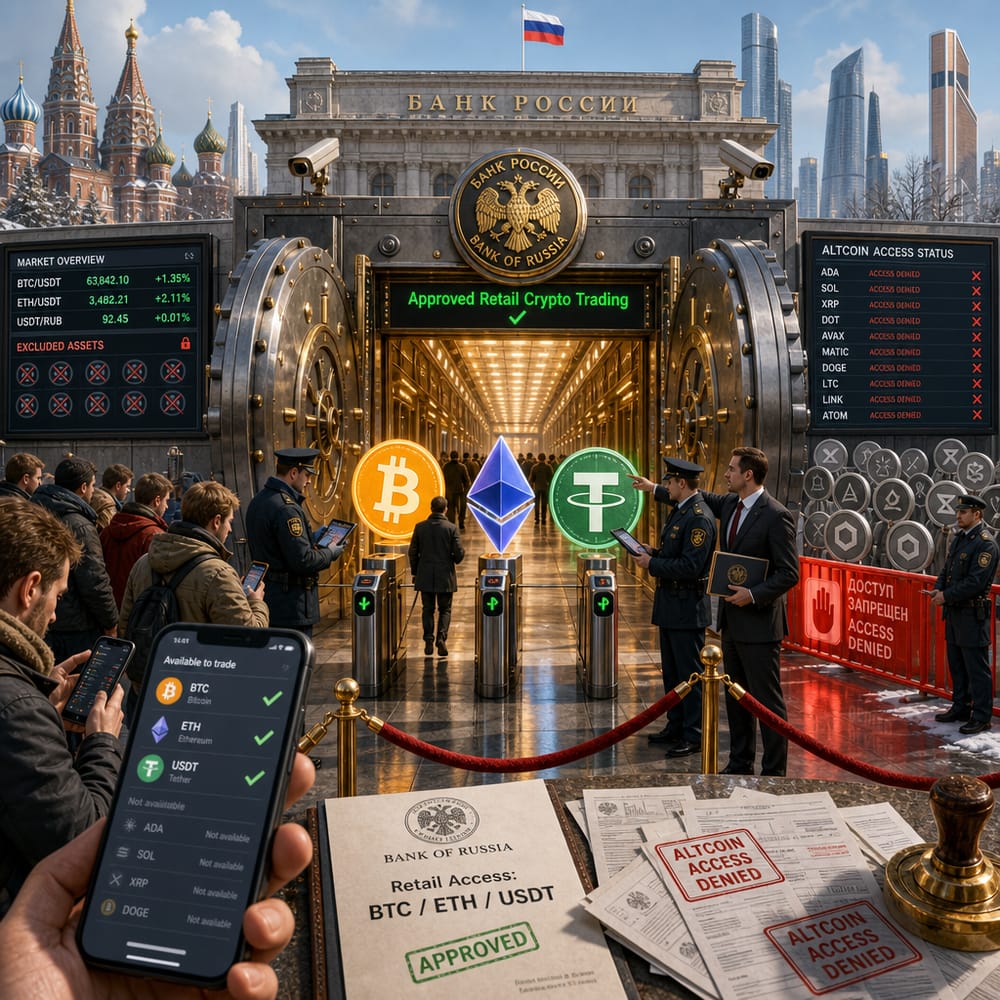
RUSSIAN REGULATOR'S CRYPTO CURATION: BITCOIN, ETHEREUM, AND TETHER MAKE THE CUT
In the world of cryptocurrency, where unpredictability is the only constant, Russia just decided it's time to go Marie Kondo on the coins it truly loves. The nation's central bank has declared Bitcoin, Ethereum, and Tether as the chosen ones, leaving less popular digital currencies out in the crypto cold. It's an executive crypto purge that would make any blockchain guru shake their head in bewilderment while nodding in reluctant agreement.
So, why these three amigos? It's simple: stability and clout. Bitcoin, the granddaddy of crypto, has been around the block (pun absolutely intended), garnering a reputation as a digital gold of sorts. Ethereum, with its robust blockchain that houses countless decentralized applications, is like the Swiss army knife of crypto. And Tether, a stablecoin pegged to the U.S. dollar, acts as the calm, collected sibling in the crypto family, ensuring stability when the market gets choppy.
But why is Russia trimming its crypto hedges? For one, the bear's been getting a bit cautious following past crypto debacles and regulatory challenges. The choice to focus on these specific currencies might be a not-so-subtle nod to reducing volatility, reigning in illegal activities, and curbing financial risks. By maintaining a tight circle of 'credible' cryptos, Russia sends a clear message: it values stability over the Wild West antics of the altcoin universe.
Of course, this move sends ripples beyond the borders of Mother Russia. Altcoins—those smaller, riskier coins that often resemble the penny stocks of the crypto world—are likely to feel the sting. A nation as massive as Russia restricting access inevitably means less liquidity and potentially fewer investors for these digital currencies. If Russia's move gains traction with other nations, altcoins could face an existential crisis, prompting their developers and holders to innovate and adapt—or fizzle out.
For global altcoin enthusiasts, this brings up a key question: is this the end or a turning point? Will altcoins pivot to reinvent themselves, offering unique value propositions that their larger counterparts don't? Maybe they’ll become the boutique craft beers of the crypto scene—prized for their niche appeal rather than their mass adoption.
The international crypto stage may also see shifts. With Russia streamlining its crypto preferences, other countries might ponder similar actions. A domino effect of regulatory changes is not entirely out of the question, especially among nations with a penchant for financial conservatism. This could lead to a global restructure in how cryptocurrencies are perceived, used, and regulated.
However, don't sound the death knell for altcoins just yet. Their community-driven innovations could bring forth new utilities and technologies that even global giants like Bitcoin and Ethereum can't match. From decentralized finance platforms to new forms of digital art through NFTs, the space remains as fertile as ever for those willing to take risks and think creatively.
In the end, Russia's regulatory action serves as a fresh reminder of the crypto market's ever-evolving dynamics, where rules get rewritten and the players reshuffle at the blink of an eye. Investors, here’s a pro tip: stay sharp, stay informed, and remember that the only certainty in the crypto world is that nothing stays the same for long. As for altcoins, they might have to channel their inner Rocky Balboa, coming back swinging harder than ever, ready to prove that they, too, can go the distance.
This article is for informational purposes only and is not investment advice. Always do your own research or consult a licensed financial professional before making investment decisions.
© Copyright 2024. All Rights Reserved.
© Copyright 2024. All Rights Reserved.