

Russell 2000 Underwater: Small Caps Lagging as Tech Sputters
Tuesday, August 18, 2026
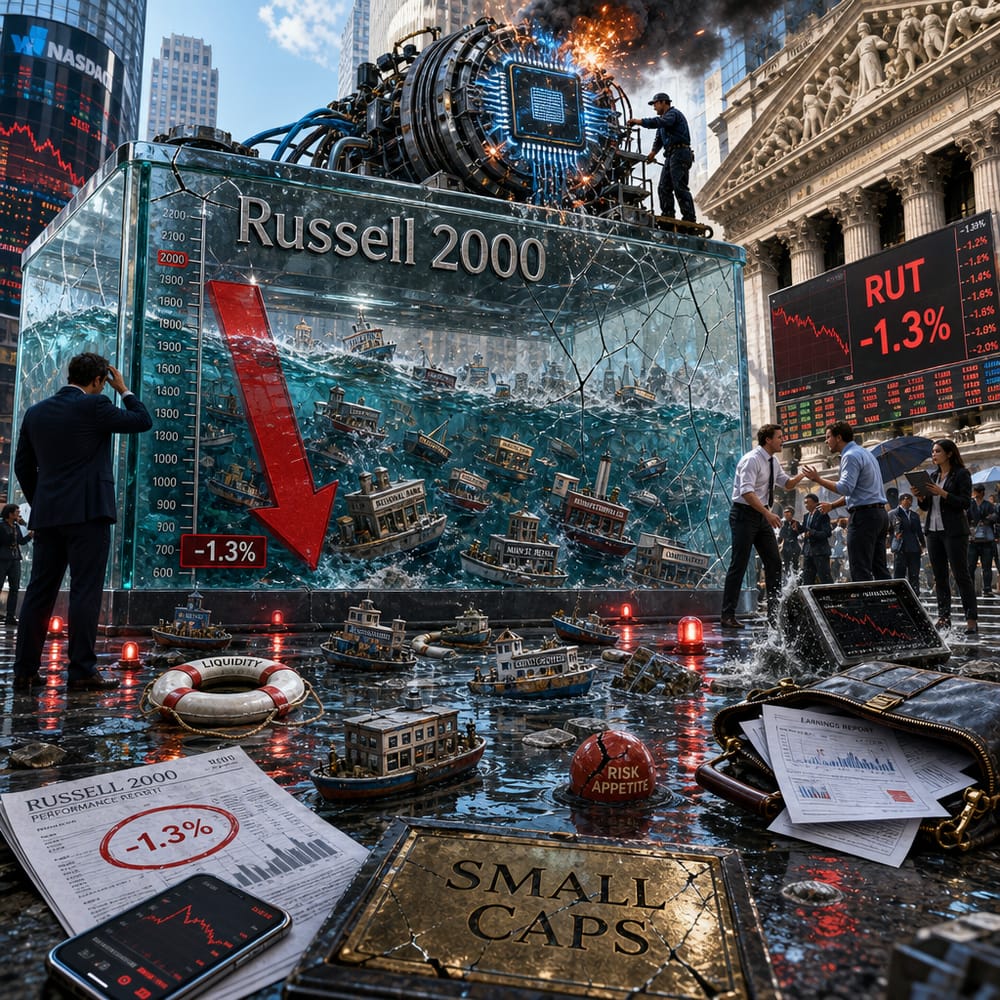
SMALL-CAPS, BIG PROBLEMS: THE RUSSELL 2000 DROWN IN TECH TURMOIL
Picture this: you’re at a high-stakes poker table, and the dealer just keeps flipping face cards for everyone but you. That’s how small-cap investors must feel these days, watching their beloved Russell 2000 index sink 1.3% on August 18. Small-caps, once the darlings of risk-takers, are now the black sheep of the market family, relegated to the sidelines while tech stocks hog the spotlight and the drama.
THE UNDERDOG STUMBLES
The Russell 2000, your go-to index for small-cap stocks, is supposed to be the scrappy underdog of the stock market world. It's generally seen as a thermometer for risk appetite, a gauge of how willing investors are to roll the dice on smaller companies. But recently, this little guy has been struggling to keep its head above water, and the culprit, in part, is the tech sector’s volatility.
WHY SMALL-CAPS ARE STUMBLING
Small-cap stocks are the market’s adrenaline junkies, thriving in booming economies but taking a beating when uncertainty rears its ugly head. As tech stocks sputter, dragged down by lofty bond yields and global economic jitters, small-caps are caught in the crossfire. Tech titans like Apple and Microsoft can weather a storm with their deep pockets and global reach, but small-caps? They’re like toddlers lost in a mall.
When the tech sector sneezes, small-caps catch a cold. Elevated bond yields, like a hangover from a wild party, are compelling investors to seek refuge in safer, more predictable large-cap stocks or bonds rather than flirt with small-cap volatility. And with tech stocks taking a hit, thanks to bond yields hitting dizzying heights, small-caps are left out on a limb with no safety net.
TECH TROUBLES AND RIPPLE EFFECTS
Why does a hiccup in tech send small-caps spiraling? Well, tech isn’t just any sector; it’s the muscle-bound Goliath of the market. When tech stocks fall, they cause a market-wide ripple effect. Investors, spooked by the sight of their beloved tech stocks losing value, become more cautious, steering clear of riskier assets like small-caps.
Moreover, small-caps often rely on tech for growth, whether it’s through direct investment or by aligning themselves with larger tech firms. When those big tech companies tighten their belts, small-cap firms feel the pinch.
WHAT CAN INVESTORS DO?
So, where does this leave the everyday retail investor trying to make sense of the market madness? First off, don’t panic. While the Russell 2000’s performance isn’t cause for champagne toasts, it doesn’t spell doom either. It’s a signal that caution is the name of the game.
Diversification is your best friend right now. Spread your investments across different sectors to avoid being overly exposed to the whims of one. Consider dipping your toes into funds or ETFs that straddle multiple industries, so you’re not solely at the mercy of tech’s rollercoaster ride.
Another savvy strategy is to focus on small-caps with strong financial foundations. Look for companies with healthy balance sheets and reasonable debt levels. These are more likely to endure a bumpy market and emerge unscathed.
Lastly, keep an eye on the Fed and interest rate movements. Rising bond yields and rate hikes could further shake the market, and being prepared can help you navigate potential volatility.
THE FINAL WORD
While small-caps may be down, they’re not out. They’ve weathered storms before, and many investors believe they will emerge stronger. The key is to stay informed and make strategic choices. Remember, the market is as much about psychology as it is about numbers. Understanding why small-caps are currently struggling helps demystify their performance and can guide your investment decisions moving forward.
So, grab your popcorn and stay tuned. The market drama is far from over, and small-caps may just surprise us yet.
This article is for informational purposes only and is not investment advice. Always do your own research or consult a licensed financial professional before making investment decisions.
© Copyright 2024. All Rights Reserved.
© Copyright 2024. All Rights Reserved.