

Russell 2000 Under Pressure: Small-Cap Vulnerability in Tech-Driven Turmoil
Monday, November 16, 2026
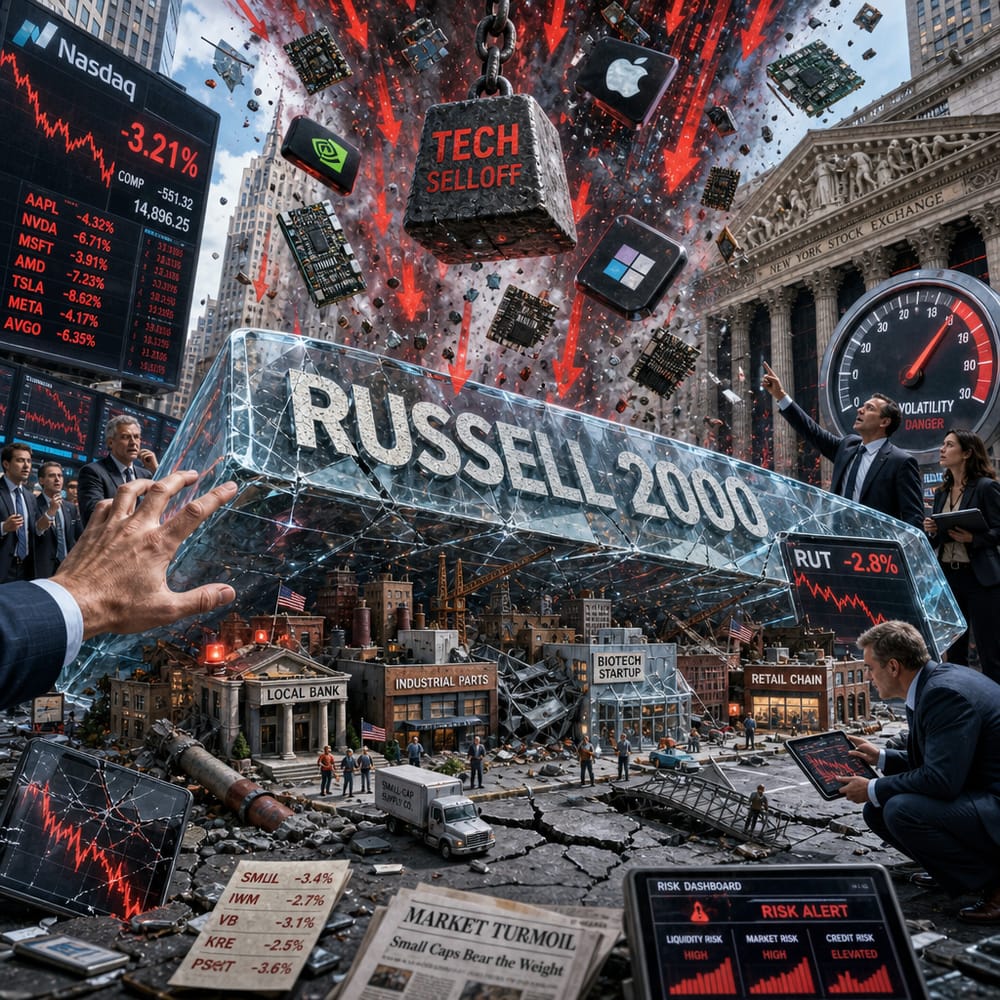
RUSSELL 2000 UNDER PRESSURE: SMALL-CAP VULNERABILITY IN TECH-DRIVEN TURMOIL
When it comes to market volatility, small-cap stocks are like that one unreliable friend who always flakes when you need them most. Once again, as the tech world teeters on the edge of chaos, these pint-sized players in the Russell 2000 are feeling the heat more than most. And for investors, this could be a wake-up call.
If you've been tracking the market's twists and turns, you've likely noticed the Russell 2000 tripping over its own shoelaces lately. This index, home to the stock market's little guys, has been underperforming in the wake of a tech sell-off that has Wall Street wiping its brow. The big question is: why are these small-cap stocks taking such a beating?
THE TECH DOMINO EFFECT
Let's start with the tech titans. When giants like Nvidia sneeze, the entire market catches a cold. Tech stocks have been on a rollercoaster ride, partly thanks to the recent drama with Nvidia's ex-CEO, Jensen Huang, and the company's post-Huang era uncertainty. And when investors start pulling out of tech stocks, it can create a domino effect that rattles the smaller players even harder.
Small-cap stocks often live in the shadows of their larger siblings. When the big tech stocks wobble, investors typically run for cover in safer, more established companies. Unfortunately for the little guys in the Russell 2000, this means they're the ones left out in the cold.
WHY SMALL-CAPS SUFFER
Small-cap stocks are like the B-sides of your favorite album: overlooked and often misunderstood. They don’t have the same financial cushion as their larger counterparts to weather economic storms. In times of uncertainty, such as a tech slump, they can become vulnerable.
Moreover, small-caps are usually more sensitive to shifts in the economic landscape, relying heavily on domestic revenues. With a storm of market volatility looming, these companies find themselves caught in the crossfire of investor fear and flight to safety.
THE GLOBAL PICTURE
But wait, there’s more. The global economy isn’t exactly helping the small-cap cause. Take Japan, for instance, which unexpectedly contracted in the third quarter, surprising everyone who thought it was on the upswing. As one of the world's major economies takes a hit, it sends ripples across markets everywhere, including our trusty Russell 2000.
Plus, let’s not forget the rising energy costs that are squeezing pockets everywhere, causing economic pressures that even the savviest small-cap can’t easily dodge.
WHAT'S AN INVESTOR TO DO?
For those invested in small-cap stocks, the current landscape might feel like a five-alarm fire. But should you really be running for the hills? Not necessarily.
First, consider why you invested in small-caps. Typically, these stocks offer higher growth potential over the long term—if you can stomach the short-term rollercoaster ride. In downturns, small-caps might underperform, but when the economy rebounds, they can outperform with gusto. Remember, patience is key.
Secondly, diversification remains your best friend. While small-caps are reeling, other sectors might be thriving. Balancing your portfolio across various sectors and market capitalizations can help cushion the blow during turbulent times.
POSSIBLE PATHS TO RECOVERY
So, what could pull small-caps out of their current funk? A few things, actually. First, a stabilization or rebound in the tech sector would certainly help ease the overall market anxiety. As tech stocks find their footing, it could restore confidence and bring investors back into the fold.
Additionally, any economic policies designed to foster growth, particularly in small businesses, could provide much-needed support. Watch for changes in fiscal or monetary policy that might signal a more favorable environment for these smaller firms to thrive.
Ultimately, navigating the Russell 2000 terrain might feel like trying to captain a ship through a storm. It’s tough going, for sure, but not impossible. Small-cap stocks might be down, but writing them off could mean missing out on their potential renaissance.
In the meantime, keep your eyes peeled for market signals and economic reports, and remember: even the market's smallest stocks can pack a punch when the tides turn.
This article is for informational purposes only and is not investment advice. Always do your own research or consult a licensed financial professional before making investment decisions.
© Copyright 2024. All Rights Reserved.
© Copyright 2024. All Rights Reserved.