

Russell 2000 Under Pressure, Signs of Small-Cap Weakness
Tuesday, August 25, 2026
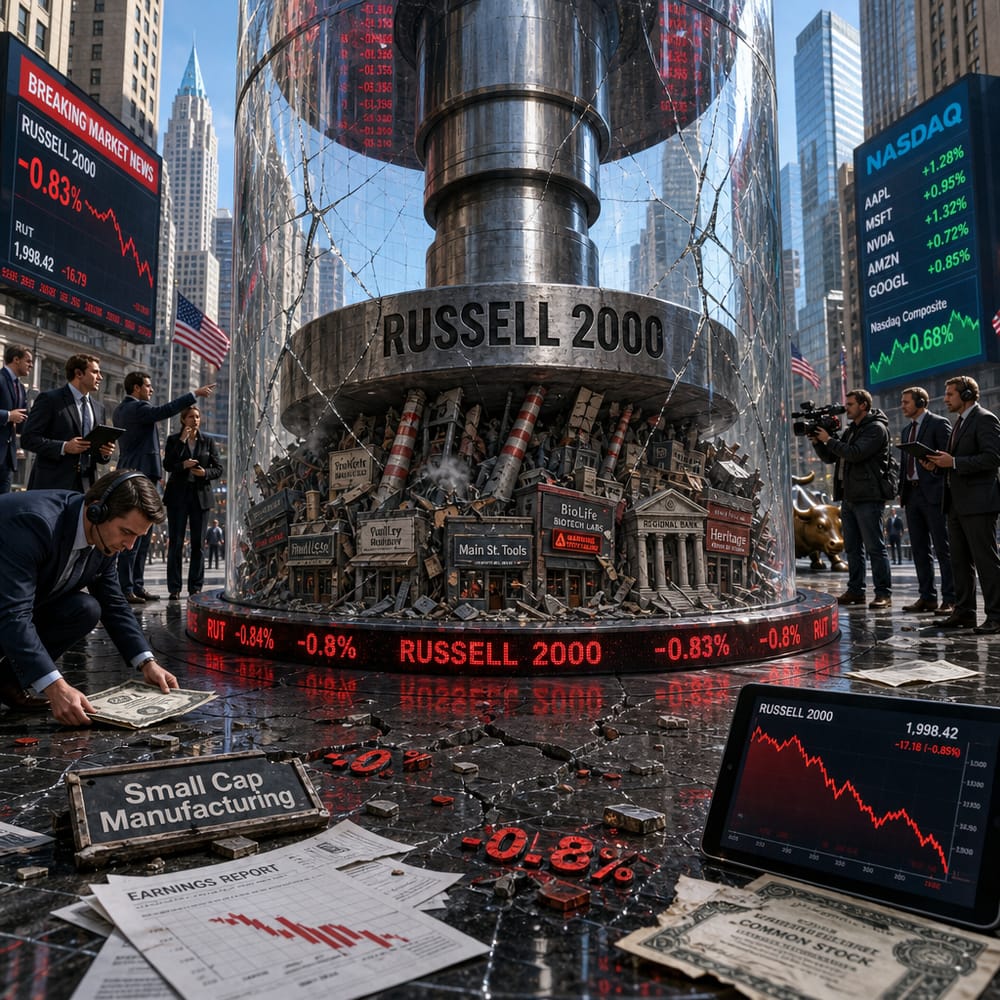
SMALL-CAP STOCKS: A CANARY IN THE ECONOMIC COAL MINE?
Is it a bird? Is it a plane? No, it's the Russell 2000 plummeting 0.8% on August 24, waving a red flag for small-cap stocks and potentially signaling broader economic woes. For the uninitiated, the Russell 2000 is basically the playground of small-cap companies, those little engines that could—a little charm, a lot of volatility. But lately, this index is acting like it's run out of steam and this recent dip might have some investors sweating through their business casual.
Now, before you hit the panic button, let's dive into what's making these small-cap stocks whimper in market misery. Are we looking at a temporary hiccup, or is there a deeper malaise infiltrating the realm of small businesses?
WHAT'S GOT THE RUSSELL 2000 RUNNING IN REVERSE?
First, let’s talk about the big elephant in the room: interest rates. As the Federal Reserve plays its symphony of rate hikes, borrowing costs are hitting a new octave. Small-cap companies, which often rely on borrowing to fund growth, now find themselves in a bit of a sticky pickle. Higher interest rates mean higher costs for capital, and smaller companies aren’t always built to withstand the squeeze like their larger counterparts.
Next up, let's have a chat about inflation. That tricky beast, which we thought might be tamed, continues to affect everything from raw materials to labor costs. Small-caps typically have less wiggle room to absorb these rising costs without passing them onto consumers, potentially hampering profit margins and putting them at a disadvantage compared to larger firms that can leverage economies of scale.
And then there's the impact of global uncertainty, from tariffs to trade wars. With Canada ramping up tariffs in a tit-for-tat with the US and fluctuating oil prices due to geopolitical tensions, small-cap stocks, which often have a more domestic focus, feel the ripple effects acutely. It's a bit like trying to navigate a minefield while wearing a blindfold—never a fun endeavor.
HOW DO SMALL-CAPS STACK UP AGAINST THE BIG DOGS?
In stark contrast, the heavyweight indices—the S&P 500 and Dow Jones—are out there flexing their muscles. With major players in tech and consumer staples driving gains, larger companies are benefiting from global exposure and diversified revenue streams. Giants like Nvidia are riding high on tech waves, while the S&P 500 saw a 0.4% rise recently.
Meanwhile, our small-cap champs are left shadow boxing in the corner. It's a bit like watching a David vs. Goliath match where Goliath actually remembered to hit the gym.
RISKS AND OPPORTUNITIES: WHERE DO SMALL-CAP INVESTORS GO FROM HERE?
With some small-cap stocks losing their luster, could this be a buying opportunity for the brave-hearted? Historically, small-caps have been a bellwether for economic sentiment; when they thrive, it often indicates investor confidence in future growth. But, there's the rub—right now, they seem to be pointing to a more cautious outlook.
The risks aren't negligible. Increased borrowing costs, potential for continued inflationary pressure, and an unending parade of global uncertainties make small-cap investing akin to a high-stakes poker game.
However, opportunities do exist. Small-caps are nimble and can often pivot quicker than their larger peers. If you're the type to bet on the underdog, there are deals to be found if you do your homework. Target companies with strong balance sheets and those that are less reliant on debt. Keep an eye on sectors poised for growth, like tech or green energy, where innovation might just outpace the headwinds.
The bottom line? The Russell 2000's recent stumble isn't necessarily a harbinger of doom, but it does warrant a reflective pause. In the grand play of market dynamics, small-cap stocks might just be the canary in the coal mine—a hint of what might come or merely a cautionary tale of today's market jitters. Whether you're a cautious observer or an adventurous investor, it's worth keeping small-caps on your radar. Who knows? You might just spot the next big opportunity before it grows too big for its britches.
This article is for informational purposes only and is not investment advice. Always do your own research or consult a licensed financial professional before making investment decisions.
© Copyright 2024. All Rights Reserved.
© Copyright 2024. All Rights Reserved.