

Russell 2000 Slides as Small-Cap Breadth Stalls—Warning Signal for Broader Risk Trends?
Monday, November 16, 2026
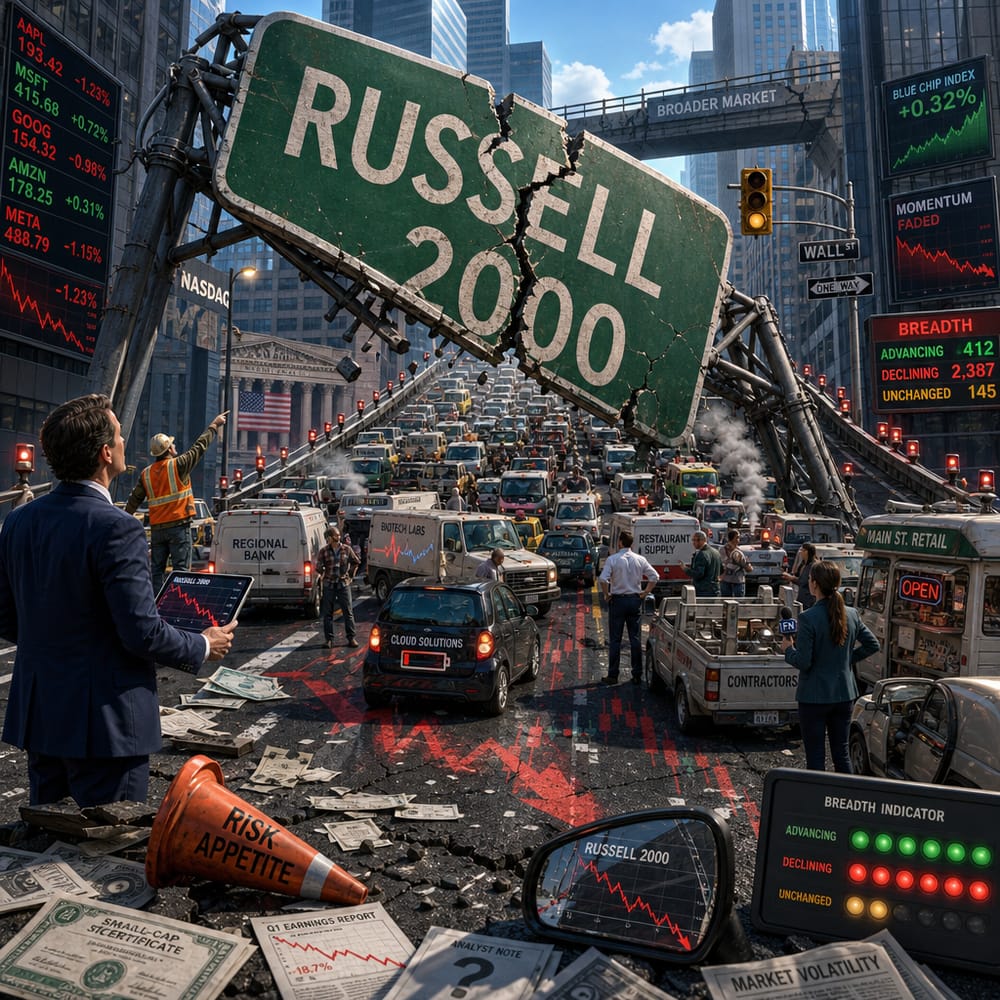
RUSSELL 2000 SLIDES AS SMALL-CAP BREADTH STALLS—WARNING SIGNAL FOR BROADER RISK TRENDS?
If the stock market were a high-school cafeteria, the Russell 2000 would be that scrappy, underrated clique of small-cap companies that often end up running the world (or at least a nifty tech startup). Yet, recently, this posse seems more like a wallflower at the dance, as their index shows signs of running out of steam. The Russell 2000's recent dip has got tongues wagging and investors sweating—because when small caps cough, the larger market might just catch a cold.
WHAT’S PULLING THE SMALL CAPS DOWN?
The Russell 2000 tracks small-cap stocks, the plucky underdogs of Wall Street. These are the companies with less swagger and a smaller market cap than the giants of the S&P 500. They're seen as a barometer for risk sentiment because they tend to lead the charge when risk appetite is high, and they also tend to retreat first when caution comes into play.
So, why the downturn? A cocktail of reasons is at play. Interest rates have been on a rollercoaster, and small firms feel the heat more intensely than corporate behemoths like Apple or Microsoft. With credit tightening, borrowing costs rise, making it trickier for these smaller companies to finance growth at a time when they need every dime to stay competitive.
And let's not forget about the looming shadow of geopolitical tensions. With whispers of economic decoupling between the U.S. and China growing louder, small caps are particularly vulnerable. These companies often have more at stake when it comes to tariffs and global supply chain hiccups, given their limited resources to buffer against such disruptions.
THE WIDER MARKET CONNECTION
You might wonder why a hiccup in the small-cap world should matter to your portfolio. Well, here's the scoop: small caps are like the canary in the coal mine for market sentiment. Their performance often heralds broader market trends. Historically, a dip in the Russell 2000 has been a precursor to a wider market correction. When investors start to shy away from these riskier bets, it often signals a shift towards caution across the board.
As traders hit the pause button on small caps, they're essentially broadcasting a collective wariness about the economic outlook. This isn't just about one sector underperforming; it potentially flags a broader market shift towards risk-off sentiment. In simpler terms, the retreat to safety could influence how the big players are going to move next.
IMPLICATIONS FOR INVESTORS
So, what should the everyday investor do when small caps start to tremble? First, don't panic, but do pay attention. The Russell 2000's struggles could be an early warning that broader market volatility is on the horizon. It's wise to consider how diversified your portfolio is across different asset classes. If you're heavily invested in small caps, it might be time to rebalance and consider adding some more stable, less volatile investments to the mix.
Moreover, keep an eye on the Fed. The central bank's stance on interest rates will continue to affect market dynamics significantly. If inflation pressures force them into more rate hikes, we could see further pressure on small caps. Conversely, any indication of easing could serve as a lifeline for these companies.
Lastly, remember that in the stock market, what goes down often comes back up. While small caps are down now, they have historically been strong performers over the long term, especially coming out of downturns. These dips can sometimes present buying opportunities for those who can stomach the volatility.
STAYING SHARP
In a market that feels like it's moving at warp speed—thank you, AI bubbles and tech stock tumbles—keeping a finger on the pulse of small caps might give you the edge. While the small caps aren’t making big headlines like Nvidia's boardroom drama or the high-stakes Anthropic IPO, their quiet shuffle could tell you more about the market's next move than the latest AI sensation ever could.
So, fellow investors, don your thinking caps and stay vigilant. The Russell 2000 may currently be whispering caution, but with the right strategy, you can still step confidently into whatever twists and turns the market throws your way. After all, in the stock market, fortune favors not just the bold, but the well-informed.
This article is for informational purposes only and is not investment advice. Always do your own research or consult a licensed financial professional before making investment decisions.
© Copyright 2024. All Rights Reserved.
© Copyright 2024. All Rights Reserved.