

Russell 2000 Outperforms Amid Smaller-Cap Resilience
Saturday, August 15, 2026
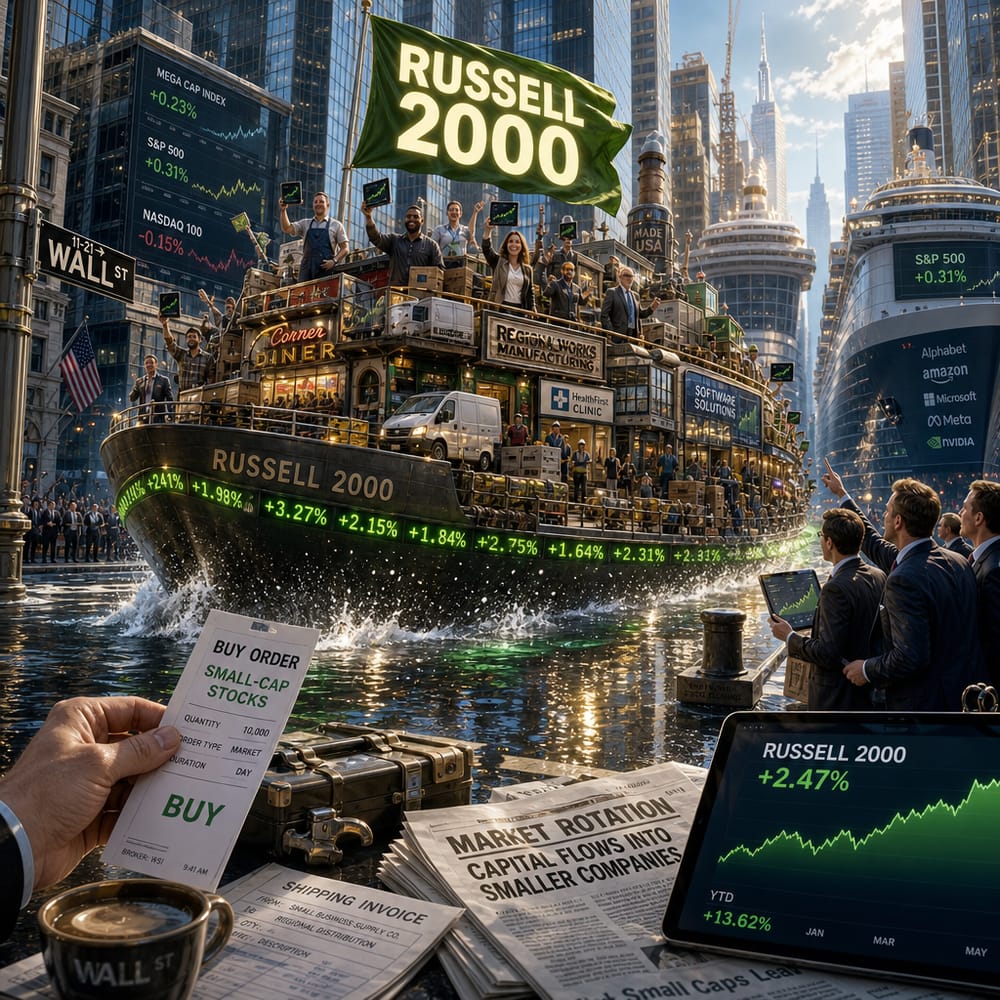
RUSSELL 2000 OUTPERFORMS AMID SMALLER-CAP RESILIENCE
It’s not every day the little guy gets to shine, but the Russell 2000 is having its moment in the spotlight, outpacing its larger, flashier siblings like the S&P 500 and the Dow Jones Industrial Average. While the big boys are sluggishly sipping their espressos, the small-cap stocks, which form the backbone of the Russell 2000, are racing ahead like they’ve downed a dozen Red Bulls.
So, what in the world is happening here? Why are these pint-sized players leading the charge, and what does it mean for the rest of the market?
LET'S TALK ABOUT THE SMALL-CAP RENAISSANCE
Small-cap stocks, those under-the-radar companies with market values typically under $2 billion, have been on a tear. The Russell 2000, which corrals 2,000 of these companies like a dedicated sheepdog, has been glowing green on traders' screens, outperforming its larger counterparts. But why?
Firstly, these companies often have more room to grow. Imagine you're at an all-you-can-eat buffet — the smaller plates (our small-cap stocks) can pile on more before they’re stuffed. While larger companies may be bogged down by global supply chain issues and political headaches, small-caps are more domestically focused. They thrive in a strong U.S. economy, which is where we find ourselves as inflation cools and interest rates stabilize.
Moreover, small-cap stocks are often seen as a bellwether for investor sentiment. When traders feel optimistic, they’re more willing to gamble on these high-risk, high-reward bets. The recent rally suggests investors are shrugging off recession fears and dipping their toes into riskier waters.
HOW DO THEY STACK UP AGAINST THE BIG LEAGUES?
While the Russell 2000 is running laps, larger indices like the S&P 500 and Dow Jones are lagging behind. The S&P 500, filled with household names like Apple and Microsoft, is dealing with its own set of challenges. From geopolitical tensions to the ongoing AI arms race sucking up capital, these giants have their plates full.
Despite their heft, these bigger indices are being weighed down by their global exposure. Countries are embroiled in economic games of chess, complete with sanctions and tariffs. Meanwhile, small-caps are laughing their way to the bank, rooted firmly in a stable U.S. soil, far from international skirmishes.
WHAT DOES THIS MEAN FOR YOU, THE INVESTOR?
For the savvy retail investor scrolling through this on their lunch break, you might be wondering what this all means for your portfolio. Well, if the Russell 2000’s recent performance is anything to go by, it signals a broader market trend: investors are ready to take on more risk.
This doesn’t mean it’s time to throw caution to the wind, but it suggests a shift in sentiment. The appetite for small-cap stocks indicates confidence in economic growth, perhaps hinting at a brighter horizon. Diversifying your investments to include a healthy mix of small-cap stocks could be wise to capture potential gains if this rally keeps up.
Moreover, it's not just a matter of chasing performance. The Russell 2000’s rise tells us that smaller companies are thriving in a dynamic economy. This resilience could spell opportunity for those looking to capitalize on niche markets and emerging sectors not dominated by behemoths.
THE TAKEAWAY
While small-cap stocks charge ahead like the hare in that age-old fable, it's vital to remember that investing is no sprint. It's a marathon. The Russell 2000's current vogue offers insights into market sentiment and economic health — two key indicators that every investor should keep an eye on.
So, whether you’re a die-hard fan of the little guys or prefer the stalwarts of the S&P 500, the stock market's current dance is a reminder that even the smallest players can make a big impact. Keep an eye on these small-cap darlings; they might just be signaling the next big market trend. And as always, invest wisely and maybe, just maybe, don't put all your eggs in one basket — no matter how tempting this rally might seem.
This article is for informational purposes only and is not investment advice. Always do your own research or consult a licensed financial professional before making investment decisions.
© Copyright 2024. All Rights Reserved.
© Copyright 2024. All Rights Reserved.