

Russell 2000 Enters Correction Territory Amid Rising Yields
Thursday, October 15, 2026
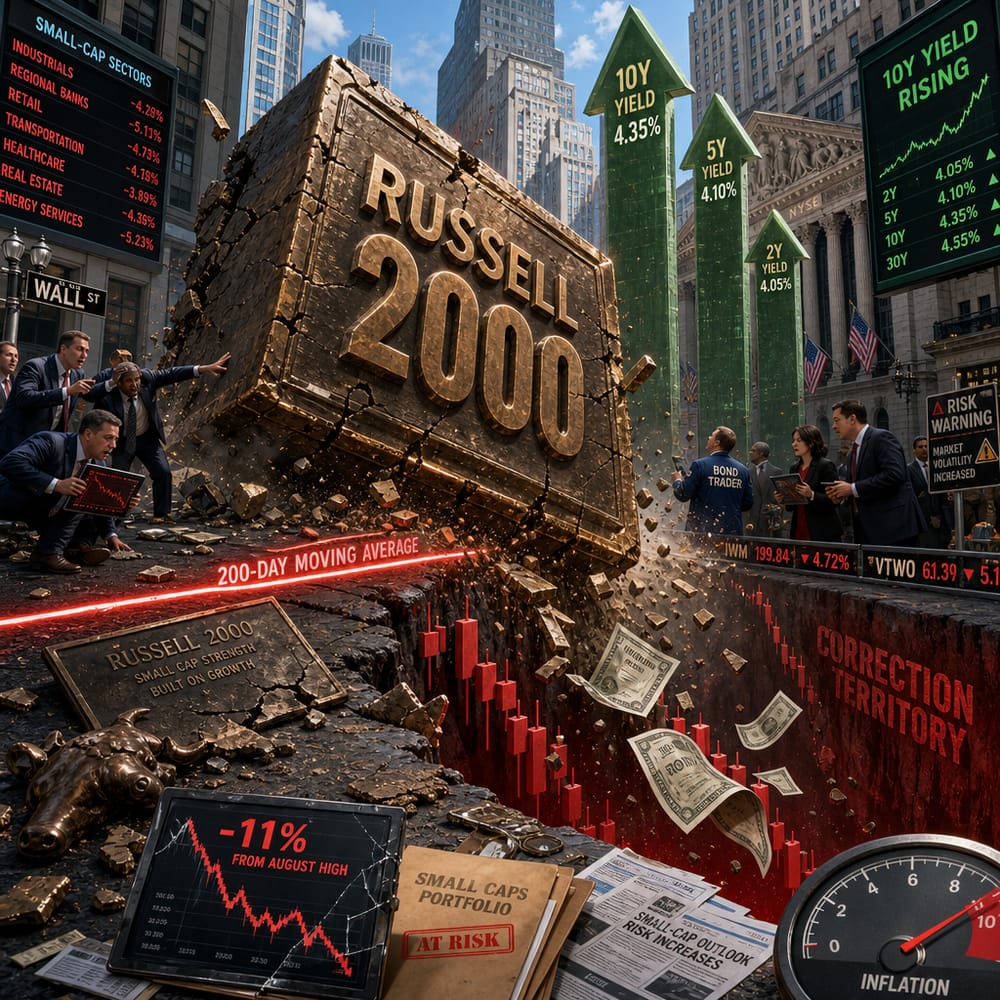
RUSSELL 2000 ENTERS CORRECTION TERRITORY AMID RISING YIELDS
Consider the Russell 2000 as the underdog team in a sports league. It’s the small-cap stock index that packs a punch, but right now, it's in the ring taking a hit—down 11% from its August highs, sliding into that dreaded correction territory. If you're an everyday investor, this isn’t just another market murmur; it could be the first domino in a cascade that rattles your entire portfolio.
Let’s back up a second. The Russell 2000 is essentially a collection of smaller companies, the scrappy fighters in the stock market world. While they may not have the brand recognition of Amazon or Apple, they have potential that investors love—think of them like the indie films of Wall Street. But right now, the buzzword here is "correction," and it means the index has dropped more than 10% from a recent high.
WHY IT MATTERS
So, why should you care about the technical breakdown of an index full of small companies you might never have heard of? Simple. The Russell 2000 is often seen as a leading indicator of market sentiment. If these smaller companies are struggling, it might suggest that broader economic challenges are on the horizon.
If the Russell 2000 continues to trade below its 200-day moving average—a key line in the sand for traders—it could signal further market deterioration. Picture it as the market's mood ring: when it dips below this level, it’s like a blinking neon sign warning of increased volatility in riskier assets. It's your cue to pay attention to the broader market's health.
THE YIELD FACTOR
One of the main villains in this narrative is the rising yield on U.S. Treasury bonds. This isn’t just Wall Street lingo; here's the scoop. When yields rise, it means investors can get better returns holding government bonds, which are safer, instead of taking a gamble on stocks. For small-cap stocks, which are already risky by nature, this means investors might ditch them for those safe government-issued returns.
High yields are a migraine for small caps because these nimble companies often rely more heavily on borrowing to fuel their growth. Higher yields translate to higher borrowing costs. Imagine if your credit card interest rate suddenly jumped while you're trying to fund a new venture—ouch.
WHAT TO WATCH
Investors should keep their eyes glued to a few technical levels. First, that 200-day moving average is critical. It’s like the market's comfort blanket; staying under it for too long can make investors skittish. And nobody wants skittish investors.
Next, look out for the Federal Reserve’s next moves. If they decide to hike interest rates again, it could add fuel to the rising yield fire, further impacting small-cap stocks. It's basically a vicious cycle where inflation and rates keep feeding off each other like a runaway teenage love story, but with dollars and cents.
SO, WHAT'S AN INVESTOR TO DO?
If you’re holding small-cap stocks or considering buying into the Russell 2000, think strategically. Diversification is your friend. Spread your investments across different sectors, and don't put all your eggs in the small-cap basket. This index might be down, but it’s not necessarily out. Historically, small caps have rebounded strongly after corrections, offering juicy returns for the brave-hearted.
Just remember, a dip in the Russell 2000 doesn’t mean you should hit the panic button and sell everything. Instead, it could be a prime time to review your investment strategy and hedge your bets. Keep an eye on economic indicators and market sentiment. The key is to stay informed, and as always, consult with a financial advisor if you're knee-deep in confusion.
In this ever-evolving financial saga, consider yourself armed with the inside scoop. Whether the Russell 2000 is a canary in the coal mine or just a temporary blip, understanding these dynamics puts you one step ahead in the investment game. Strap in, because the market roller coaster doesn’t show signs of slowing down any time soon.
This article is for informational purposes only and is not investment advice. Always do your own research or consult a licensed financial professional before making investment decisions.
© Copyright 2024. All Rights Reserved.
© Copyright 2024. All Rights Reserved.