

Rupee Under Pressure from Oil, RBI Loosens Dollar Inflow Window
Sunday, August 23, 2026
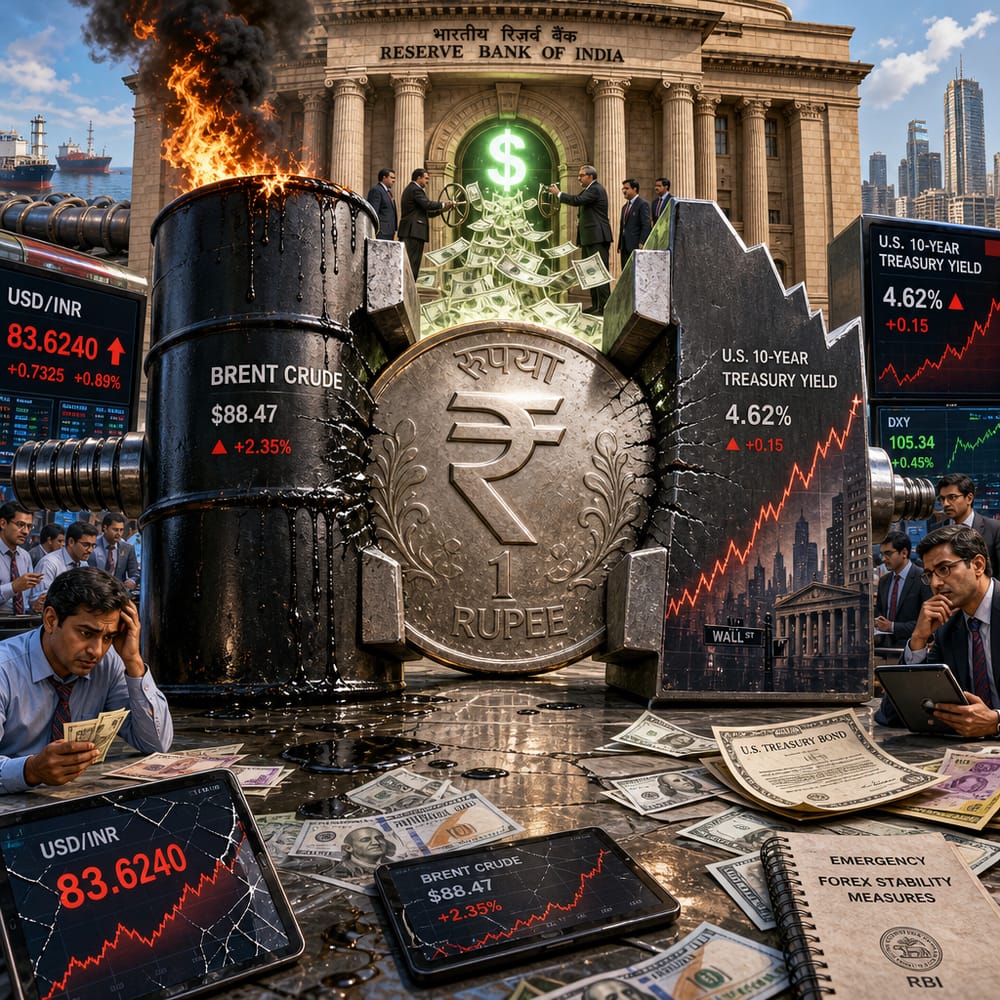
The rupee is sweating like a dollar store umbrella in a hurricane, and the Reserve Bank of India (RBI) has just pulled out its toolbox to patch things up. Rising oil prices and the gravitational pull of U.S. Treasury yields are squeezing India's currency tighter than a pair of jeans after Thanksgiving dinner. Let's unpack what this means for the world's most populous democracy and its bustling economy.
THE OIL PRICE PREDICAMENT
First, let's talk about oil—the sticky wicket in India's economic playbook. As the world's third-largest importer, India is no stranger to the whims of international oil prices. It's a bit like being in a rocky relationship with someone who keeps jacking up rent mid-month. High oil prices mean India's import bills soar, and that puts downward pressure on the rupee. It's simple supply and demand: More outflow to pay for imports, less demand for the rupee.
What’s worse, as oil prices balloon, transportation costs rise, inflation ticks up, and the common man finds his pocket feeling a little lighter. It's a dance around the bonfire, and everyone's starting to sweat.
RBI’S GAME PLAN
Now, the RBI isn’t just sitting on the sidelines sipping chai. They're taking action—specifically by loosening the dollar inflow window. In plain English, this means they're making it easier for dollars to flow into the country. This is like opening all the taps in a house suffering from drought, aiming to boost the dollar supply and, consequently, stabilize the rupee.
The RBI has been reducing the regulatory hurdles for foreign investments and encouraging remittances from the large Indian diaspora. More dollars coming in means more support for the rupee, ideally preventing it from taking a nosedive.
HIGHER U.S. YIELDS AND THE RUPEE
Adding to the rupee's woes are the rising yields on U.S. Treasuries. Higher yields make U.S. bonds more attractive to investors, drawing capital away from emerging markets like India. It's as if America's calling, “Come here, your dollars are welcome,” and international investors can't resist the siren’s call. This outflow of capital puts additional pressure on the rupee, compounding its decline.
THE LONG GAME
The elephant in the room, of course, is the long-term impact of a weaker rupee. Import costs rise, which could exacerbate the trade deficit—where India imports more than it exports. While this isn’t necessarily disastrous, it could mean tightening belts and could impact everything from government spending to the average consumer's purchasing power.
On the flip side, a weaker rupee can make India's exports cheaper and more competitive abroad. It's a double-edged sword that can stimulate sectors like IT services and textiles. But this potential silver lining would require a well-coordinated economic strategy, something that goes beyond just firefighting currency crises.
WHAT'S NEXT?
The RBI is in a high-stakes chess game, balancing inflation, currency stability, and economic growth. Whether its current measures will be enough to keep the rupee afloat remains to be seen. If oil prices and U.S. Treasury yields continue to rise, India will need more than quick fixes. Maybe a stronger structural reform, perhaps a more diversified energy strategy, could provide long-term relief.
For now, all eyes are on the RBI and their next move. Will they manage to anchor the rupee in these turbulent waters, or is this just the beginning of a longer, more arduous journey? As the old saying goes, when one door closes, another one opens. For the rupee, let’s hope it’s a door to stability.
This article is for informational purposes only and is not investment advice. Always do your own research or consult a licensed financial professional before making investment decisions.
© Copyright 2024. All Rights Reserved.
© Copyright 2024. All Rights Reserved.