

Ross Stores (ROST): Tariff Refund Fuels Massive Guidance Raise—But How Much Is Sustainable?
Saturday, August 22, 2026
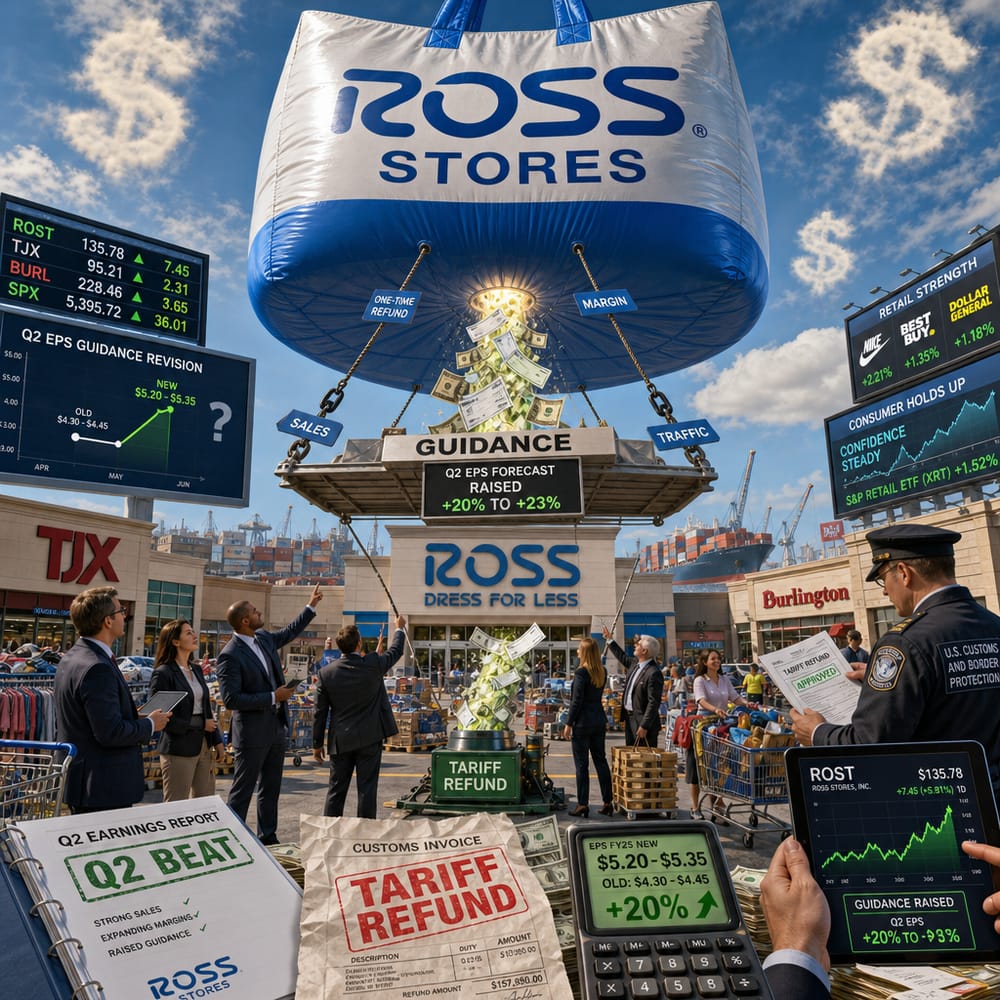
ROSS STORES: A TARIFF REFUND BOOST OR FOOL'S GOLD?
What's that you hear? The sound of champagne corks popping at Ross Stores HQ? Well, maybe just a bit—and they’ve earned it. The discount retailer just pulled off a stunning earnings beat in Q2, riding high on a one-time $100 million tariff refund. But before you start a conga line straight to your broker, let's chat about why this tariff windfall might be a double-edged sword for Ross. And more importantly, for your portfolio.
Ross Stores recently dropped some financial fireworks with a hefty guidance raise, dazzling Wall Street like a Fourth of July display. But here’s the twist: A significant chunk of their earnings glow came from a one-time tariff refund. So, what's the deal? Is Ross a retail superhero, or just Clark Kent masquerading in a cape?
THE TARIF-FIC BOOST
First, let's decode this magical tariff refund. Simply put, it’s like finding a $20 bill in your winter coat from last year. Nice, but you're not budgeting next month’s rent on it. The refund gave Ross an impressive revenue boost and helped them beat Wall Street's forecasts. But here's the catch: it’s a one-and-done deal. A financial unicorn that’s not galloping back anytime soon.
SUSTAINABILITY OR JUST A SUGAR HIGH?
The big question is whether Ross can maintain its sprightly growth pace once this sugar rush fades. The real strength of Ross, TJX, and Burlington isn't in one-off financial perks, but in their operational prowess. Ross has long thrived by offering name-brand bargains that cater to budget-conscious fashionistas. Can that solid foundation carry them forward without the one-time boost?
As with any retail player, traffic is king. If the post-pandemic shopping spree slows, Ross could find itself scrambling for sustainable growth. In the highly competitive world of discount retail, even a slight dip in consumer traffic could be as welcome as a heat wave in December.
PEER PRESSURE, RETAIL STYLE
When you stack Ross against its peers—TJX and Burlington—it's like watching a retail version of "Survivor," where market share and valuation take center stage. Currently, Ross holds its own in this trio, often praised for its efficient inventory management and appealing discount model. But it’s worth noting that TJX often steals the spotlight with its robust global footprint and diverse portfolio. Then there’s Burlington, the underdog with a knack for surprising the market with its resilient growth tactics.
In terms of valuation, Ross seems fairly priced compared to its peers. However, the market’s notoriously short memory means that a hiccup in growth could lead to a swift recalibration of its stock price. Investors, beware of knee-jerk reactions.
RISKY BUSINESS
If consumer traffic starts to flicker, Ross might face some stormy weather. With economic uncertainty casting a shadow, consumers might tighten their purse strings, impacting Ross's bottom line. Higher gas prices, like those biting into Walmart's sales, can also dim the retail shine. It's all interconnected, folks.
WHAT'S NEXT?
For savvy investors, the key is to separate the flash from the fundamentals. Ross’s recent performance shows operational strength, but keep an eye on the underlying trends. Look for sustained momentum in foot traffic and competitive pricing strategies before you double down on Ross.
In this high-stakes retail game, the long-term play isn't about one-off windfalls but about consistent execution and adaptability. Ross has shown it can roll with the punches, but keep your portfolio diversified to hedge against any potential retail heartburn.
So, what should you do with Ross in your investment cart? Be cautious, be informed, and stay nimble. The retail landscape is ever-evolving, and today's tariff refund hero might just turn into tomorrow's retail whodunit.
This article is for informational purposes only and is not investment advice. Always do your own research or consult a licensed financial professional before making investment decisions.
© Copyright 2024. All Rights Reserved.
© Copyright 2024. All Rights Reserved.