

Robinhood's Surge on S&P 500 Inclusion
Saturday, August 08, 2026
ROBINHOOD'S SURGE ON S&P 500 INCLUSION
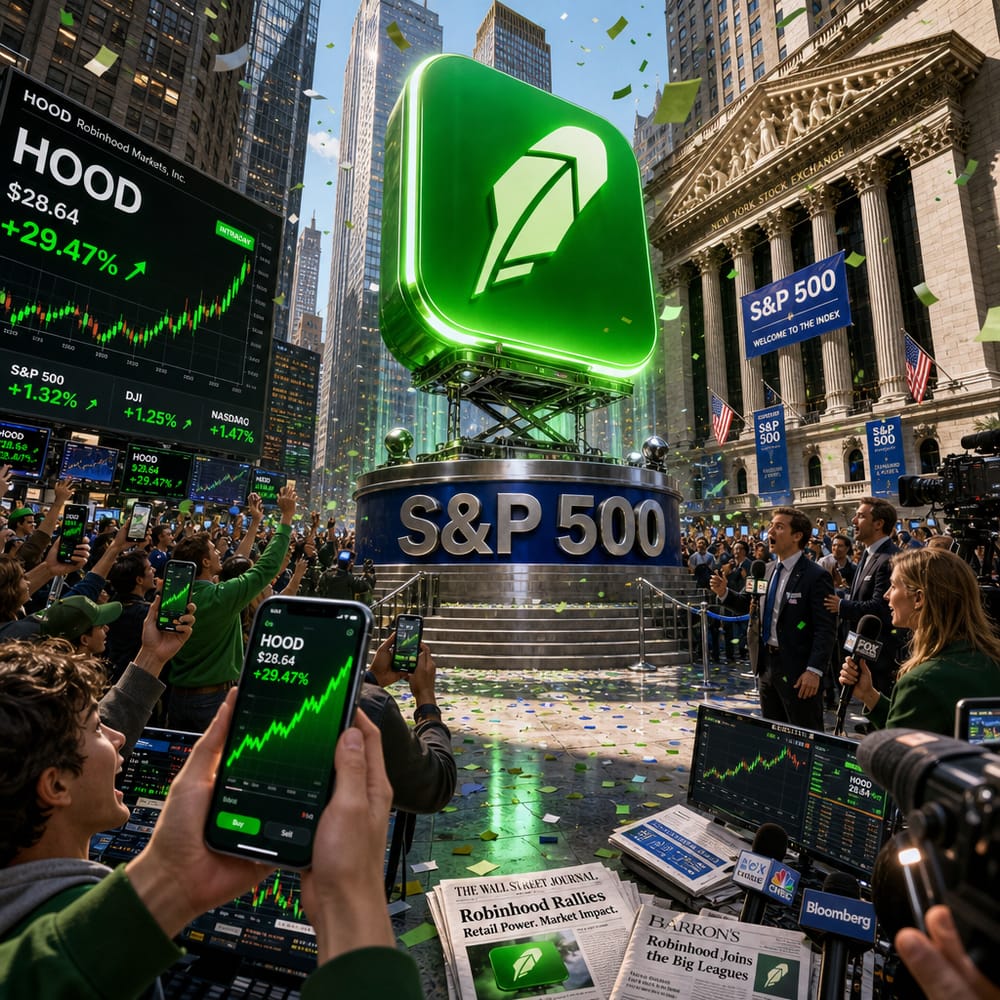
Grab your party hats and pop the champagne, because Robinhood just crashed the S&P 500 party. The stock experienced a surge worthy of a Wall Street confetti cannon after the big wigs announced its inclusion in the hallowed index. But before you go cashing out your crypto to buy HOOD shares, let’s break down why this is a big deal and what it could mean for your portfolio.
So, what’s all the fuss about? Today, Robinhood’s stock shot up like it had a rocket strapped to it, with shares climbing a cool 7%. If you’ve been watching your feed, you know that’s no small beans. The move came on the heels of the news that Robinhood would be joining the S&P 500, effective at the opening of trading on August 15. But what really happens when a stock joins this elite club, and why is everyone making a fuss?
INDEX INCLUSION: MORE THAN JUST A STATUS SYMBOL
First off, joining the S&P 500 is like receiving a golden ticket in the financial markets. It’s a signal that a company has made it to the big leagues, but more importantly, it opens the floodgates to a whole new pool of investors. Index funds and ETFs (Exchange-Traded Funds) that track the S&P 500 will now need to buy Robinhood shares to match the index. This means increased demand, which, as any Econ 101 student will tell you, can lead to increased stock prices. So, Robinhood’s jump isn’t just a one-day wonder—it could be just the beginning.
Now, let’s address the question in every retail investor’s mind: Is this a trend we should ride, or are we chasing a mirage?
THE MECHANICS BEHIND THE MAGIC
Inclusion in the S&P 500 often leads to a short-term surge due to the buying pressure from funds that need to add the stock to their holdings. But not every stock maintains that initial glow. Remember Tesla's wild ride when it joined the index in 2020? It spiked, dipped, then skyrocketed again. The lesson here is that while the initial boost is almost a given, the real test lies in Robinhood’s long-term performance and how it leverages this new-found credibility.
PEER PRESSURE AMONG BROKERS
While Robinhood basked in the limelight, its peers in the retail brokerage space didn’t see a similar lift. Other brokerage firms like Charles Schwab and E*TRADE have been more of the steady, reliable types rather than the headline-grabbing thrill seekers. They didn’t see the same kind of spike in their stock prices today, suggesting that Robinhood’s surge is more about the index inclusion than a sector-wide trend.
THE BROADER FINANCIAL SECTOR
Robinhood’s ascension also shines a spotlight on the evolving landscape of financial services. As more millennials and Gen Z investors flood into the market, platforms that cater to the app-based, meme-stock-hungry crowd are gaining prominence. Robinhood’s inclusion is a nod not just to its business model, but to the seismic shift in how the younger generation approaches investing.
LET’S NOT FORGET THE RISKS
Before you go all-in on HOOD, remember that Robinhood’s journey hasn't been without its setbacks. Regulatory concerns and market volatility have kept this stock on a rollercoaster ride, and while index inclusion is a confidence booster, it doesn’t immunize the company from future challenges. The stock’s performance will hinge on how well Robinhood can navigate regulatory headwinds and expand its offerings to keep its core audience engaged.
THE BOTTOM LINE
In the world of investing, nothing is ever a sure bet. While Robinhood’s stock price is soaring today, the real intrigue lies in how it leverages this new status to compete in a cutthroat industry. As an investor, you should keep your eyes peeled and your wits about you—because while the S&P 500 stamp of approval is a big deal, in the stock market, only one thing is guaranteed: an unpredictable ride.
So, what’s your move? Whether you’re bullish or bearish on Robinhood, one thing is clear: the financial world will be watching closely. As always, do your homework, keep your emotions in check, and invest wisely.
This article is for informational purposes only and is not investment advice. Always do your own research or consult a licensed financial professional before making investment decisions.
© Copyright 2024. All Rights Reserved.
© Copyright 2024. All Rights Reserved.