

Robinhood's S&P 500 Inclusion Boosts Stock
Monday, October 05, 2026
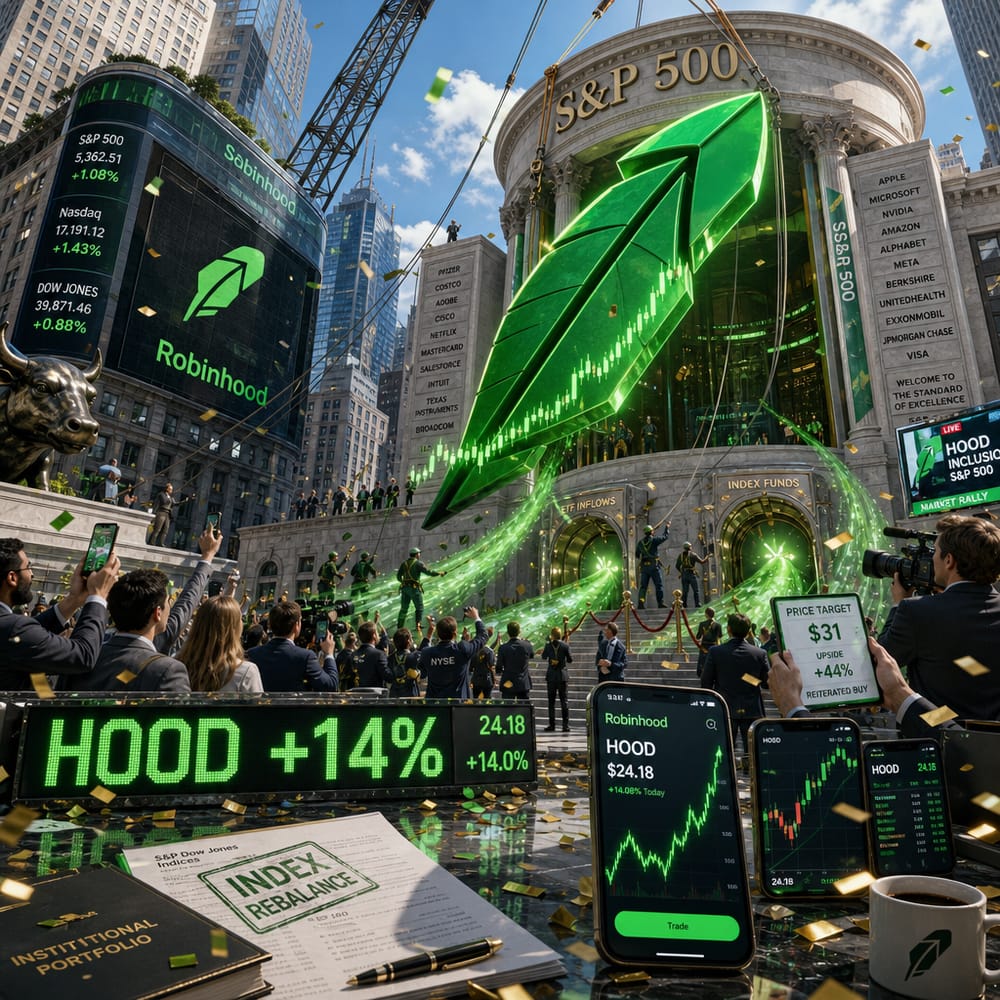
Robinhood is having one of those weeks that any stock dreams of. It's as if it just got a backstage pass at a rock concert. The fintech darling saw its stock spike a flashy 14% after being added to the elite S&P 500 club. That's the kind of guest list that makes any company sit up and say, "I've arrived!"
Now, why is being on the S&P 500 roster such a big deal? Let’s break it down like a dollar menu item at your favorite fast-food joint. The S&P 500 is the VIP room of the stock market. It showcases 500 of the biggest, baddest U.S. companies. To get in, you need a market cap that's as hefty as a double cheeseburger—around $14 billion these days. You also need to be based in the U.S., have a public float of at least 10%, and show four straight quarters of positive earnings. Think of it as the financial equivalent of making the varsity team.
So, what's the buzz about Robinhood finally grabbing its S&P 500 jersey? Well, for starters, index funds and ETFs that track the S&P 500 will now need to buy Robinhood's stock. That's an automatic influx of demand which could support the stock price and make it more stable. It's like having a swarm of new fans lining up for your autograph.
Historically, when a company enters the S&P 500, it enjoys what some might call a 'honeymoon phase'. There's a rush of buying as funds pivot to include the new entrant, often leading to a short-term pop in stock price. But before you start dreaming of retirement in Cabo, keep in mind that this honeymoon can sometimes be short-lived.
Let's take a stroll down memory lane. Robinhood has been on a rollercoaster ride since its IPO back in 2021. It took the market by storm with its commission-free trading and snazzy app that turned stock trading into a game for millennials and Gen Z. But just like any hot app, the initial thrill wore off as competition heated up and regulatory scrutiny rained on its parade. Compared to peers like Charles Schwab and E*TRADE, Robinhood has struggled with volatility, making its stock more like your favorite meme stock than a blue-chip staple.
Now, the million-dollar question: What does this S&P 500 inclusion mean for Robinhood's long-term game? Buckle up, because it could get interesting. Being in this exclusive index might boost Robinhood’s credibility. Think of it as getting a solid five-star review on Yelp—more investors might be tempted to check it out. It could also improve liquidity, making it easier for big players to buy and sell without causing wild price swings.
And let's not forget the competitive edge. This move could act as a magnet for top talent and partnerships, and could even open doors to fresh capital infusions. It’s like upgrading to first class on the financial flight path—more room to maneuver and a bigger audience peeking over to see what you're up to.
But before you go all-in and max out your portfolio with HOOD stocks, remember that joining the S&P 500 is more like reaching base camp than summiting Everest. Robinhood still faces challenges galore—regulatory hurdles, growing competition, and the ever-present need to innovate. It's like starting a marathon: the real test is maintaining that lead all the way to the finish line.
So, Robinhood has made a splash by joining the S&P 500, and investors are buzzing like bees in a flower shop. But the long-term story is still unwritten. Will Robinhood use its newfound status to catapult itself to the top, or will it get stuck in the quagmire of financial challenges? Only time will tell. But hey, the spotlight sure looks good on them for now.
This article is for informational purposes only and is not investment advice. Always do your own research or consult a licensed financial professional before making investment decisions.
© Copyright 2024. All Rights Reserved.
© Copyright 2024. All Rights Reserved.