

Robinhood (HOOD): Shares Surge 14% on S&P 500 Inclusion
Sunday, August 16, 2026
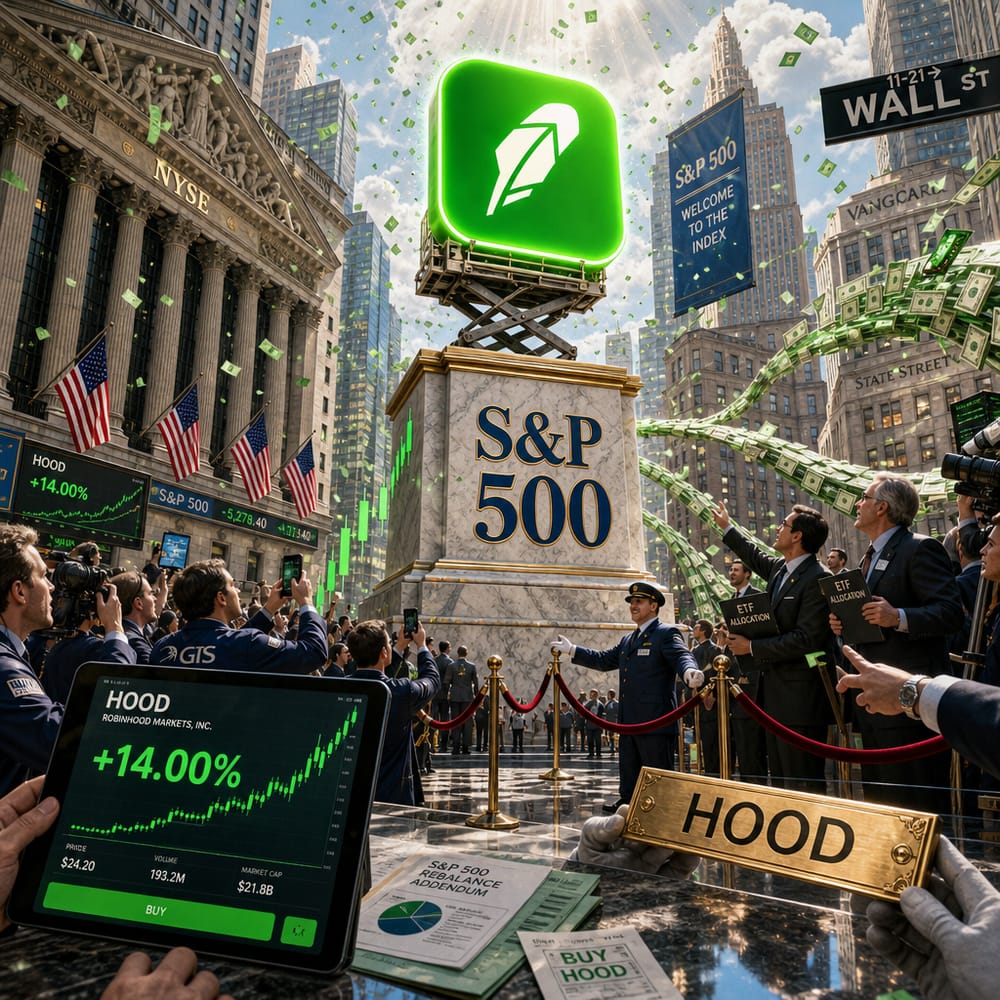
Robinhood Hits the Big Leagues: How Joining the S&P 500 Could Change the Game
Robinhood’s stock just had its caffeine shot moment, vaulting over 14% with the news of its entry into the prestigious S&P 500 index. It’s like getting your band on the main stage at Coachella — a massive visibility boost that could bring in a wave of new fans, or in this case, investors.
Here's the scoop: Robinhood’s shiny new membership card to the S&P 500 club isn’t just for show. It’s a big, flashy entry ticket to the world of passive investment flows. In simpler terms, all those index funds and ETFs (exchange-traded funds) that mimic the S&P 500 will now have to buy Robinhood stock to keep up with the Joneses — or in this case, the Jones Index. Picture a tidal wave of passive buying, ready to lift Robinhood's ship.
But how big is this wave? While numbers could fluctuate, analysts estimate passive buying from S&P-linked funds could easily surpass several hundred million dollars. It’s like upgrading from a small town fair to the Super Bowl halftime show in terms of audience reach.
So, what does this mean for the average investor? If you own Robinhood shares, congratulations — your portfolio just got a little more interesting. But beyond the immediate thrill of being in the cool crowd, what should you really be looking at?
Let’s talk valuation. Before this invite to the S&P 500 dance floor, Robinhood was in the same conversation as other fintech darlings like PayPal and Square. But now, it’s playing with a whole new set of big-leaguers. So, how does Robinhood's valuation hold up after this new listing?
In terms of market capitalization (that’s a fancy term for the total value of the company’s shares of stock), Robinhood might still seem like the new kid on the block compared to its established peers. However, being in the S&P 500 changes the game. It means more eyeballs, potentially more stability, and, let’s not kid ourselves, more scrutiny.
With the S&P 500 inclusion, Robinhood has essentially graduated from the minor leagues. Its valuation will now be weighed against some hefty competitors, and investors will be watching closely to see if it can maintain its growth narrative. Remember, being part of the S&P 500 is a bit like going to your high school reunion — everyone is checking to see who’s done well for themselves and who’s still stuck in the past.
The market is a fickle beast. While the initial surge in Robinhood's stock price is a testament to investor enthusiasm, the real test will be whether the company can keep this momentum going. It’s not just about showing up to the party; it’s about staying there and standing out in a room full of seasoned pros.
So, should you be jumping on the Robinhood bandwagon? That depends on your risk appetite and investment strategy. If you’re looking for a thrill and believe in Robinhood’s long-term growth, this new chapter might be a compelling story to follow. But, as always, don your investor cap responsibly — and maybe pack a parachute just in case the ride gets bumpy.
In the meantime, Robinhood’s entry into the S&P 500 is undoubtedly a milestone worth celebrating. Whether it can capitalize on this newfound attention and convert it into sustained growth, well, grab your popcorn because it's going to be an interesting watch.
In the world of investing, being part of the S&P 500 is the ultimate badge of honor. For Robinhood, it’s a chance to not only increase its visibility but also to step up and prove it deserves its spot on that coveted list. Investors, analysts, and fans alike will be watching to see how Robinhood navigates these choppier waters.
The next chapter for Robinhood might just be its most exciting yet, as it tries to reinvent itself from the scrappy fintech upstart to a stalwart of the financial industry. Stay tuned, because if there’s one thing we’ve learned about Robinhood, it's that it never fails to keep us on the edge of our seats.
This article is for informational purposes only and is not investment advice. Always do your own research or consult a licensed financial professional before making investment decisions.
© Copyright 2024. All Rights Reserved.
© Copyright 2024. All Rights Reserved.