

Robinhood (HOOD): Riding the S&P 500 Wave
Friday, October 02, 2026
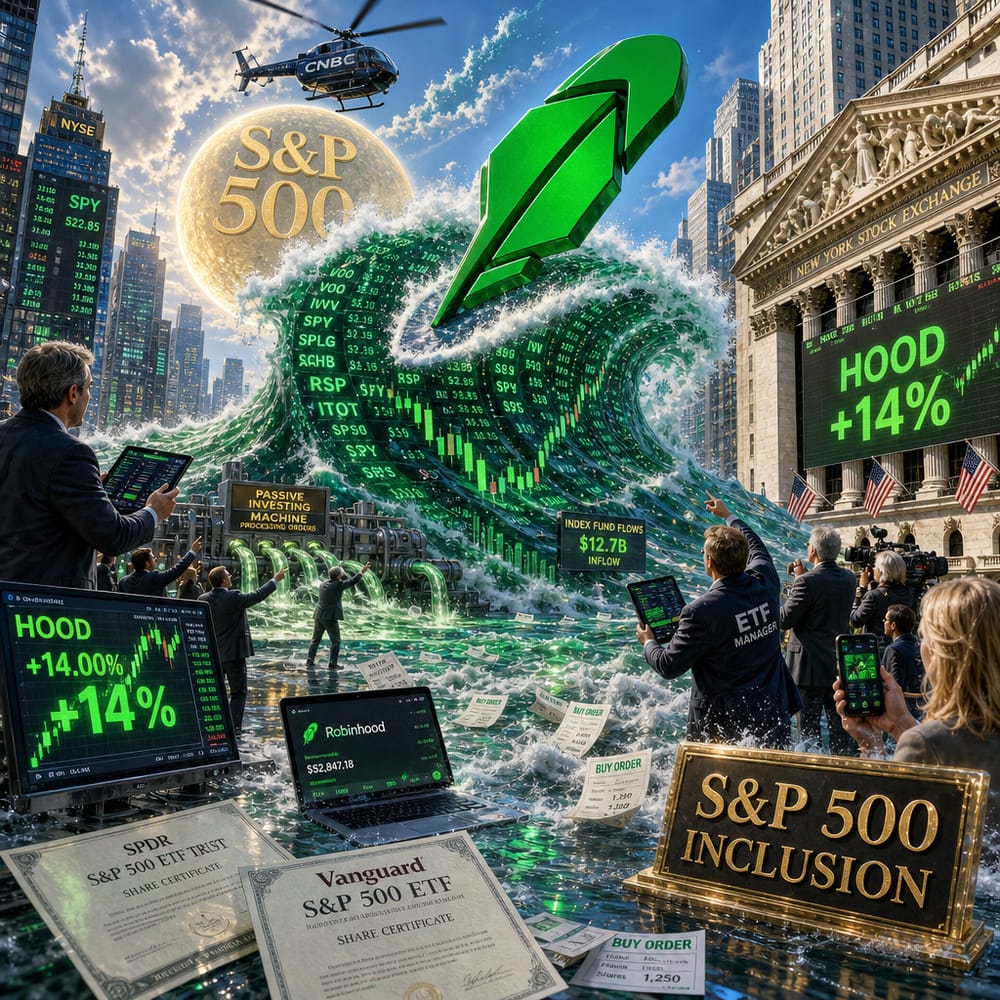
ROBINHOOD (HOOD): RIDING THE S&P 500 WAVE
Well, well, well, Robinhood's back in the spotlight, and this time it's not just Redditors or GameStop enthusiasts cheering from the bleachers. Robinhood, the trading app that made headlines for gamifying finance, has now entered the big leagues—it's an S&P 500 player. Cue the confetti, because its stock just leapt 14% at the announcement. But what exactly does joining this venerable index mean for Robinhood, and should you be hopping onto this wave?
First, let's talk about why everyone in finance-world is buzzing like they just had their third espresso. Being included in the S&P 500 isn't merely a pat on the back—it's like getting invited to the Oscars of Wall Street. It's a validation, a badge that says "You've made it!" But more importantly, it's a golden ticket to a perpetual flow of investment from index funds and ETFs (exchange-traded funds). Think of it as a guaranteed fan base that buys your stock whether they like you or not.
Here's the juicy part: index-tracking funds have to buy shares of Robinhood to mirror the S&P 500's composition. So, how much are we talking, exactly? Analysts suggest we’re looking at several billion dollars worth of buying demand, potentially buoying the stock further. It's like Robinhood just got inherited by a rich relative, and they're not afraid to spend.
But before we pop the champagne, let's take a step back and check out Robinhood's valuation scoreboard. Right now, fintech peers like PayPal and Square are the benchmarks. Robinhood's price-to-earnings ratio—a fancy way of saying what investors are willing to pay for each dollar of the company’s earnings—is looking lofty, but not outrageous. It's kind of like paying extra for avocado toast; you know it's expensive, but it’s trendy, and sometimes you just can't resist.
That said, the road to financial glory is rarely without its potholes. Robinhood still carries a backpack full of risks. First, there's the ever-present regulatory scrutiny. With great power comes great responsibility—or in Robinhood's case, intense oversight from financial authorities who aren't exactly thrilled with their past antics. Any hiccup here could spook investors faster than you can say "meme stock."
Then there's the competitive landscape. The fintech jungle is fierce, with big cats and new startups vying for dominance. Robinhood must continue to innovate to keep them at bay. Any slip in their user base or a botched rollout of new features could be as devastating as a crash in a NASCAR race.
And let’s not ignore the backdrop of broader market conditions. The Federal Reserve’s interest rates, inflation jitters, and the wild ride of Treasury yields all play a part in setting the stage for stocks. If the economic winds change, they could chill the warmth from that S&P 500 glow-up.
So, what’s the bottom line for the retail investor scrolling through their phone? Robinhood's entry into the S&P 500 is certainly a milestone worth noting, and the initial surge in its stock price reflects newfound investor enthusiasm. However, investing in it now means weighing the allure of potential gains from passive inflows against the specter of regulatory speed bumps, fierce competition, and overall market volatility.
For those feeling bullish, Robinhood’s status as the poster child of the democratization of finance might just be enough to warrant a slice of your portfolio pie. But as with any investment, keeping your eyes peeled and your expectations realistic is key. After all, in the rollercoaster of stock markets, you never know when the next dip—or peak—might come.
This article is for informational purposes only and is not investment advice. Always do your own research or consult a licensed financial professional before making investment decisions.
© Copyright 2024. All Rights Reserved.
© Copyright 2024. All Rights Reserved.