

Risk Sentiment Lightens: VIX Plummets to Low Levels
Friday, August 14, 2026
RISK SENTIMENT LIGHTENS: VIX PLUMMETS TO LOW LEVELS
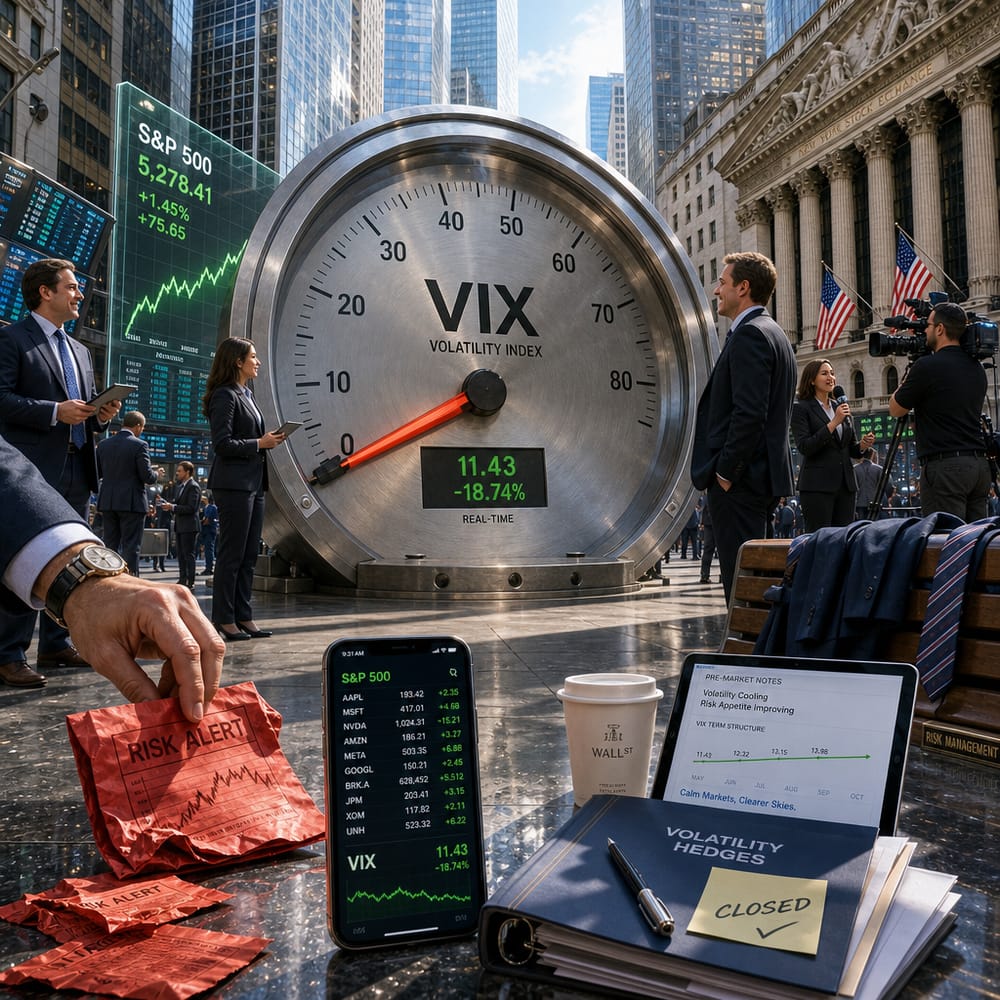
The market's "fear gauge" just got a lot less fearful. The VIX, the ticker symbol for the Chicago Board Options Exchange Volatility Index, has plummeted to its lowest levels in 2026. That's not just a lullaby for insomniac traders; it's a neon sign blinking "all clear" in the financial fog. But is it really all blue skies from here, or is that a mirage on the horizon?
First, let's talk about what has the VIX dropping faster than a cat off a hot tin roof. The VIX is essentially Wall Street's mood ring, indicating how much volatility investors expect in the S&P 500 over the next month. When it drops, it suggests that the market is catching its breath, and investors are feeling less jittery about sudden swings. Several factors have contributed to this downturn in volatility, and they read like a list of every savvy investor's favorite bedtime stories.
For one, the recent Federal Reserve signals are as soothing as a warm cup of cocoa. With the whispers of interest rates holding steady in September, money managers from Wall Street to Main Street are tucking those anxieties under their pillows — for now. Meanwhile, the geopolitical stage, usually a catalyst for market upheaval, seems to be simmering instead of boiling over. Sure, there's a mess in Iran and a few diplomatic snafus making headlines, but investors seem more interested in the tech rally driven by AI and the drop in violent crime stats that put a bit of gloss on otherwise tense news cycles.
So, what exactly does reduced volatility mean for the average investor? Picture a world where your investments don't resemble a rollercoaster at Six Flags. It's a mood where people swap out "sell" with "hold" and maybe even a bold "buy." With less turbulence, investors often feel emboldened to take risks, dipping their toes into equities rather than hoarding cash or clinging to bonds like they're the last life raft on the Titanic.
But before we get too cozy in this lull, let's play the devil's advocate for a minute — reduced volatility might invite a fresh batch of risks. Historically, complacency has been the villain in the horror stories of financial markets — think about the infamous tech bubble or the housing crash. When everyone assumes the market's smooth sailing, they may overlook the icebergs lurking beneath.
Take a glance at history, and you'll see the foreshadowing. It was just this kind of complacency that led to catastrophic market corrections when those unexpected events hit, like a bolt from the blue. A jittery market keeps investors on their toes. But a complacent market? That's the guy at the party who’s fallen asleep in the punch bowl. It's comfortable, sure, but also potentially embarrassing and definitely not sustainable.
Still, for now, things look pretty good. The S&P 500 has logged its third consecutive weekly gain, and there's tangible enthusiasm around sectors like tech, with AI leading the way. Goldman Sachs is banking on the AI infrastructure boom, a signal that smart money is flowing into innovation rather than stagnation. Meanwhile, stocks like Nvidia are riding high, as companies scramble to keep up with the demand for more computational power.
On the downside, a weak report on retail sales landed with a thud, hinting that the consumer might be nursing a bit of a hangover from months of high inflation. This could mean that the market's current party atmosphere might be a bit more of a façade than a full-blown fiesta. Meanwhile, oil prices are playing see-saw, and Treasury yields are doing their best impression of a slinky, leaving investors to wonder if that's a harbinger of trouble or just another Tuesday.
In the end, while the VIX's low levels suggest market calm, investors need to remember that the financial seas can be capricious. It’s crucial to stay informed, diversified, and ready to adjust those sails if needed. After all, if Wall Street's taught us anything, it's that calm waters don't last forever. But for now, pass the sunscreen and enjoy the cruise — just keep an eye out for those financial icebergs.
This article is for informational purposes only and is not investment advice. Always do your own research or consult a licensed financial professional before making investment decisions.
© Copyright 2024. All Rights Reserved.
© Copyright 2024. All Rights Reserved.