

Risk-On Sentiment Returns: Market Breadth and Indicators Show Improving Appetite
Thursday, November 12, 2026
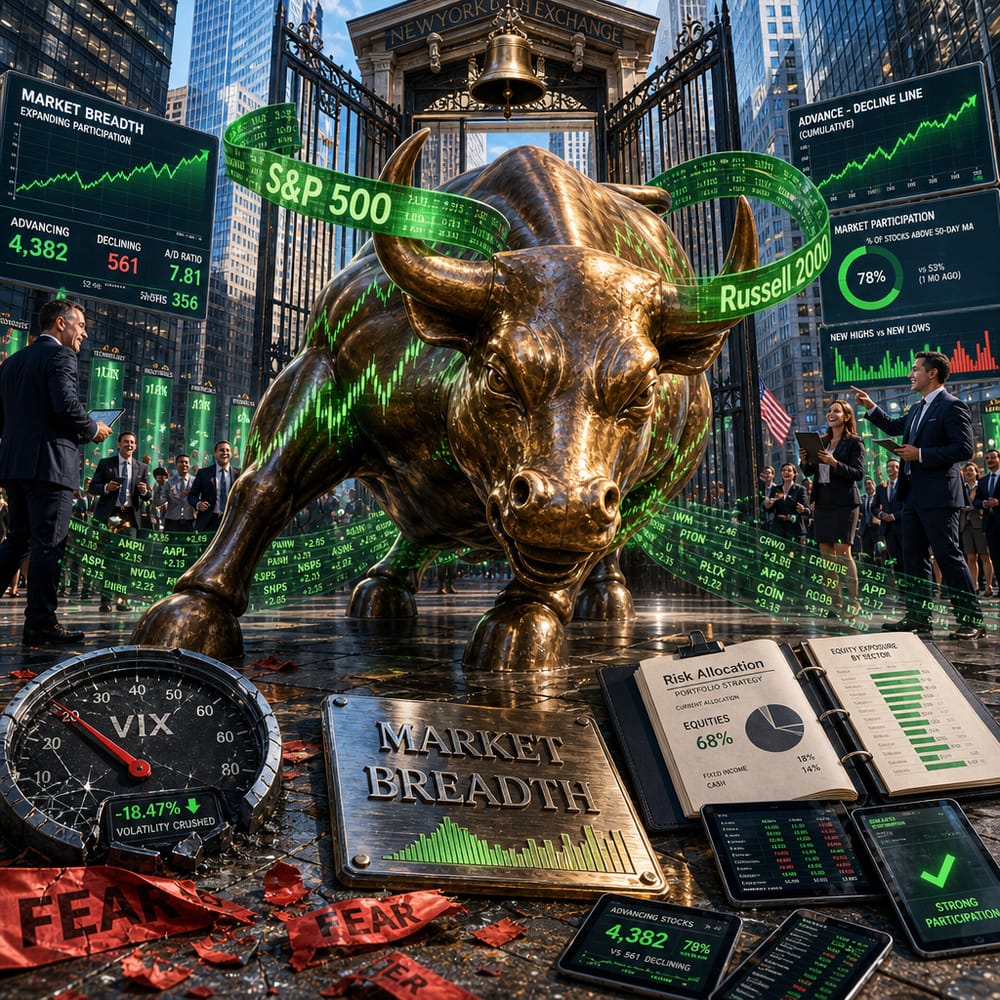
RISK-ON SENTIMENT RETURNS: MARKET BREADTH AND INDICATORS SHOW IMPROVING APPETITE
Here's the scoop: Wall Street's sporting its party hat again, and it’s not just because pumpkin spice latte season is in full swing. Investors are shifting their focus from hiding under the bed with their cash to rolling the dice on the market roulette wheel. It’s a risk-on environment, and the indicators are yelling it from the rooftops.
WHAT’S A RISK-ON SENTIMENT, ANYWAY?
Picture this: investors are like cats. Sometimes they’re skeptical and cautious, hiding from anything that makes a loud noise. Other times, they’re bold and adventurous, ready to pounce on anything that moves. When things calm down and opportunities look promising, investors take on more risk — thus, “risk-on.” It’s like the market putting on its brave pants and going on a shopping spree.
Several indicators are flashing that retail investors are increasing their appetite for risk. The VIX, often dubbed the market's "fear gauge," is taking a dip, signaling less anxiety about market volatility. Meanwhile, the broad indices like the S&P 500 and Russell 2000 are showing signs of life with more participation across sectors. This broad participation tells us that it's not just the tech wizards or healthcare honchos riding the wave — Mr. and Mrs. Average Joe stocks are joining the parade too.
THE SECTOR DANCE FLOOR
In a risk-on world, not all sectors are invited to the dance. But right now, it looks like everyone’s got an invitation, and nobody is missing out on the action. Tech stocks, which had been the prom kings and queens for a while, are back after taking a bit of a breather. But it’s not just tech; financials, industrials, and even the small-cap stocks — those little engines that could — are revving up.
Small businesses, which the Russell 2000 index tracks, are an interesting piece of this puzzle. They're feeling frisky, ready to seize on opportunities brought about by a more confident consumer base and a robust domestic economy. With the spotlight shifting from just watching the tech giants like hawks (or AIs in this day and age), investors are spreading their attention and bets across the board.
THE DOWNSIDE TO GOING ALL-IN
Of course, the market isn’t all rainbows and butterflies. Jumping into a risk-on mode isn’t without its perils. Investors could find themselves in the middle of a regret fest if unforeseen shocks hit — think geopolitical dramas or unexpected economic downturns.
Moreover, not everyone is confident this risk-on sentiment is here to stay. Some are wary about the market’s resilience, especially with interest rates still flirting with higher grounds and inflation showing it might not be ready to hit the snooze button. These could be party crashers that send investors scurrying back to their safe havens.
IMPACT ON YOU AND YOUR PORTFOLIO
So, what does this mean for you, the retail investor scrolling through this article on your lunch break? Well, a risk-on environment is often a sweetener for stock prices, potentially fattening up your portfolio if you play your cards right. But remember, it can be a double-edged sword. It’s not about jumping in headfirst but thinking strategically.
Diversification remains your best friend, even in a risk-on climate. Having a mix of different sectors and asset classes could cushion potential blows while allowing you to ride the wave of gains. Stay informed, keep an eye on those market indicators, and don’t let the allure of quick gains blind you to the importance of a balanced investment strategy.
The market’s current mood is like a well-brewed cup of optimism with a dash of uncertainty, and whether it turns out to be a delightful experience or an over-caffeinated episode depends on how you play the game. So, keep your wits about you, and let’s see where this merry-go-round of risk takes us next.
This article is for informational purposes only and is not investment advice. Always do your own research or consult a licensed financial professional before making investment decisions.
© Copyright 2024. All Rights Reserved.
© Copyright 2024. All Rights Reserved.