

Rising Treasury Yields Pressure Mega-Caps and Trigger Sector Rotation
Wednesday, September 30, 2026
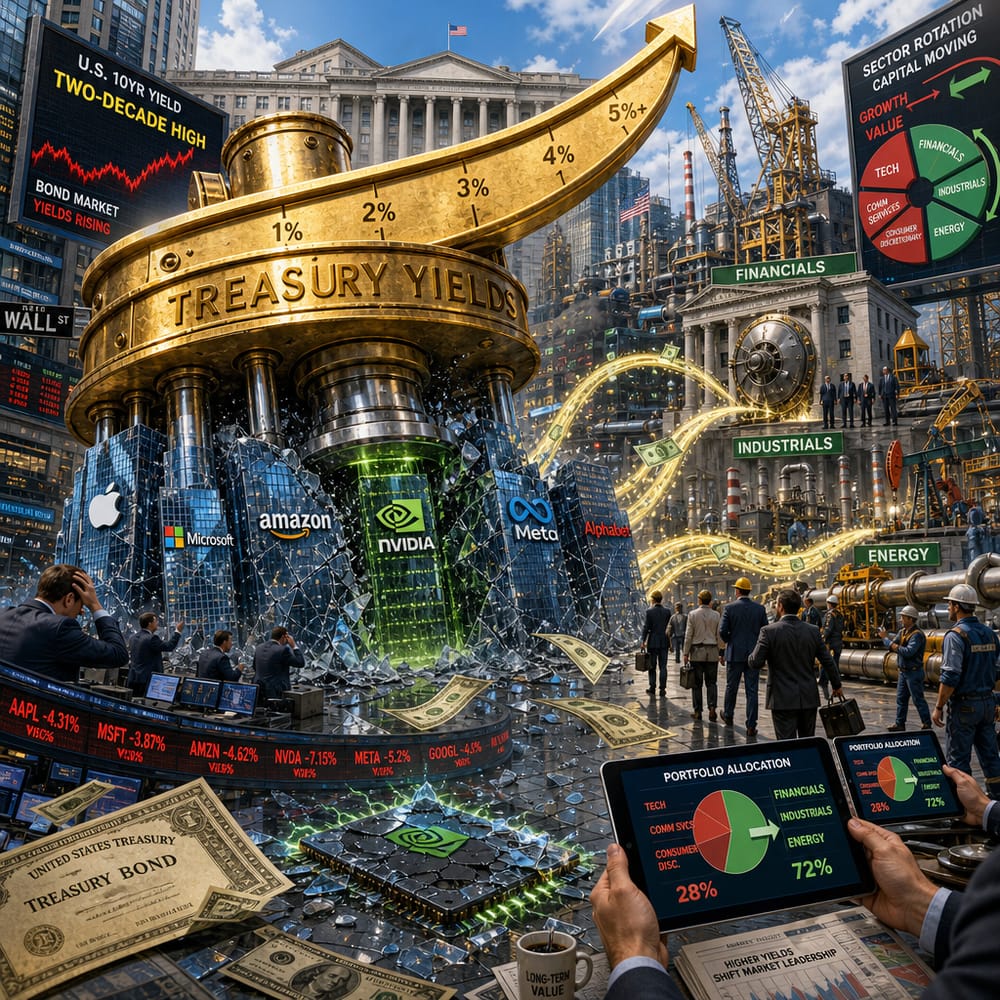
If you thought the only thing skyrocketing lately was the number of streaming subscriptions you have, think again. U.S. Treasury yields are climbing like they're training for Everest, reaching peaks unseen since folks were lining up for the first Harry Potter book. We're talking two-decade highs, people. And if you're wondering why your portfolio feels like it's doing the cha-cha, you're not alone. Those towering Treasury yields are casting a long shadow over the market's beloved mega-cap tech stocks.
Now, let’s break this down. When Uncle Sam offers an IOU with a better return, it makes those tech stock dreams seem a bit riskier. Mega-cap giants like Nvidia, which were once the darlings of every investment portfolio, are now getting side-eyed like your gym membership during a Netflix marathon. Rising yields mean higher borrowing costs and, let's face it, tech companies often run on a steady diet of borrowed money to fuel their innovation engines. This makes their future earnings look less appealing compared to the now juicer, low-risk returns on government bonds. It's a tough crowd out there.
So, what's an investor to do when the tech stars dim? Diversify, darling! Enter the defensive and cyclical sectors, stage left. Financials, industrials, and energy stocks are swooping in like the hero in a rom-com, ready to sweep investors off their feet. These sectors are often seen as safe havens in stormy markets. Rising rates can pump up profits for financial institutions, as they can charge more on loans. Meanwhile, industrials and energy sectors often ride the coattails of economic expansions, as businesses ramp up production and energy demand spikes.
Nvidia and its tech brethren, however, aren't just sitting on the sidelines sulking. They're adjusting their game plan, focusing more on cost efficiencies and exploring alternative revenue streams to navigate these choppy waters. While they might be taking a short-term hit, let's not forget these companies have more tricks up their sleeves than a magician's rabbit. The demand for AI and tech innovation isn’t exactly taking a coffee break, and these mega-caps are still in the game for the long haul.
But for now, those investors who previously followed tech stocks like they were the latest TikTok trend are beginning to refocus. They’re rotating into sectors that can jive with the new yield environment. Financials are notably poised to benefit. Banks, in particular, get a profitability boost from the rising interest rates, as they widen the gap between what they earn from loans and what they pay out in interest.
Meanwhile, industrials have been quietly flexing their muscles, benefiting from the infrastructure investments and manufacturing resurgence that sometimes follow economic upticks. And let's not forget energy. With global demand back on the rise, and the world weaning off fossil fuels slower than a five-year-old off candy, oil and gas stocks are enjoying their moment in the sun.
This sector shift isn't just a passing fancy. It signifies a broader change in investment strategies, one where stability becomes sexier, and the measured allure of dividends and steady growth overtakes the wild highs and lows of tech enthusiasm. It’s likely you’ll see this trend continue as long as those yields keep doing their best Mount Everest impression.
In essence, rising Treasury yields are shaking up the stock market dance floor. Mega-cap tech stocks might be feeling the heat, but this shift opens up opportunities elsewhere. Investors are looking beyond the usual suspects, exploring avenues that promise stability and growth amid the rising interest rate climate. So, while tech stocks take a moment to catch their breath, financials, industrials, and energy sectors are stepping into the spotlight, ready to take a bow. Who says you can't teach an old market new tricks?
This article is for informational purposes only and is not investment advice. Always do your own research or consult a licensed financial professional before making investment decisions.
© Copyright 2024. All Rights Reserved.
© Copyright 2024. All Rights Reserved.