

Rising Treasury Yields Pose Long-Term Budget Pressure
Thursday, August 06, 2026
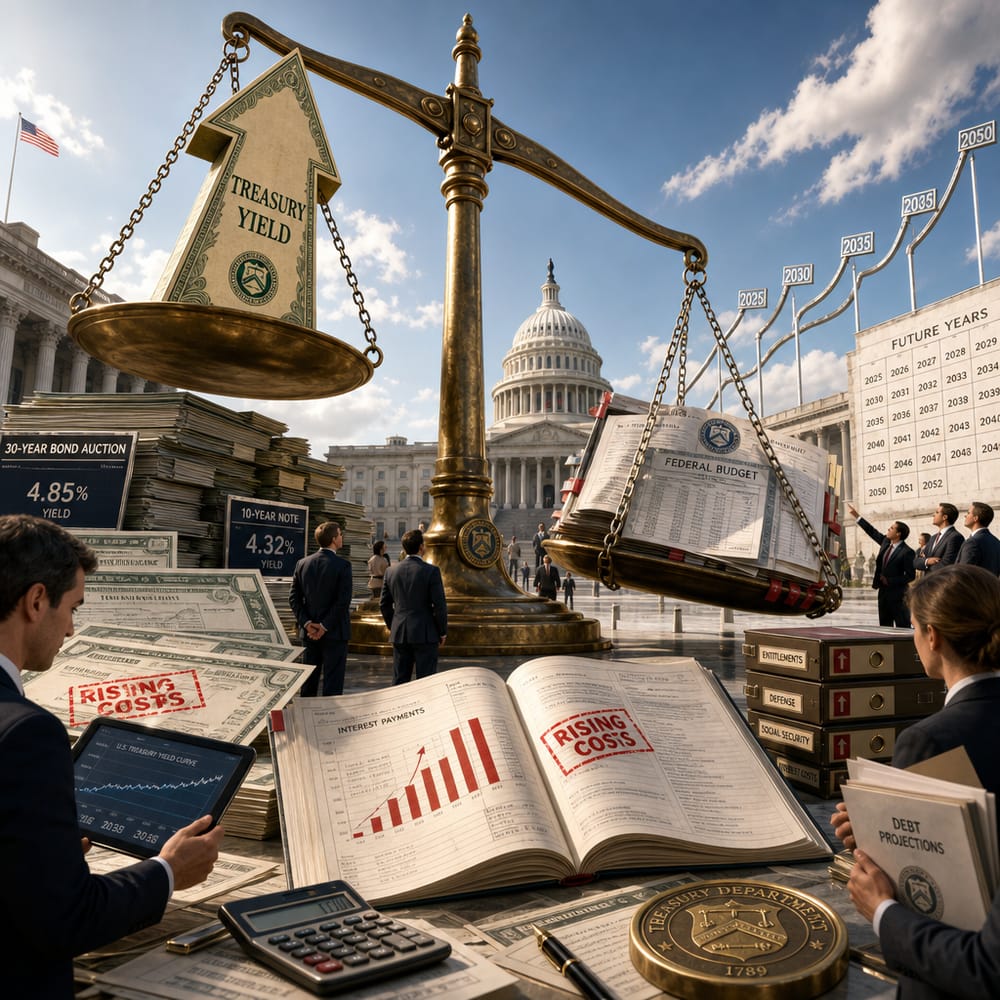
If you've been paying any attention to the financial rollercoaster that is the U.S. government budget, you might have noticed a new twist in the plot: rising Treasury yields. Yes, those boring old government bonds are stepping into the spotlight, and they’re packing a punch that could knock out future budgets. Let’s break it down before anyone decides fiscal policy is a snooze fest.
Treasury yields, the interest rates Uncle Sam pays to borrow money, have been on a steady climb. At first glance, this might seem like a nerdy footnote in the annals of finance. But, dear reader, think again. This seemingly innocuous uptick is set to jack up debt servicing costs faster than a caffeine-spiked energy drink hits your system.
So why should you, the sophisticated retail investor, care about Treasury yields? Well, when these yields rise, it means the government has to shell out more money just to pay interest on its existing debt. Picture it like a ballooning credit card bill that makes you wince every time you check your bank account. Except, in this case, it's the U.S. Treasury straining under the weight, and the numbers are astronomically more daunting—a cool $32 trillion in national debt and counting.
HIGHER COSTS, TOUGHER CHOICES
The fiscal implications are akin to a game of budgetary Jenga. As those yield percentages inch upward, they threaten to dislodge carefully stacked spending priorities. Interest payments are set to balloon, potentially swallowing up public funds that could have been allocated to other critical areas like infrastructure, education, or—as we’ve seen a lot in the last few years—healthcare.
Imagine the government’s budget as a giant pie. Rising yields mean that more of that pie is gobbled up by interest payments, leaving less for everything else. This forces policymakers into a tight spot: Do they cut spending, raise taxes, or—perish the thought—borrow even more? None of these options are particularly palatable for politicians or for the average Joe who just wants decent roads and affordable college tuition.
THE RIPPLE EFFECT
Beyond the confines of Washington’s corridors, rising yields are like a financial weather system that affects everyone. Higher government borrowing costs can lead to increased interest rates on everything from mortgages to car loans. So, if you’re planning to buy that dream house or upgrade your clunker to something with a working AC, brace yourself for potentially pricier borrowing costs.
Moreover, if the government opts to tighten its belt, public services and social programs could face cuts. This means less spending power in the economy which might curb consumer spending—a key engine of growth. In other words, those Treasury yields could ripple through the economy like a rowdy crowd at a stadium wave.
THE LONG VIEW
Now, I hear you thinking, “But what about the long term?” Well, high debt servicing costs could act like kryptonite on the U.S. economy’s superpowers. Gnarly debt loads could hamper economic growth and leave the government with less fiscal firepower to tackle future crises—think wars, pandemics, or the next inevitable financial bubble.
Moreover, America’s debt burden could eventually make it less attractive to investors. If investors start seeing U.S. Treasuries as riskier propositions, they might demand even higher yields, creating a vicious cycle of rising interest costs. This is where things could get ugly, faster than a hidden cat hair gets on your brand-new black sweater.
WHAT'S NEXT?
So, what’s the plan, you ask? Well, policymakers need to pull a Houdini and find a way to balance borrowing while tackling rising interest costs. This likely involves a mix of strategic spending cuts, tax reforms, and perhaps even revisiting economic growth strategies. Not an easy task when the political climate is as stormy as it’s been in recent memory.
In conclusion, while rising Treasury yields might sound like they belong in the realm of dull economic theory, make no mistake—they’re the financial equivalent of a ticking time bomb for the U.S. budget. As for you, savvy investor, keep an eye on the bond market, because what happens there doesn’t stay there. It could very well impact your borrowing costs and investment returns in the not-so-distant future.
This article is for informational purposes only and is not investment advice. Always do your own research or consult a licensed financial professional before making investment decisions.
© Copyright 2024. All Rights Reserved.
© Copyright 2024. All Rights Reserved.