

Rising Odds of Fed Rate Cut: Reaction to Bond Market and Macro Signals
Wednesday, August 19, 2026
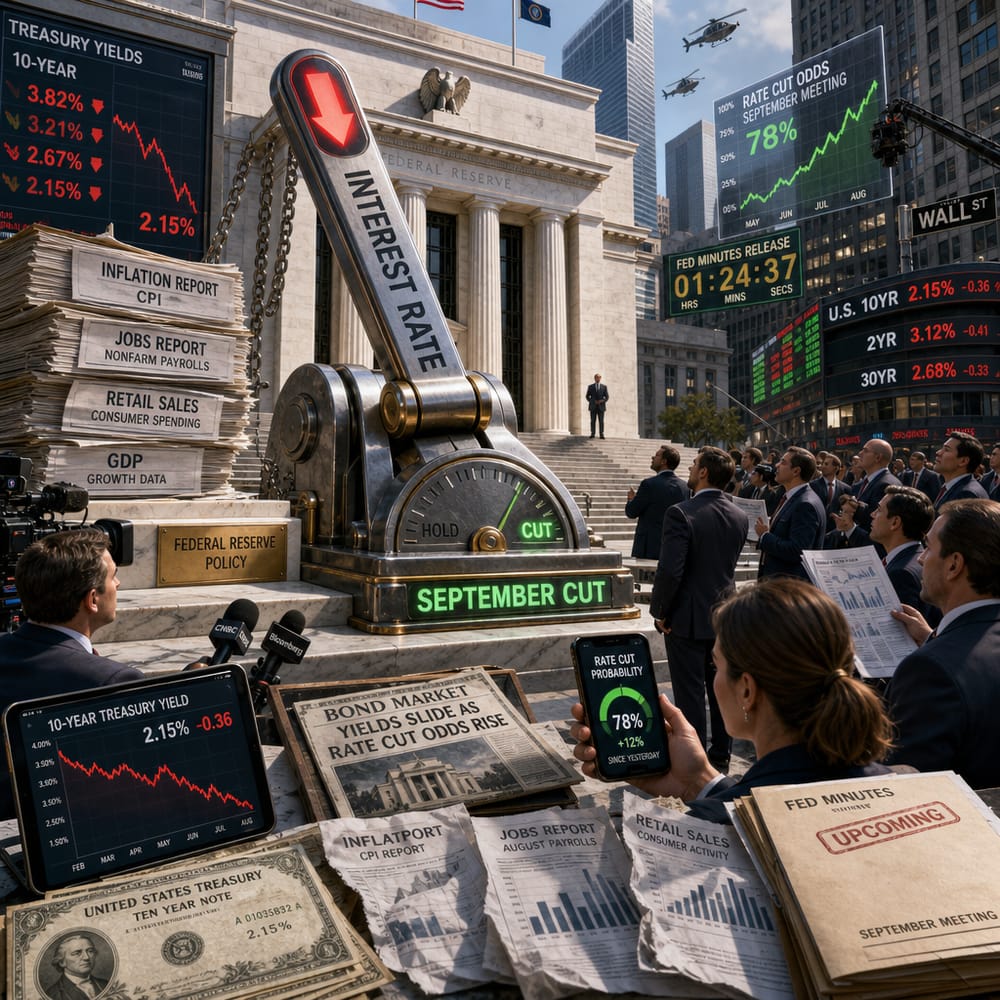
WHAT'S COOKIN' WITH THE FED: WILL WE SEE A RATE CUT SOON?
Picture this: You're making your morning coffee, scrolling through the latest financial headlines, and something catches your eye: Could a rate cut be on the horizon? It’s like spotting an oasis in the desert of high borrowing costs, isn't it? Let's dive into the juicy details that have traders and investors buzzing.
The bond market is currently experiencing a roller coaster ride that would make any thrill-seeker pause. Just days ago, Uncle Sam, aka the Treasury Department, dropped a bombshell: it’s doubling down on debt buybacks. That’s right, they’re planning to snatch up twice as much of their long-term bonds, hoping to calm the stormy seas of sky-high yields. And boy, did the market react. Yields tumbled, and stock market futures perked up like a caffeinated squirrel.
So what's the big deal with these buybacks? They're like a financial mop soaking up excess bonds, which can help lower yields. Lower yields make borrowing cheaper, and when borrowing is cheaper, businesses and consumers tend to spend more. It’s a classic case of supply and demand in action. The Treasury’s buyback adventure is aimed at soothing the 10 to 30-year bond market, which has been throwing a tantrum since late June.
Now, let’s talk about the Federal Reserve—the monetary puppet master that everyone loves to speculate about. The minutes from the Fed’s last meeting are about to drop, and traders are eager to scrutinize every word like a codebreaker in a spy movie. Any hint that the Fed might ease up on its interest rate hikes could send markets soaring.
Traders are already adjusting their rate cut expectations, sharpening their pencils, and recalibrating their models. Many are betting that the Fed might pivot from its hawkish stance to something a bit more dovish—think less bald eagle and more peace dove. The market's mood swings are palpable as yield curves flatten and investors hedge their bets.
So why would the Fed even consider a rate cut in September? Enter the bond market's recent shenanigans and the Treasury’s bold buyback maneuver. When yields drop, the Fed may find itself with enough breathing room to consider easing up on interest rates without fueling inflationary fires. After all, a rate cut could be a welcome relief valve for an economy that's been running hot for a while.
The recalibration of rate cut probabilities isn't just a bunch of traders sitting around a table with crystal balls; it's based on hard data and macroeconomic signals. Investors are closely watching every move the Fed makes, ready to react faster than you can say "rate hike."
Let’s not forget, however, that the road to a rate cut is strewn with potential roadblocks. Inflation, employment numbers, and global economic conditions are all factors that the Fed will weigh carefully. But with the Treasury’s aggressive buybacks making waves, there’s a palpable sense of anticipation.
For retail investors, the implications of a rate cut are significant. Lower rates can mean cheaper mortgages, better stock market performance, and potentially higher bond prices. It's like being handed a golden ticket to Willy Wonka’s financial chocolate factory—sweet rewards for savvy investors.
In a nutshell, keep your eyes peeled for the upcoming Fed minutes. They're more than just a window into the Fed’s thinking; they're a potential blueprint for the economy's next chapter. Whether you're sipping that morning coffee or planning your next investment move, remember that the financial seas are shifting. Stay informed, stay sharp, and keep your investment strategies as dynamic as the markets themselves.
As the saying goes, fortune favors the prepared mind—and the prepared investor. So, as we all watch and wait, take a moment to consider how you might pivot your portfolio if the Fed decides to ease its foot off the interest rate pedal. With the odds of a rate cut rising, it might just be the perfect time to plot your next market play.
This article is for informational purposes only and is not investment advice. Always do your own research or consult a licensed financial professional before making investment decisions.
© Copyright 2024. All Rights Reserved.
© Copyright 2024. All Rights Reserved.