

Rising Long-Term Treasury Yields Despite Cooling Inflation Signals
Tuesday, August 18, 2026
RISING LONG-TERM TREASURY YIELDS DESPITE COOLING INFLATION SIGNALS
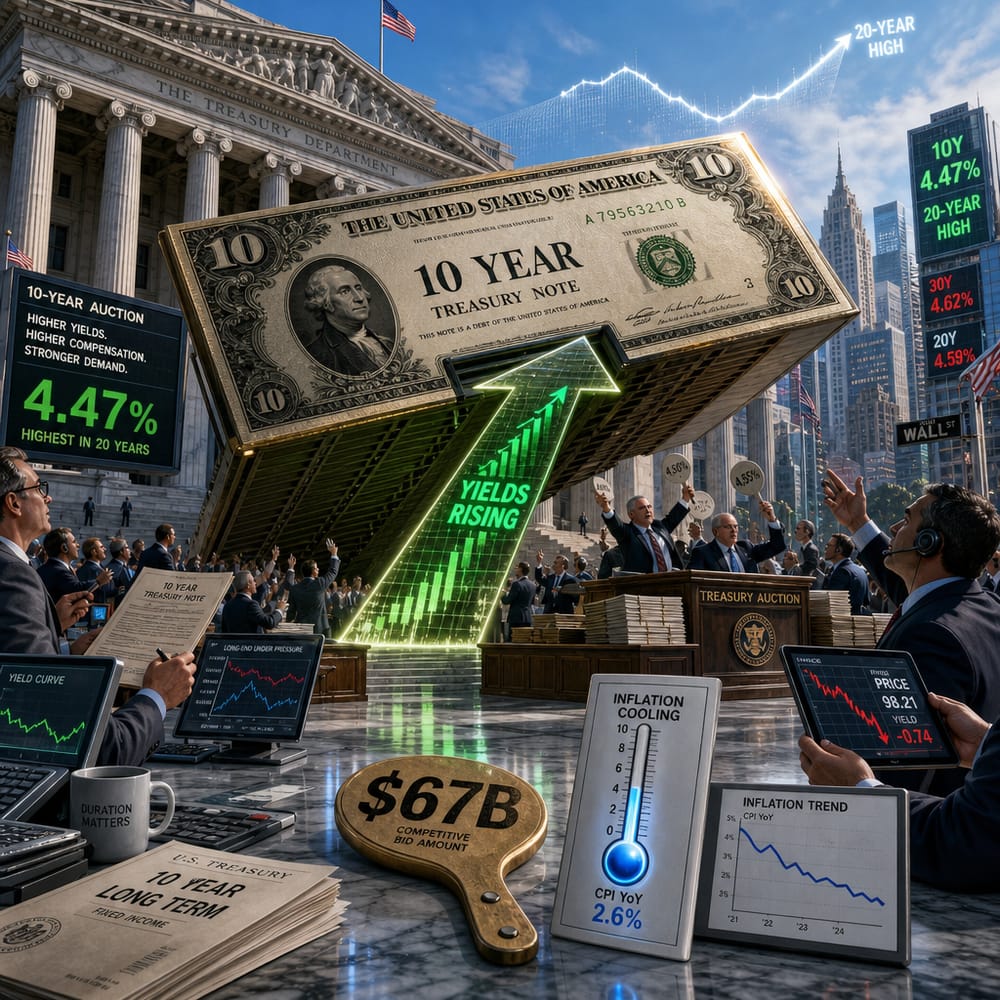
Feeling like you're in a time warp every time you check out the 10-year Treasury yield? You're not alone. Investors just demanded the juiciest yields in almost two decades on a whopping $67 billion in U.S. government bonds. Despite inflation cooling off like a hot summer day turning into a breezy evening, those yields are still strutting above 4.65%—4.70%. It’s like they're on an endless rollercoaster ride, and here’s why you should care.
Imagine you’re heading out to buy a car or maybe refinance your home. You stroll into the bank, and guess what? Interest rates are playing hard to get. You’re left wondering why, when everything from eggs to gasoline is thankfully not burning a hole in your pocket anymore. Well, my friend, it’s because the bond market’s having a moment—and not the good kind.
WHY ARE YIELDS RISING DESPITE COOLING INFLATION?
Think of the bond market as that grumpy friend who’s always expecting the worst. Even if inflation seems to be chilling out, the bond market’s got that side-eye going on. Current high yields—those juicy return rates on long-term bonds—are signaling that investors think inflation might wear out its welcome and stick around longer than invited.
But wait, there’s more. The national debt is creeping up like a bad horror movie sequel, expected to hit $40 trillion soon. This mountain of IOUs means Uncle Sam's got to issue more bonds to keep the lights on. And what do investors demand in return for the risk of holding onto U.S. debt? Higher yields, of course. It’s a fiscal tightrope walk, and the stakes are high. If investors get cold feet, other assets might start looking more attractive than long-term U.S. Treasurys.
WHAT ARE THE RISKS OF SUSTAINED HIGH YIELDS?
Elevated yields in the bond market are a double-edged sword. On the one hand, they offer attractive returns for investors. On the other, they make borrowing more expensive for everyone from the U.S. government to the average Joe. Higher borrowing costs could hit consumer wallets like a surprise water balloon, potentially slowing down the entire economy.
Sustained high yields may also indicate a looming fiscal hangover, signaling investors’ concern over long-term government spending and debt management. Imagine a scenario where your credit card bill keeps growing, and the interest rate climbs each month. You’d start sweating a little, right? That’s what sustained high yields could spell for government finances.
HOW MIGHT THIS AFFECT CONSUMER BORROWING COSTS?
Brace yourself, borrowers. When bond yields are dancing in the stars, it often translates to higher interest rates on loans. Whether you're buying a home, a car, or just need a loan to fix that leaky roof, you might find yourself paying more. Mortgages, student loans, and credit cards could all feel the ripple effect as lenders adjust rates to keep up with rising yields.
For businesses, it means higher costs to raise capital, which could slow down expansion plans or hiring. It’s like asking companies to run a marathon with lead shoes. Even if inflation is cooling, the market’s telling us to buckle up for a bumpy ride.
WHAT DOES THIS MEAN FOR YOUR PORTFOLIO?
For those glued to the stock market, keeping an eye on bond yields is crucial. High yields can put pressure on stock prices as they offer a tempting alternative investment, causing some investors to shift their attention away from equities. As seen with the recent dip in the S&P 500 and the tech-heavy Nasdaq, the markets are grappling with the realities of high yields and global economic uncertainty.
Now’s the time to play it smart. Diversification is your best friend. While bonds might be yielding a bit more, don’t forget about the potential in other sectors. The market’s broadening beyond just tech and energy, so check out what’s happening in other corners of the economy.
THE BOTTOM LINE
In the grand scheme of financial drama, rising long-term Treasury yields are a subplot that could turn into a blockbuster. They’re not just numbers on a screen; they affect what we pay for loans, how stocks perform, and how confident we feel about the future. So, whether you’re a seasoned investor or a curious newbie, it pays to keep your eyes on the yield curve. It’s telling us a story, and for now, it’s packed with suspense.
This article is for informational purposes only and is not investment advice. Always do your own research or consult a licensed financial professional before making investment decisions.
© Copyright 2024. All Rights Reserved.
© Copyright 2024. All Rights Reserved.