

Rising Fed Rate-Hold Odds on Cooling Data
Saturday, August 15, 2026
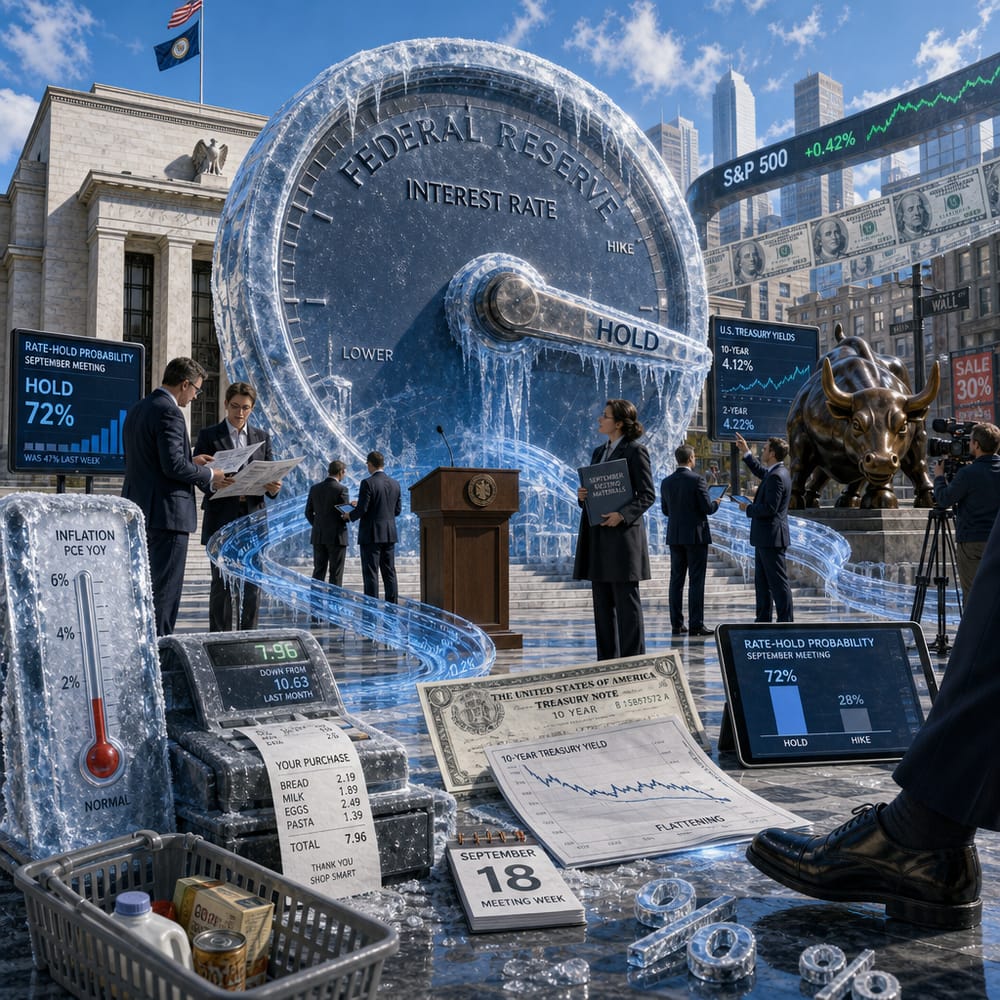
WHISPERING WINDS OF CHANGE: FED RATE HOLD LIKELY AS INFLATION COOLS AND RETAIL SALES SLIP
Hold onto your hats, folks—or maybe don’t, because the winds of the Federal Reserve’s decision-making are feeling a lot calmer these days. With inflation playing it cool and retail sales taking a small breather, the odds of the Fed holding interest rates steady in September are growing. And let’s face it, in the chaotic dance that is the financial markets, even a slight shift in rhythm can send ripples through stock prices, bond yields, and investor strategies.
So, why should you care if the Fed decides to keep rates as they are? Well, imagine the Fed as the DJ at the biggest financial party in the world. When they spin the dial on interest rates, everyone's got to change their moves. But if they keep the music at the same beat, we can all find our groove again—at least for a while.
WHAT A FED RATE HOLD MEANS FOR STOCKS
For equity markets, a potential Fed rate hold can be as comforting as your favorite hoodie on a chilly day. Typically, when interest rates remain stable, borrowing costs don't spike for companies. That’s good news for their bottom lines and could lead to stock prices getting a bit of a boost. The S&P 500 might just keep its swagger, though it’s never a dull moment with market dynamics, and we all know Wall Street loves a bit of drama.
But wait, there’s more! A steady rate might also coax investors back into stocks as less attractive returns from bonds nudge them towards the allure of equities with their glitzy return potential. Still, don’t expect a wild bull run just yet. The market’s cocktail of optimism and caution means investors are still keeping a close eye on any surprise twists in economic data or Fed commentary.
BOND YIELDS: TO RISE OR NOT TO RISE?
Now, onto bonds, those seemingly stodgy but secretly thrilling instruments of financial intrigue. When the Fed holds rates, the ripple effect on bond yields is double-edged. Lower yields could mean bond prices go up, which is great if you’re holding long-term Treasuries. But if you’re looking for a hot new bond to park your cash, you might find the returns aren’t as sizzling as before.
Bonds are also the harbingers of economic sentiment. If rates hold and inflation stays tame, long-term yields might not see much upward movement. This could be a sign that investors don’t foresee a hot economy in the coming years. But, on the flip side, it also suggests a sense of stability. A flat outlook for borrowing costs can keep the economy on an even keel, encouraging business investments and spending.
THE BROADER ECONOMY: A BALANCING ACT
As the Fed contemplates its next move, the broader economy gets to sit back and chew on some steady prospects. Holding rates might breathe life into sectors sensitive to interest rates, like housing, where affordable financing is the name of the game. On the flip side, if inflation turns out to be a sleeping giant rather than a tamed beast, the Fed might have to pull a surprise card later, snapping the calm.
And let’s not forget: a steady rate environment can play nice with economic growth. It gives businesses the confidence to plan their investments and expansions without fear of unexpected financing shocks. But as always, the economy is a complex beast, and the delicate dance between stable growth and inflation is an age-old waltz that requires masterful choreography.
FINAL THOUGHTS
The anticipation of a Fed rate hold is like the eye of a financial hurricane—calm, but with the potential for quite the storm. Whether you’re bullish on the stock market or eyeing the bond yield horizon, this period of relative peace might just be the time to reassess your strategy and find your footing before the Fed’s next move.
So grab your popcorn, keep an eye on those economic indicators, and remember—while the Fed might be playing it cool, there’s always something stirring in the global economy’s grand theatre. And who knows, the next act could be just around the corner.
This article is for informational purposes only and is not investment advice. Always do your own research or consult a licensed financial professional before making investment decisions.
© Copyright 2024. All Rights Reserved.
© Copyright 2024. All Rights Reserved.