

Rising Bitcoin Mining Difficulty and Tariff Challenges
Sunday, August 16, 2026
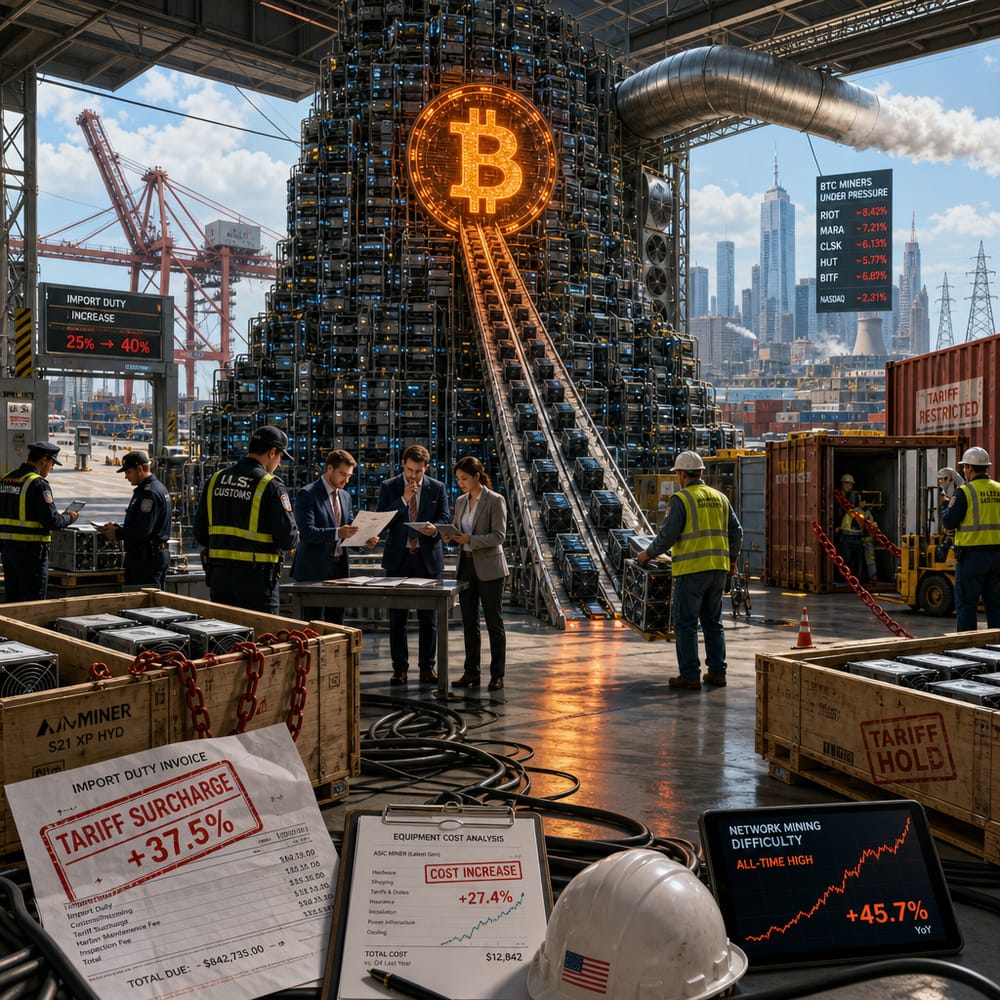
BITCOIN MINERS FACE AN UPHILL BATTLE: MORE DIFFICULTY, MORE TARIFFS
Welcome to the wild world of Bitcoin mining, where fortunes can be made and lost faster than you can say "blockchain." Just when U.S. miners thought they had the digital gold rush figured out, two nasty developments are lurking in the wings: a record high in mining difficulty and some tariff-related curveballs that could send profits into a tailspin.
THE ROCKY ROAD OF MINING DIFFICULTY
Let’s start with the biggest elephant in the room: the soaring Bitcoin mining difficulty. Think of mining difficulty like the treadmill from hell—it just keeps getting faster, and you have to run harder to keep up. Essentially, this metric measures how tough it is to find a new block of transactions and get rewarded with Bitcoin. And guess what? It’s harder than ever. The network keeps adjusting the difficulty to ensure blocks are mined every ten minutes or so, but as more miners jump into the fray, the difficulty spikes. This is great for securing the network but not so hot for mining profitability.
For miners, this means more computing power—juicier machines that guzzle more electricity than a herd of Teslas on a road trip. The higher the difficulty, the more miners spend on beefing up their hardware to stay competitive. When your operating costs start to make you feel like you’re burning cash rather than earning Bitcoin, well, Houston, we have a problem.
TARIFFS: THE UNWELCOME GUESTS AT THE PARTY
As if the relentless march of mining difficulty wasn’t enough, U.S. Bitcoin miners are now grappling with tariffs that are putting the squeeze on their already tight margins. Due to ongoing trade disputes, many of the components and machinery needed for mining are fetching higher prices. When tariffs play havoc with import costs, miners feel the burn.
These tariff pressures mean that equipment like ASICs (specialized mining hardware) and the energy-efficient cooling systems that keep these machines from melting down are suddenly more expensive. And while Bitcoin may be the currency of the future, paying your bills still requires cold, hard cash today. So, when those bills start to look like a blockbuster movie budget, it’s easy to see why miners might break a sweat.
STRATEGIES IN A TRICKY LANDSCAPE
Navigating through this stormy weather, miners are pulling every trick out of the hat. They’re pivoting to renewable energy in droves, not because solar panels are the latest fashion trend, but because they’re cost-effective in the long haul. Energy is the lifeblood of mining operations, and finding cheaper, cleaner sources is a no-brainer.
Furthermore, some are striking up creative alliances. Partnerships with energy companies offer miners better deals on electricity—after all, a steady customer who promises to consume vast amounts of power is quite the catch. Others are exploring geographical diversification, moving operations to regions with lower energy costs—hunting for the sweet spots where the power grid is robust but the rates don’t spark an existential crisis.
Plus, there’s a silver lining: tech innovations are stepping up. Newer, more efficient mining rigs are making it possible for miners to extract more Bitcoin for less juice. We’re talking about hardware that’s sleek, powerful, and not unlike the muscle car of the Bitcoin world.
WHAT’S THE WIDER IMPACT?
These challenges are shaking up the landscape, potentially reshaping the future of the crypto supply chain. If U.S. miners find themselves squeezed out due to rising costs, we could see a shift in mining power to countries with more favorable conditions. A decentralized network is the cornerstone of Bitcoin’s appeal, and maintaining a geographically dispersed mining community is crucial to its integrity.
Moreover, the tariff-induced cost pressures could trigger further consolidation in the industry. Smaller operators might find the going too tough and get snapped up by their larger, more robust peers. This, in turn, could lead to fewer, bigger players dominating the scene, which might not be great news for those who value decentralization above all else.
In the volatile world of Bitcoin, miners are no strangers to high stakes. But as they scramble to adapt to rising difficulties and tariff troubles, one thing’s for sure: they’re in for a bumpy ride. The ones that will come out on top won’t just be the toughest—they’ll be the savviest, using innovation, strategy, and a little bit of luck to navigate the road ahead. So, buckle up, Bitcoin enthusiasts—the journey is just getting started.
This article is for informational purposes only and is not investment advice. Always do your own research or consult a licensed financial professional before making investment decisions.
© Copyright 2024. All Rights Reserved.
© Copyright 2024. All Rights Reserved.