

Retailers and Tariff Refunds: A New Catalyst?
Thursday, August 20, 2026
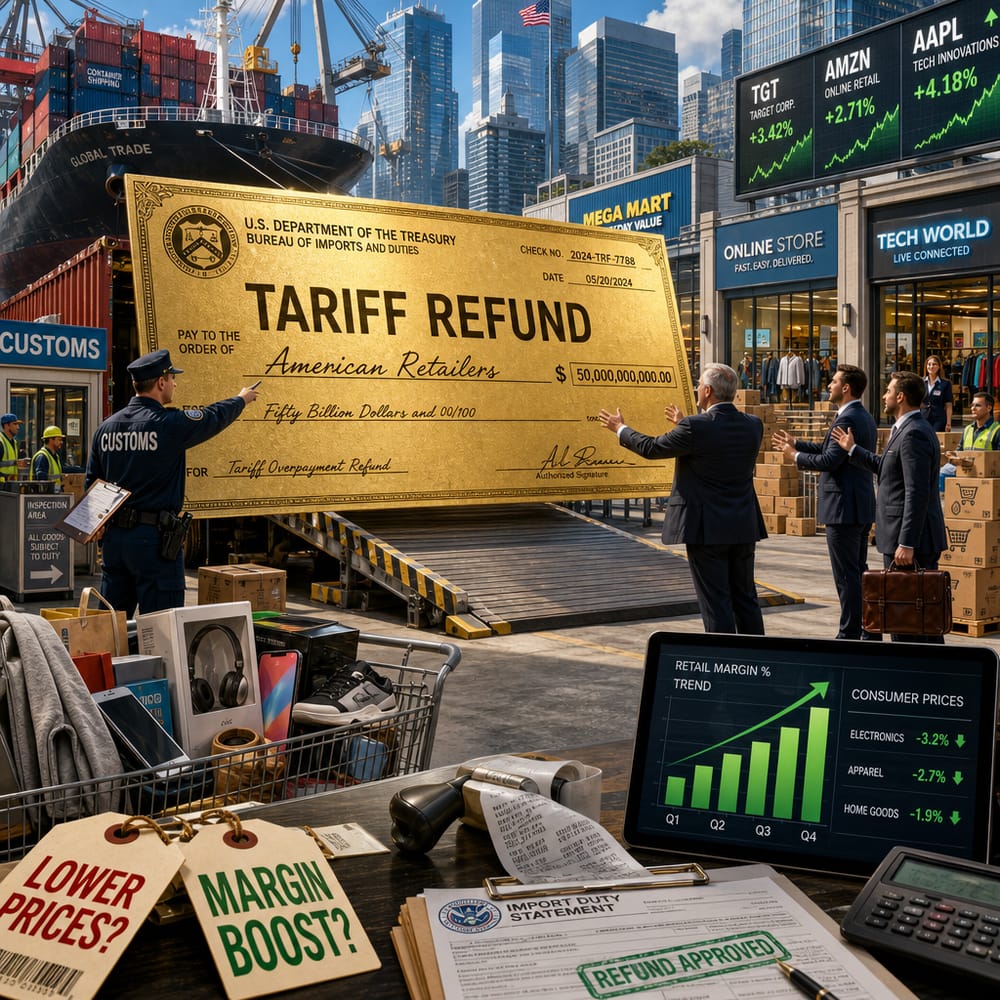
TARIFF REFUNDS: A GAME-CHANGER FOR RETAILERS?
All eyes on the checkout line because something new is brewing, and it's not just your pumpkin spice latte. Retail giants like Target, Amazon, and Apple are about to receive hefty tariff refunds, and these could shake up the retail landscape like a caffeinated barista at 8 a.m.
So, what’s the big deal with these tariff refunds anyway? Picture a financial windfall—akin to finding a forgotten $20 bill in your jeans pocket but on steroids. Retailers had been paying extra due to tariffs for years, and now, thanks to some regulatory maneuvers, they're getting some of that money back. This isn't just pocket change; it's enough to potentially alter pricing strategies and even impact stock valuations.
A GAME PLAN
Some major players are already laying out their plans. Walmart, for instance, is setting the pace by leveraging its windfall to keep already competitive prices down. The retail juggernaut recently revealed it will invest its extra cash into maintaining low prices for customers. CFO John David Rainey expressed confidence in the company's growth, and why not? By plowing these refunds back into pricing, Walmart can continue to lure budget-conscious shoppers through its doors.
But what about Target, Amazon, and Apple? The jury's out, but speculation is high that Target might follow a similar path to Walmart’s. Historically, both brands engage in a retail arms race of sorts, often mirroring each other's strategies to stay competitive. If Target opts to use its refunds for price cuts, it could trigger a ripple effect, pushing rivals to reconsider their own pricing strategies.
Amazon, ever the enigmatic titan, is less predictable. Given its vast array of services and platforms, it might channel its refunds into other areas, like logistics or AWS (Amazon Web Services), rather than consumer price cuts directly. Still, it could pass on savings to its loyal Prime members, reinforcing its ecosystem's stickiness.
And then there's Apple, the cool kid on the tech block. Instead of slashing prices on its coveted gadgets, Apple might be eyeing another route. Think research and innovation. Perhaps it will invest those refunds into developing the next iPhone, ensuring that it remains perpetually out of reach for those prone to dropping their phones in the toilet.
THE CONSUMER ANGLE
So, will you and I see lower prices at the register? If Walmart's strategy sets the trend, lower prices could indeed be coming. However, it's a mixed bag. Not all retailers might choose to pass the windfall onto consumers. Some could use it to pad their margins or reinvest in business infrastructure, potentially leaving you with the same price tag at the store.
Yet, even if prices don't plummet, there's a silver lining: enhanced financial health for retailers means they're better equipped to weather economic downturns. Healthier balance sheets can translate into stock stability, and in today's roller-coaster market, that kind of predictability is as reassuring as an electric blanket in winter.
STOCK MARKET RIPPLE EFFECTS
This leads us to the stock market. Investors are already speculating on how these refunds may impact valuations, especially for companies like Target, Amazon, and Apple. The expected changes in pricing dynamics could alter competitive landscapes, and for the savvy investor, this presents both opportunities and risks.
For instance, if Target deploys its refunds wisely, it could boost customer loyalty and consequently, its stock performance. Conversely, if retailers use these refunds inefficiently, they risk missing out on growth opportunities, which could dampen investor interest.
Similarly, Apple's potential reinvestment in innovation could excite investors, driving up stock prices as shareholders anticipate the next big breakthrough. Meanwhile, Amazon's diverse revenue streams mean any strategy it adopts could have wide-ranging implications.
THE BOTTOM LINE
Whether you're a bargain hunter or an investor, keep an eye on these tariff refunds. They’re not just a financial quirk—they're a strategy tool. As retailers choose how to wield their newfound cash, the retail and stock market landscapes could look vastly different in the near future. For now, it’s a waiting game, but one that promises intrigue and, potentially, opportunity. So, grab your popcorn—or better yet, your smartphone—and stay tuned.
This article is for informational purposes only and is not investment advice. Always do your own research or consult a licensed financial professional before making investment decisions.
© Copyright 2024. All Rights Reserved.
© Copyright 2024. All Rights Reserved.