

Retail Spending Slump Drags on Market Confidence
Saturday, August 15, 2026
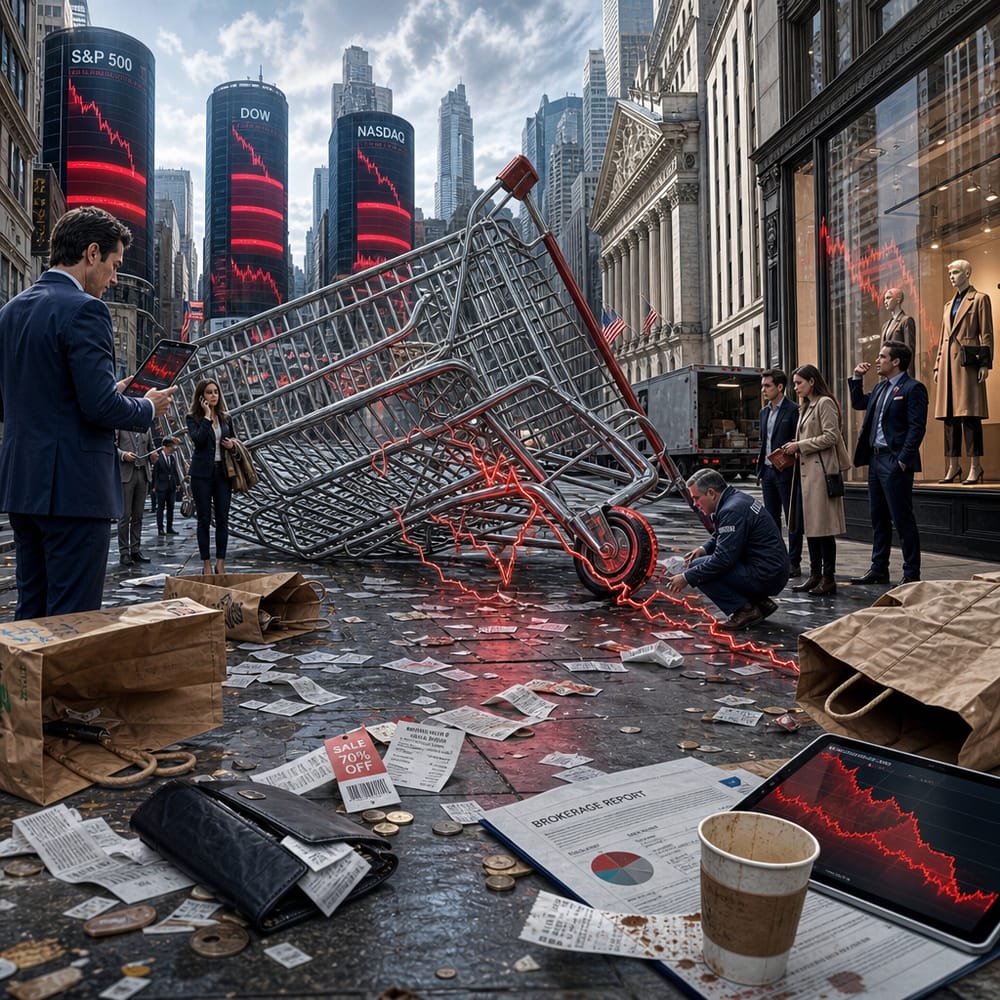
RETAIL SPENDING SLUMP DRAGS ON MARKET CONFIDENCE
Here's the news flash you've been waiting for: It turns out that our wallets are a little lighter than Wall Street hoped. Retail spending is on the decline, and it's making investors sweat bullets harder than an amphetamine-fueled stockbroker. With major indices taking a nosedive, everyone's questioning if consumers are set to become the Scrooge McDucks of this economic narrative. So, how worried should we be about this retail spending slump, and what does it spell for the market's future?
For the uninitiated, retail spending is a vital sign of economic health, like a corporate thermometer checking if the economy's running a fever. It's the total of what we all spend in stores, online, and every mall from coast to coast. And, folks, we've hit a snag. Sales figures have come up short, weaker than a decaf espresso, and that’s got the S&P 500, the Dow, and the Nasdaq all glancing nervously at their balance sheets.
Before you start panic-selling your stockpile of Beanie Babies, let’s break it down. The significance of this spending slump is not trivial. When consumers tighten their purse strings, businesses notice. And when businesses notice, they cut back on hiring, reinvestment, and generally batten down the hatches. What starts as a gentle ripple in consumer confidence can quickly turn into a tidal wave impacting everything from job growth to stock prices.
Now, you might be wondering how all this ties into the Federal Reserve, our nation’s financial janitor, constantly mopping up after economic parties. The Fed’s primary tool is setting interest rates, which influence how much borrowing costs for everyone from big businesses to Mrs. Smith buying her first home. With retail spending cooling like yesterday's coffee, the Fed might hold off on its plans to hike interest rates. Lower rates could make borrowing cheaper, hopefully inspiring businesses and consumers alike to start spending like it’s Black Friday.
But there's a flip side to that coin. If the Fed keeps rates low to juice the economy, it could fuel inflation, the economic boogeyman that makes everything from avocados to Zumba classes more expensive. The decision is as delicate as playing Jenga with a stack of hundred-dollar bills. One wrong move, and it’s crash city.
So, what does this mean for the future? Well, look, if Wall Street were a crystal ball, we’d all be living on our own private islands. But here's the skinny: If retail spending doesn’t pick up, we might see a sluggish market, like a marathon runner who's had too much turkey. Investors could get jittery, and we all know how that goes. Lower consumer spending means lower corporate earnings, and that could keep the brakes on stock market growth.
Yet, it’s not all doom and gloom, folks. The market has been known to surprise us, like your grandma who suddenly knows how to tweet. There’s a chance that spending might rebound, especially if the Fed plays its cards right and the economy stabilizes. If inflation eases and consumers feel more confident, we could see wallets opening up again, prompting a market rally that would make even the most cynical investor grin.
So what should retail investors do in these uncertain times? Stay informed, stay calm, and steer clear of knee-jerk reactions. Keep an eye on the Fed's moves, market trends, and consumer behavior. Diversify your portfolio, because putting all your eggs in one basket is only a good idea if you’re the Easter Bunny.
Remember, the stock market is a long game, not a scratch-off ticket. So, take the news in stride, sip your latte, and watch this space. Like a good Netflix series, the economic story is still unfolding.
This article is for informational purposes only and is not investment advice. Always do your own research or consult a licensed financial professional before making investment decisions.
© Copyright 2024. All Rights Reserved.
© Copyright 2024. All Rights Reserved.