

Retail Sentiment: Dollar Tree Upgrade
Tuesday, August 25, 2026
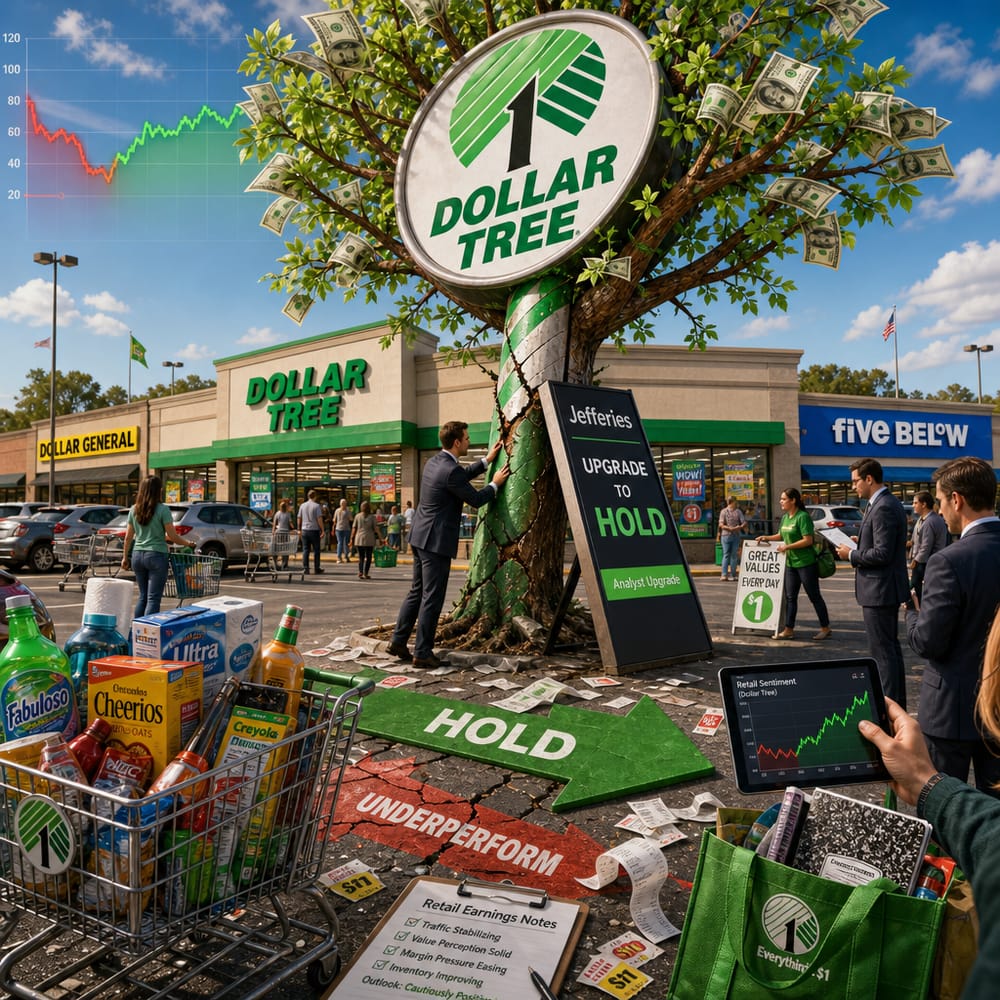
Dollar Tree just got a little love from Jefferies, moving up from “Underperform” to “Hold.” It’s like hearing your trendy aunt finally admit she kinda likes Taylor Swift. But what makes this actually interesting is what it signals about the broader retail sentiment — an industry with no shortage of economic ankle-biters these days.
So what’s the deal with this upgrade? Why should you, the retail investor scrolling through your morning coffee, care? Well, let’s spill the beans.
THE RETAIL RESILIENCE RIDDLE
First up, what's Jefferies seeing at Dollar Tree that made them put away the red pen? The retail world isn’t exactly sunshine and daisies right now. Rising interest rates, supply chain headaches, and a consumer base tightening its purse strings — it’s like a retail version of “Survivor,” and Dollar Tree’s just been thrown a lifeline.
The upgrade suggests Jefferies sees some stability. Maybe not a golden ticket to retail paradise, but at least a sign Dollar Tree isn’t about to drop into the abyss. The word on the street is that its margin trajectory is holding its ground, meaning the company’s making the most out of each dollar sold despite the economic bouncers at the door.
But why Dollar Tree and not Dollar General or Five Below? Well, let’s talk fundamentals. Dollar Tree has been making some savvy moves, like getting all cozy with Family Dollar — a company they acquired a while back. This means expanded reach, and more reach means more customers (hopefully).
STACKING UP AGAINST THE COMPETITION
How does Dollar Tree measure up with its discount brethren? Dollar General has been feeling the pinch with its rural focus, facing a consumer base that’s battling economic uncertainties more than their urban counterparts. And Five Below, while it attracts the younger crowd with its cheeky products, has a narrower niche and higher price points.
Dollar Tree’s secret sauce appears to be its ability to balance the low-price promise without letting quality hit rock bottom. They know how to play the “it’s just a buck” card, which, magic as it sounds, makes it easier for consumers to justify those impulse buys even when budgets are tighter than skinny jeans post-holiday season.
BUT WAIT, THERE’S THE BIG BAD ECONOMY
Now, before you start seeing dollar signs, let’s chat macroeconomic headwinds. The retail sector is like a ship navigating choppy seas. Inflation is still a guest who won’t leave the party, and interest rates are doing their best to bring the mood down. Even with the Treasury yields sliding slightly (a small win), consumer confidence isn’t exactly popping champagne.
And don’t forget the ominous clouds of a forthcoming election. Political shifts could shake things up in the economy, potentially leading to more cautious consumer behavior. Plus, international drama like China Shock 2.0 is reshaping how U.S. companies deal with global competition, potentially affecting supply chains and product availability.
WHAT THIS MEANS FOR YOU
So what’s the play here for the savvy retail investor? Jefferies’ upgrade to Dollar Tree doesn’t scream “buy now,” but it does whisper “watch closely.” This shift in sentiment might be the market saying it’s time to pay attention to how these discount retailers can adapt and thrive in a tough landscape. It’s like watching a reality show, the drama isn’t going to end, but it’s all about who plays the game best.
Keep an eye on same-store sales trends, the heartbeat of retail success. And watch how gross margins evolve — not just at Dollar Tree, but across its major competitors. The retailers that can maintain or even boost their margins while navigating the economic minefield are the ones that deserve your attention.
In the end, Jefferies tossing a bone to Dollar Tree might just be the smoke signal that retail, particularly discount retail, is stabilizing enough to muster through the storm. It won’t be smooth sailing, but then again, does the market ever make things that easy?
Remember, don’t just buy the hype — buy the strategy.
This article is for informational purposes only and is not investment advice. Always do your own research or consult a licensed financial professional before making investment decisions.
© Copyright 2024. All Rights Reserved.
© Copyright 2024. All Rights Reserved.