

Retail Sector Under Pressure: Impact of Rising Oil Prices and Yields
Tuesday, August 18, 2026
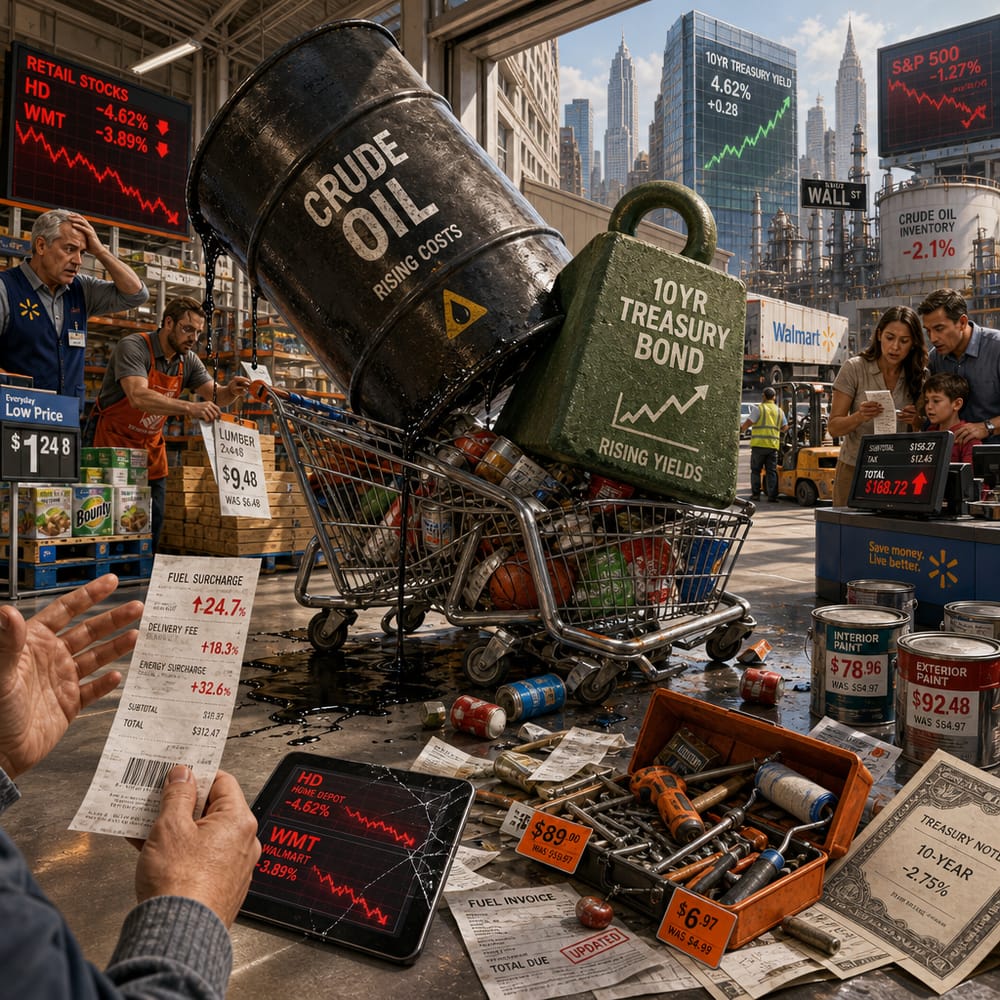
RETAIL SECTOR UNDER PRESSURE: IMPACT OF RISING OIL PRICES AND YIELDS
If you've been eyeing your portfolio lately and feeling like someone turned up the heat, you're not imagining it. Rising oil prices and Treasury yields are stirring up trouble for the retail sector, and it's not just making Wall Street sweat. From Walmart's mega-stores to Home Depot's warehouses, big-name stocks are navigating some seriously choppy waters. So, what's at the core of this financial storm, and where's the life raft for investors?
First, let's talk oil. As you likely noticed when filling up your tank, those numbers at the pump have been on the rise. And when oil prices climb, it doesn't just make your road trip more expensive; it also hits the cost of transporting goods. Retail giants like Walmart and Home Depot rely heavily on transportation to stock their shelves and fulfill online orders. Higher transportation costs can squeeze profit margins tighter than a pair of post-holiday jeans.
Walmart, a retail behemoth known for its low prices, feels the pinch pretty quickly. Every penny increase in transportation costs can mean higher outlays to keep those smiley face price rollbacks from turning into frowns. Similarly, Home Depot, with its vast supply chain network hauling everything from nails to two-by-fours, faces a similar predicament. When transportation costs spike, they have to make a choice: absorb the costs (ouch for profits) or pass them onto consumers (which could deter spending).
Now, onto the Treasury yields, which might sound like a buzzkill cocktail, but actually represent the interest the U.S. government pays to borrow money. Recently, yields have hit a 19-year high, and while that might sound impressive, it's not exactly a gold star for the economy. For consumers, higher yields often lead to increased borrowing costs—think mortgages, auto loans, and credit card rates—all of which could cramp consumer spending. With less disposable income, shoppers might think twice before splurging on that new patio set at Home Depot or stocking up on all those Walmart rollbacks.
So, who among the retail giants is most vulnerable? Well, Walmart and Home Depot are certainly feeling the heat, but they're not alone. Retail stocks across the board are caught in a tug-of-war between rising operational costs and consumer wallets being squeezed from all sides. While these big names have the muscle to weather some of the storm, smaller retailers might find themselves more exposed, lacking the scale to absorb the costs or the brand strength to command premium pricing.
The broader market isn't immune either. The S&P 500, a barometer of the U.S. economy's health, has already felt the pressure from rising yields and oil prices. Elevated global bond yields are pushing investors to reassess risk, and that's not helping retail stocks that were already grappling with margin pressures.
So, what's an investor to do? If you're holding onto retail stocks, it might be time to reevaluate your strategy. Consider diversifying your portfolio to include sectors less sensitive to oil prices and interest rates. Also, keep an eye on retailers with robust e-commerce strategies or those that are actively finding ways to hedge against rising transport and borrowing costs. Companies investing in technology to streamline their supply chains or those venturing into more resilient consumer segments might offer better protection.
In the meantime, buckle up and watch the broader indicators. If oil prices stabilize or yields come down, the retail sector could see some relief. Until then, retail investors should stay informed and be ready to adapt—because in this market, the only constant is change. And hey, if all else fails, just think of it as a great excuse to finally get around to that home improvement project with some new tools from Home Depot.
This article is for informational purposes only and is not investment advice. Always do your own research or consult a licensed financial professional before making investment decisions.
© Copyright 2024. All Rights Reserved.
© Copyright 2024. All Rights Reserved.