

Retail Sales Decline: Impact on Market Sentiment
Saturday, August 15, 2026
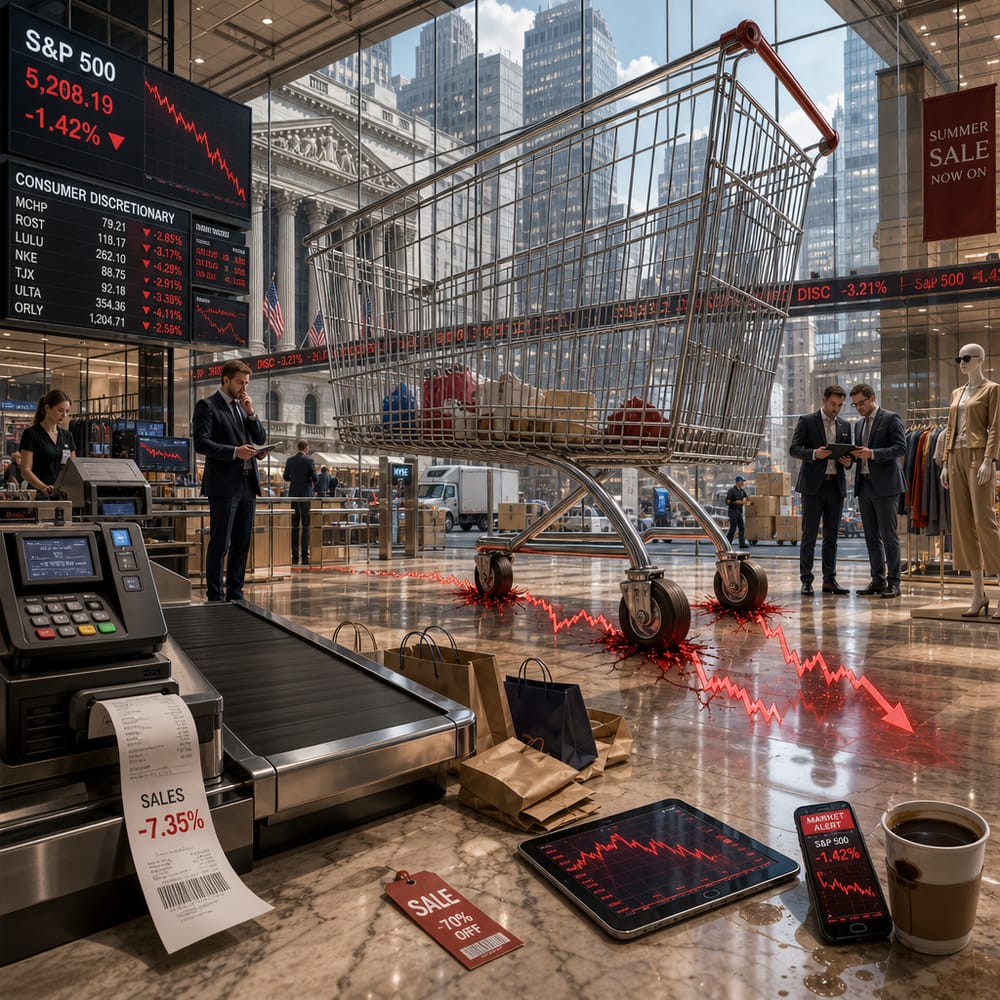
RETAIL SALES SLIP: IS THE ECONOMY LOSING ITS MOJO?
Picture this: It's late July, and while you're scrolling through your favorite shopping apps, the U.S. retail scene decides to pull a disappearing act. Retail sales just slid by 0.6% last month. It’s the first drop in nine months, a plot twist no one saw coming. Is this a brief summer slump, or are we witnessing the early signs of a consumer spending slowdown?
Let’s dive in and see what this means for your wallet, the broader economy, and any rate decisions from our friends at the Fed.
THE RETAIL RIPPLE EFFECT
Retail sales are like the pulse of the U.S. economy. When Americans shop, it's not just for fun — it keeps the economic engine running. Consumer spending accounts for about two-thirds of the GDP, so when it takes a hit, it's like catching a cold when someone sneezes next to you on the subway.
July's decline isn't just a number; it’s a "Houston, we have a problem" moment. Bad news in retail sales can send shivers down the spines of those invested in consumer discretionary stocks — think companies making products people buy with disposable income, like Nike or Starbucks. The S&P 500, a stock market index that includes 500 of the biggest companies in the U.S., could catch a chill too if retail woes persist.
THE FEDERAL RESERVE'S NEXT MOVE
With retail sales hiccupping, you might wonder if the Federal Reserve is rethinking its strategy. The Fed has been on a rate-raising spree to cool inflation without crashing the economy. But falling retail sales might make them pause before hitting the hike button again.
Should the Fed take its foot off the interest rate pedal, it might give the economy some breathing room — but that’s assuming inflation doesn't misbehave. It’s a balancing act worthy of a Cirque du Soleil performance.
WHERE DID THE SHOPPERS GO?
The big question is, why did retail sales dip? Are consumers just taking a breather after the pandemic-induced shopping spree, or is it a sign they're tightening their belts for a rainy day? Economic anxiety, rising prices, or getting back to basics and saving more money could all be factors.
A University of Michigan report shows consumer sentiment took an 8% dive, ending a two-month feel-good streak. People are getting jittery about the economy, and when folks are nervous, they tend to spend less — it’s just human nature.
INVESTOR SENTIMENT ON THE EDGE
Investor sentiment is like a squirrel on a branch; it's easily spooked. A drop in retail sales can create a ripple of worry through the markets — investors hate uncertainty more than cats hate water.
However, it’s not just retail sales throwing shade. The AI boom is hiking up housing prices in tech hubs like San Francisco, making markets jittery about a potential bubble. Meanwhile, wars abroad and cybersecurity threats are adding fuel to the anxiety fire. Every little piece contributes to the big, complicated puzzle of market sentiment.
WHAT TO WATCH NEXT
As retail sales dip, keep an eye on August's numbers. Are they bouncing back, or is this the beginning of a downward trend? Watch how consumer discretionary stocks react. They may become as volatile as your favorite rollercoaster.
Also, stay tuned to Fed announcements. If they decide to ease up on interest rates, it might signal their concern about a slowdown, which could change the investing landscape. And don’t forget to listen to the economic chatter — from inflation to employment figures, everything is interconnected.
So, dear reader, hold onto your wallets and your portfolios. This retail sales slip could be a blip, but it might also be the first gust of wind before the storm. Shop carefully, invest wisely, and keep those eyes peeled. Retail therapy might just become retail triage if this trend continues.
This article is for informational purposes only and is not investment advice. Always do your own research or consult a licensed financial professional before making investment decisions.
© Copyright 2024. All Rights Reserved.
© Copyright 2024. All Rights Reserved.