

Retail Sales Decline Amid Cooling Inflation
Tuesday, August 18, 2026
RETAIL SALES DECLINE AMID COOLING INFLATION
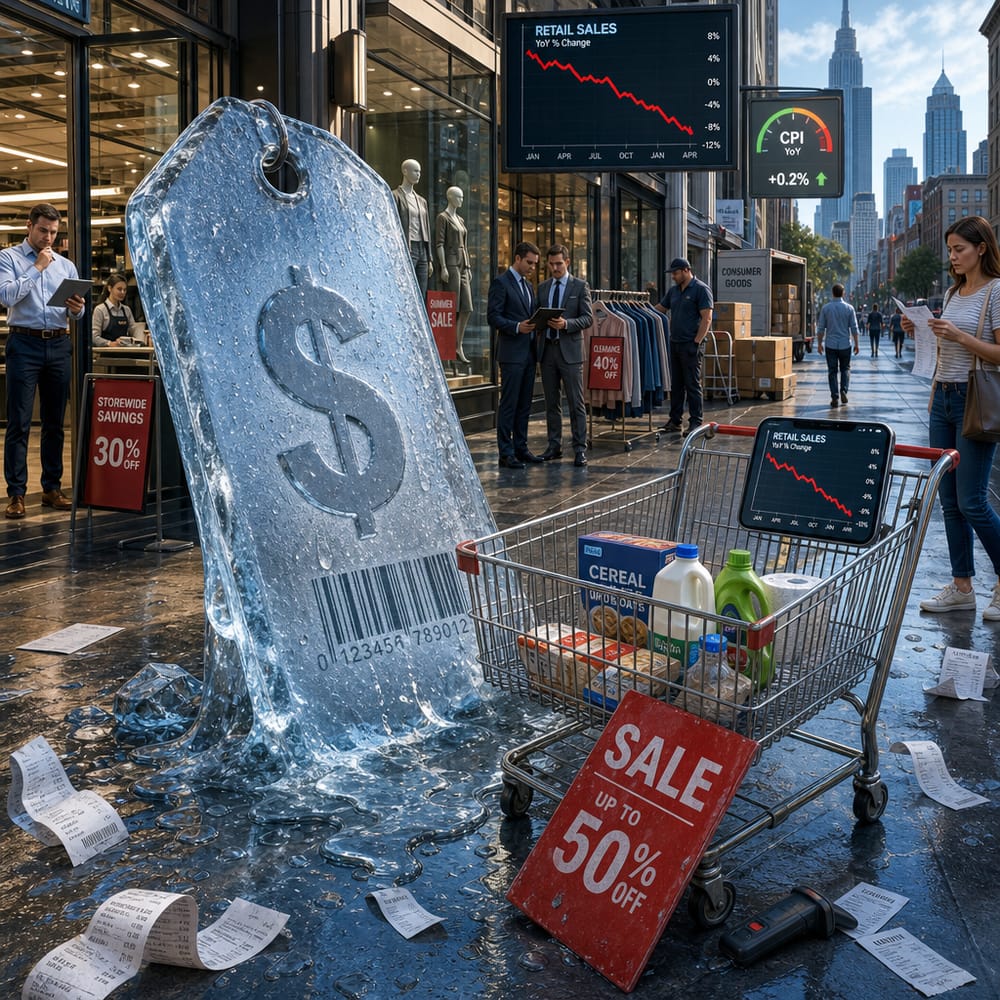
In the world of retail, dropping sales numbers are as welcome as a surprise tax audit. So when the latest figures revealed a 0.6% slide in retail sales for July, it was like a splash of cold water in the face of retailers everywhere. This was no gentle dip, but the sharpest tumble since May 2025. However, the twist here is that inflation is showing signs of easing, with the Consumer Price Index (CPI) barely creeping up by a measly 0.1%. Talk about mixed signals.
So, what's driving this baffling trend? It’s like prepping for a summer barbecue only to find your guests have all turned vegan overnight. The disconnect between easing inflation and faltering retail sales has got everyone scratching their heads. Is it a hint that consumer confidence is crumbling, or does it reflect something deeper lurking beneath the economy's glossy surface?
First, let's talk about that inflation story. The Federal Reserve has been tiptoeing around interest rate hikes like a cat on a hot tin roof, keen to avoid any unnecessary shocks to the system. And while inflation appears to be cooling its jets, the specter of rising oil prices, spurred by geopolitical tensions, hints that this respite might be just a brief intermission.
Now, when inflation eases, one might expect consumers to flock back to the stores, wallets at the ready. But, alas, the reality seems to be more complicated. The recent decline in retail sales suggests that consumers might be holding back their dollars, wary of future economic dramas. Rising oil prices don’t just jack up gas bills; they ripple through the economy, impacting everything from shipping costs to the price of getting your favorite latte to your hands.
Moreover, higher Treasury yields are lurking in the market shadows. They inch their way up, tempting investors with the promise of safer returns compared to the rollercoaster ride of the stock market. This allure could be nudging consumers to save rather than spend. It’s like inviting folks to a party where the main attraction is an economic forecast gloomier than a Monday morning.
So, what does this all mean for future monetary policy? Well, the Federal Reserve, which has been in a delicate waltz with interest rates, might have to take a breather. If retail spending doesn't pick up, pressure could mount for a more relaxed approach to rate hikes. After all, throttling the economy in an attempt to curb inflation might end up being as productive as trying to stop a tidal wave with a sandcastle.
And let's not forget the sectors taking the hardest hits. Retail and consumer goods are feeling the sting, as you might expect. But there’s an emerging narrative in the tech-heavy regions, like San Francisco, where the AI boom is transforming the housing market into a circus of soaring prices. It’s a reminder of how unevenly economic forces can play out across different sectors and geographies.
The retail sector’s troubles might have a silver lining for bargain hunters, though. As consumer goods feel the pressure, there might be discounts and deals aplenty — a little win for shoppers if they’re willing to brave the economic squalls.
In the end, the retail sales slump amid easing inflation is a story of contrasts, a reminder of the economy's unpredictable dance. While the puzzle of consumer spending continues to unfold, investors and policymakers will need to keep their wits sharp. Because in this economic landscape, the only constant seems to be change itself.
So, keep an eye on your favorite retail stocks, and maybe stock up on that popcorn. As the drama unfolds, it promises to be quite a show.
This article is for informational purposes only and is not investment advice. Always do your own research or consult a licensed financial professional before making investment decisions.
© Copyright 2024. All Rights Reserved.
© Copyright 2024. All Rights Reserved.