

Resilient Labor Market as Jobless Claims Drop
Saturday, August 22, 2026
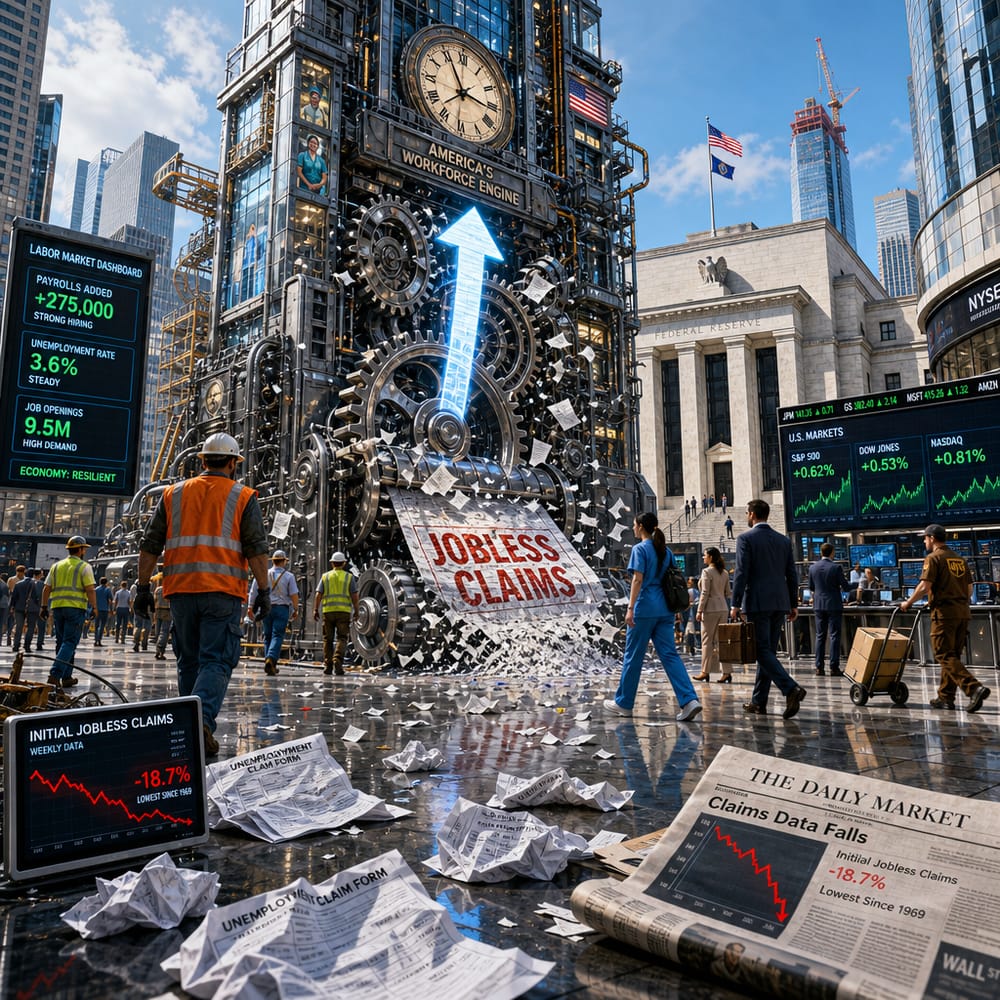
JOBLESS CLAIMS DROP: A SIGN OF STRENGTH OR A CANARY IN THE COAL MINE?
You know what they say: the job market is like a cup of coffee. Some days it’s hot, strong, and keeps you buzzing with optimism, while other days it’s lukewarm and gives you jitters about the future. Well, folks, today’s brew is piping hot. The latest scoop from the economic grapevine is that jobless claims have taken a nosedive. Yes, fewer people are queuing up for unemployment benefits, which paints a rosy picture of the labor market. But before we get too comfy, let's unpack what this really means for you, me, and everyone invested in this financial rollercoaster.
A DROP IN JOBLESS CLAIMS: WHAT'S COOKING?
First, let's dig into the delicious details. The latest data shows a decline in jobless claims, indicating that fewer people are being laid off and many are finding jobs faster than they can say “You’re hired!” So why this sudden surge in employment stamina? For starters, businesses across multiple sectors are fighting tooth and nail to hold onto workers amidst fears of talent shortages. The service industry, tech, and healthcare sectors are rolling out the red carpet for skilled workers. It's a job seeker’s smorgasbord out there.
At the same time, let’s not ignore the role of technology transforming how businesses operate. From automation to AI, technology has turbocharged efficiency, allowing companies to make do with fewer humans. It’s a double-edged sword, but so far, it's keeping layoffs at bay.
WHAT DOES THIS MEAN FOR THE FED?
Now, the plot thickens. You see, when the job market flexes its muscles, all eyes turn to the Federal Reserve, the financial wizards who set interest rates. The Fed has a dual mandate to keep employment high and inflation low, a balancing act akin to walking a tightrope while juggling flaming torches.
Here's where it gets interesting: A strong labor market doesn’t just make the Fed raise an eyebrow; it could make them reach for the interest rate lever. With solid employment figures, the Fed might be convinced to keep interest rates high to prevent the economy from overheating and inflation from skyrocketing. But if inflation starts to cool, we might see the Fed easing its grip and possibly lowering rates—something borrowers would love.
COULD POLICY EASING BE ON THE HORIZON?
Let’s talk about the potential for policy easing. Strong employment numbers could offer the Fed some breathing room to consider easing policies, but it's not a done deal. Inflationary pressures are still lurking in the background like the plot twist of a thriller novel. Lower unemployment could drive wages up, putting more money in people’s pockets but also hiking up prices.
For the Fed, it’s a waiting game, watching economic indicators like a hawk before making any sudden moves. But if the employment train keeps chugging along with inflation in check, there could be room for more accommodative policy, like lower interest rates, down the road.
WHAT'S THE BOTTOM LINE FOR INVESTORS?
So, what does all this mean for us, the humble retail investors checking stock apps between zoom meetings? A robust labor market usually spells good news for consumer spending, which is music to the ears of companies and, by extension, their investors. More jobs mean more disposable income, fueling everything from retail therapy to real estate purchases.
However, keep your eyes peeled and your portfolios diversified. The economic landscape is as unpredictable as a game of Monopoly, and sudden shifts can happen. Stay informed, stay nimble, and be prepared for whatever twists the market might throw your way.
In the end, while today’s jobless claims report is a shot of strong espresso giving us a much-needed jolt of optimism, the financial world is anything but static. So keep that seatbelt fastened and enjoy the ride. The economy is always brewing something new, and we’ll be here to sip, savor, and spill the beans as it unfolds.
This article is for informational purposes only and is not investment advice. Always do your own research or consult a licensed financial professional before making investment decisions.
© Copyright 2024. All Rights Reserved.
© Copyright 2024. All Rights Reserved.