

Record Outflows from U.S. Equity Funds Amid Fed's Hawkish Stance
Sunday, August 30, 2026
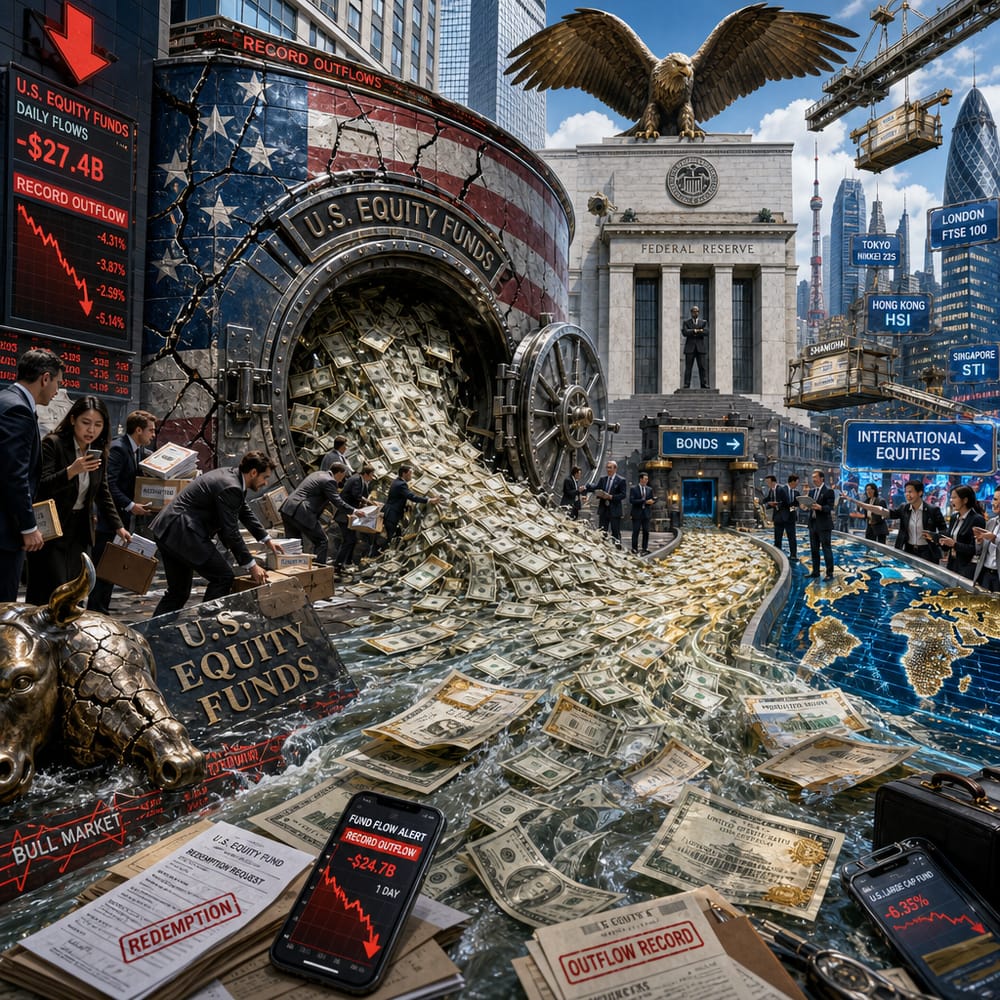
RECORD OUTFLOWS FROM U.S. EQUITY FUNDS: INVESTORS SEARCH FOR SHELTER AMID FED’S HAWKISH SURPRISE
Hold onto your portfolios, folks, because the Federal Reserve just dropped a hawkish bombshell, and it's sending shockwaves through the equity markets. Investors are fleeing U.S. equity funds faster than a cat from a bath, and they're not just running aimlessly—they're strategically shifting their capital to new opportunities. So, what's causing this grand exodus, and where's the money going? Let’s dive into the financial frenzy.
THE FED'S HAWKISH SIGNALS
First, let’s translate the Fed-speak. When we say the Federal Reserve is "hawkish," we mean they're like a strict teacher who's fond of pop quizzes—always ready to raise interest rates if inflation doesn’t behave. And that's precisely what's happening now. The Fed has hinted that they might keep rates higher for longer, and investors are understandably jittery.
Higher interest rates typically spell trouble for stock markets. Why? Because they raise the cost of borrowing, squeezing corporate profits and consumer spending. So, investors are reassessing their strategies, and it seems like U.S. equities are losing their charm—for now, at least.
THE RECORD OUTFLOWS
Last week, U.S. equity funds experienced their largest outflows on record. Investors are yanking their money out faster than a magician pulls a rabbit from a hat, leaving fund managers wondering what hit them. This stampede reflects a broader expectation of tougher times ahead for American companies, especially those heavily reliant on consumer credit.
But it's not just blind panic. Investors are looking for safer harbors in the financial storm. So, where's the smart money heading?
THE SHIFT TO BONDS AND INTERNATIONAL EQUITIES
With the Fed’s hawkish stance rattling the markets, short-term bonds have become the new belle of the ball. Think of them as the warm blanket of the investment world—offering safety and a bit of interest while the equity markets are as comforting as a rollercoaster ride. Bonds are appealing right now because they promise fixed returns, and you don't have to worry about them plummeting like a cliff-diving pelican.
Meanwhile, international equities are having their moment in the sun. With U.S. equities under pressure, investors are casting their nets wider to include markets that aren't as tightly bound to Uncle Sam's interest rate policies. Emerging markets and stable European stocks are luring investors with the promise of growth without the same level of domestic volatility.
OPPORTUNITIES IN DIVIDEND STOCKS
Amid the turmoil, some savvy investors are eyeing dividend stocks like a gourmet buffet. These are stocks that pay you just for holding them and can be a great way to generate income, especially in an environment where interest rates might dampen some growth prospects. Companies like Exxon Mobil, which has been a reliable dividend payer for decades, are catching the eye of those looking to cushion their portfolios with consistent income.
KEEP CALM AND INVEST ON
So, what does this mean for you, the everyday investor? It's not all doom and gloom—or at least, it doesn’t have to be. Now might be the perfect time to reassess and rebalance your portfolio. The shifts we're seeing aren’t just about fleeing U.S. equities; they're about seeking opportunities elsewhere.
Consider diversifying beyond the U.S. market, looking at bonds for stability, or even exploring dividend stocks for consistent payouts. The financial landscape is changing, and staying nimble could be your best strategy.
THE BOTTOM LINE
Hawkish Fed policies have sent U.S. equity funds into a tailspin, but it's creating a buffet of opportunities elsewhere. As investors reshuffle their portfolios, they're finding solace in bonds, international markets, and dividend-paying stalwarts. Keep your eyes open and your strategy flexible, because if there's one thing we know about markets, it's that they love a good plot twist. Stay smart, stay informed, and remember—this too shall pass.
This article is for informational purposes only and is not investment advice. Always do your own research or consult a licensed financial professional before making investment decisions.
© Copyright 2024. All Rights Reserved.
© Copyright 2024. All Rights Reserved.