

Record November Spot Bitcoin ETF Outflows: Over $4.9B Pulled in Month
Sunday, November 29, 2026
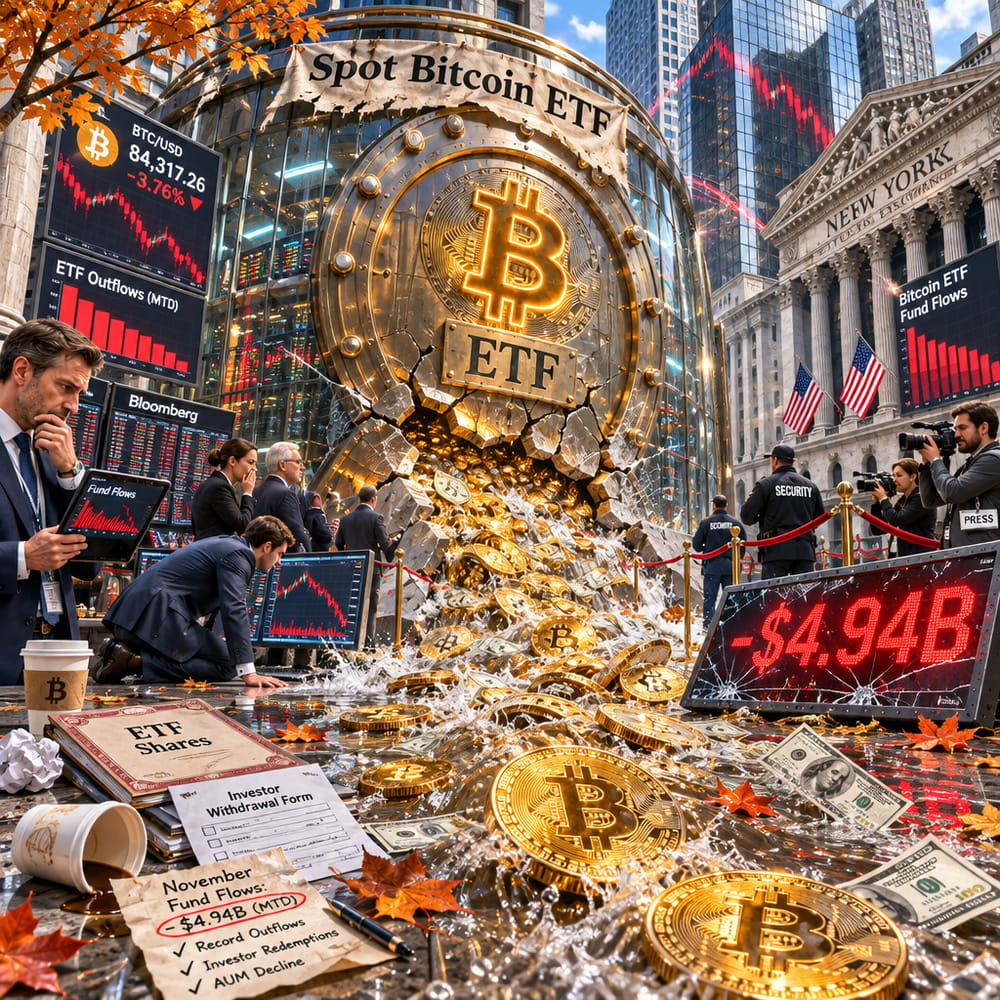
THE GREAT BITCOIN WITHDRAWAL: WHAT NOVEMBER'S $4.9 BILLION ETF OUTFLOWS MEAN FOR CRYPTOCURRENCY
Holy blockchain! November's Bitcoin market just took a punch that would make even Rocky wince. In the worst month since their shiny debut in 2024, U.S. spot Bitcoin ETFs—or exchange-traded funds for those of you who don't speak Wall Street—saw investors yank out a jaw-dropping $4.94 billion. Yes, billion with a 'B'. It's like witnessing a digital gold rush in reverse.
Now, you might be wondering, "Why are investors fleeing like they've just seen their ex at the grocery store?" Ah, well, pull up a chair. Let’s unpack the drama.
WHAT’S DRIVING THE GREAT ESCAPE?
There’s no single villain in this saga; it's more of an ensemble cast of calamities. First up, the global economic outlook resembles a high-stakes poker game with the Federal Reserve. Interest rates are jittery, and when they're high, risky assets like Bitcoin tend to lose their luster. Investors move their chips back to safer bets, like government bonds that suddenly seem as appealing as winning the lottery.
Moreover, the crypto world hasn't exactly been a model of stability. Market volatility is the name of the game, and it's been on full display. With regulatory chatter reaching a deafening crescendo, thanks to government hawks eyeing crypto like a hawk eyes a particularly tasty-looking mouse, caution is the new cool.
INFLUENCE ON BITCOIN'S PRICE
Now, the $64,000 question: what does this all mean for Bitcoin’s price tag? History tells us that when institutional investors pull out, prices tend to wobble like an amateur tightrope walker. Bitcoin has already felt the pressure, and these outflows are like throwing another log on the fire of uncertainty.
The mass exodus can exacerbate price dips, leading to a cycle where dropping prices trigger further outflows. It’s a bit like that time everyone convinced themselves skinny jeans were out—and suddenly, everyone’s closets were bursting with the latest baggy styles.
LONG-TERM IMPACTS ON CRYPTO ETFS
While the current exodus is sending shockwaves, what does this mean for the long haul? One sharp reality: the romance between institutional investors and crypto ETFs might be cooling. If investors continue to see Bitcoin as a digital daredevil act instead of a stable investment, the whole sector might need a serious rebrand or risk becoming the MySpace of finance.
The long-term ramifications could also include a reevaluation of how these ETFs are structured. If investors keep pulling out, fund managers might be forced into some financial feng shui—perhaps crafting products that cushion against the inherent volatility of the crypto world.
WHAT INVESTORS SHOULD WATCH NEXT
For those of you with a keen eye on Bitcoin’s pulse, keep your eyes wide open. The next moves by the Federal Reserve could either be the sugar rush or the hangover Bitcoin has been bracing for. If they decide to lower interest rates, Bitcoin might just regain its shine as the digital ‘store of value’ everyone loves to debate about at dinner parties.
Furthermore, watch how global regulatory landscapes shape up. The clearer the rules, the more confident investors feel. And confidence in financial markets can be as contagious as a kitten video on the internet.
SO, SHOULD YOU PANIC?
Before you run for the hills or stash all your savings in a mattress, remember: the crypto world has always thrived on chaos. If you're in it for the long haul, this could be just another storm in Bitcoin’s tempestuous teacup.
After all, we're talking about an asset that’s been declared dead more times than a Hollywood action hero. If you have the stomach for the rollercoaster, the long-term prospects of Bitcoin—and its merry band of ETFs—might still be gleaming on the horizon.
So, stay informed, stay smart, and as always, invest wisely. The world of Bitcoin is never dull, and November just proved it in spades.
This article is for informational purposes only and is not investment advice. Always do your own research or consult a licensed financial professional before making investment decisions.
© Copyright 2024. All Rights Reserved.
© Copyright 2024. All Rights Reserved.