

Record Low U.S. Workers' Share of GDP in Q2
Sunday, August 16, 2026
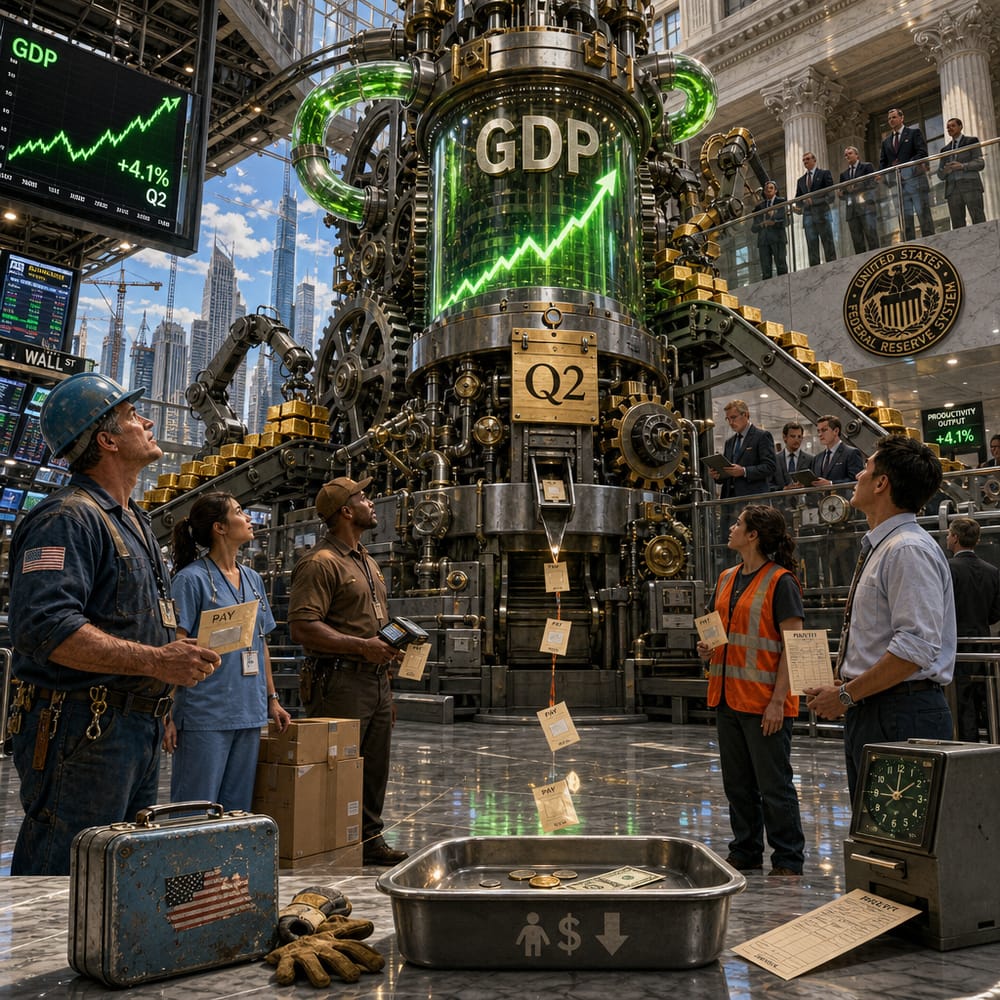
RECORD LOW U.S. WORKERS' SHARE OF GDP IN Q2
If you think your paycheck isn't stretching as far as it used to, you're not alone. In the second quarter of this year, American workers took home a record low slice of the country's economic pie, also known as GDP. While businesses are raking in profits like they’ve found a secret money tree, workers are left nibbling on the crumbs. Sit tight, because this downward shift could have ripple effects that make your wallet sweat.
Now, before you start picturing a dystopian future where bartering with Chick-fil-A nuggets becomes a real option, let’s break down what's happening. Picture the economy as a giant pizza. The size of the pizza (our GDP) keeps growing, but the slice that goes to workers—your wages—has been shrinking, which is like having a pizza party and finding out all you get is a bite-sized morsel.
THE WHYS AND WHATS
So, what’s causing this shrinking slice? The short answer: productivity gains. Thanks to technology and efficiency improvements, businesses are producing more with less. And while you'd think that would translate into higher wages, the sad reality is that it’s the CEOs popping champagne while workers might have to settle for store-brand cola.
On top of that, the bargaining power of workers has been taking hits like a piñata at a kid's birthday party. The gig economy, automation, outsourcing—these are just a few players on the opposing team. Employers have more options than ever, which means they’re less likely to shell out extra dough to keep you happy.
INFLATION AND YOUR WALLET
Now, here's where it really hits home: inflation. When workers get a smaller share of GDP, their spending ability takes a nosedive. Lower consumer demand can lead to reduced economic growth. If people aren't buying, stores aren't selling, and the whole economy takes a hit. Your go-to avocado toast and morning lattes might start feeling like luxuries instead of treats.
And let's not forget the Federal Reserve—the economic overlords who control interest rates like a wizard with a crystal ball. They use monetary policy to keep inflation in check, but with workers getting less and less, they might struggle to balance the scales. If workers don’t have enough cash to splurge on goods and services, it could impact the overall demand, messing with inflation targets.
THE INCOME GAP WIDENS
This shrinking workers' share isn’t just an economic hiccup—it’s a full-blown inequality party, and it’s getting harder to ignore. While executives and shareholders are seeing their bank accounts balloon, the average Joe is left wondering why reaching that "American Dream" feels like a mirage in a desert.
Economic inequality breeds a host of societal issues, from reduced social mobility to increased crime rates. If the divide widens further, those age-old dreams of owning a house or funding a college education might sound as outdated as cassette tapes.
POLICY IMPLICATIONS
What now, you ask? Well, these trends could tug at the sleeves of policymakers and the Fed. If they want to keep the economy on a steady course, they might have to address wage stagnation. We’re talking tighter regulations on corporate profits, more robust labor unions, or perhaps a magic wand that poofs full-time benefits into gig-economy jobs.
But, dear reader, the ultimate question is this: Will they act, or will workers continue to watch their purchasing power dwindle like a melting ice cream cone? Only time will tell.
In the meantime, keep an eye on your paycheck, stay informed, and maybe stash a little extra in that rainy-day fund. Because the way things are trending, you might need it more than you think.
This article is for informational purposes only and is not investment advice. Always do your own research or consult a licensed financial professional before making investment decisions.
© Copyright 2024. All Rights Reserved.
© Copyright 2024. All Rights Reserved.